
Tea tree
Melaleuca alternifolia (Maiden & Betche) Cheel
Tea tree is an Australian native known for its strongly antimicrobial essential oil, led by terpinen-4-ol.
Chưa có đánh giá nào — hãy là người đầu tiên!
Overview
A shrub or small tree with narrow leaves rich in essential oil. ISO 4730 requires at least 30% terpinen-4-ol.
Gallery
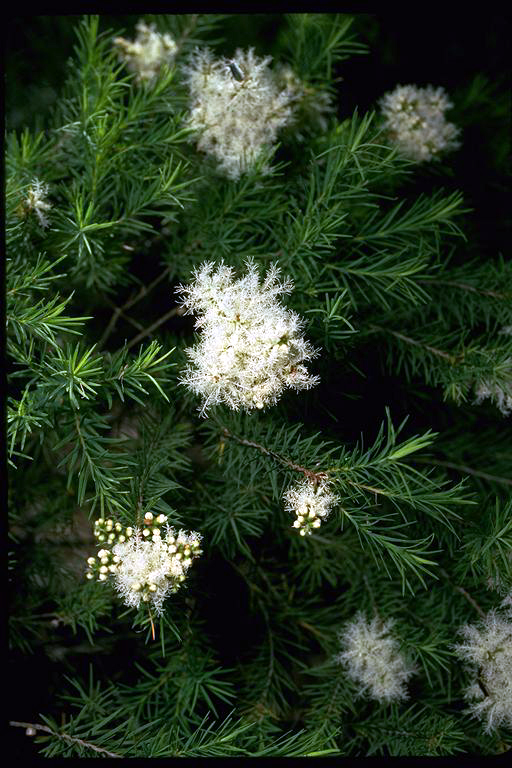 Tea treeTea tree
 Tea tree
 Tea tree
 Tea treeTea treeTea tree
Life cycle
From seed to productSeed & germination
Tea tree seeds germinate in riverside wetlands; seedlings favour moisture and tolerate acidic soil.
Mature shrub
A 4–7 m shrub with narrow oil-rich leaves; it grows fast and is commonly planted in plantations.
Oil distillation
Fresh leaves are steam-distilled into oil rich in terpinen-4-ol, meeting the ISO 4730 standard.
Distribution & origin
Share of recorded occurrences by region- Australia72%
- China plantations12%
- Vietnam9%
- Other regions7%
Chemical composition
Relative content in agarwood resin- Terpinen-4-olMain antimicrobial40%
- γ-TerpinenePrecursor23%
- α-TerpineneAntimicrobial10%
- 1,8-CineoleExpectorant15%
- OthersTrace compounds12%
Uses
- Antiseptic, skin and acne care
- Hair and scalp care
- Natural cleaners and sanitisers
Properties
- Oil colour
- Clear, pale yellow
- Scent
- Fresh, lightly camphor
- Standard
- ISO 4730
Habitat & conservation
Swampy, riverside habitats in eastern Australia with seasonally flooded soils.
Conservation
Least Concern; oil comes mostly from plantations, so wild populations face little pressure.
References
- 1ISO 4730 — Oil of Melaleuca, terpinen-4-ol type — ISO, 2023
- 2Antimicrobial activity of tea tree oil — Clinical Microbiology Reviews, 2020