Aloe vera
Aloe vera (L.) Burm.f.
Aloe vera is a stemless succulent whose 30–60 cm leaves hold a clear, acemannan-rich gel and a yellow latex containing aloin — a staple of skincare, cosmetics, beverages and traditional medicine.
No ratings yet — be the first!
Gallery

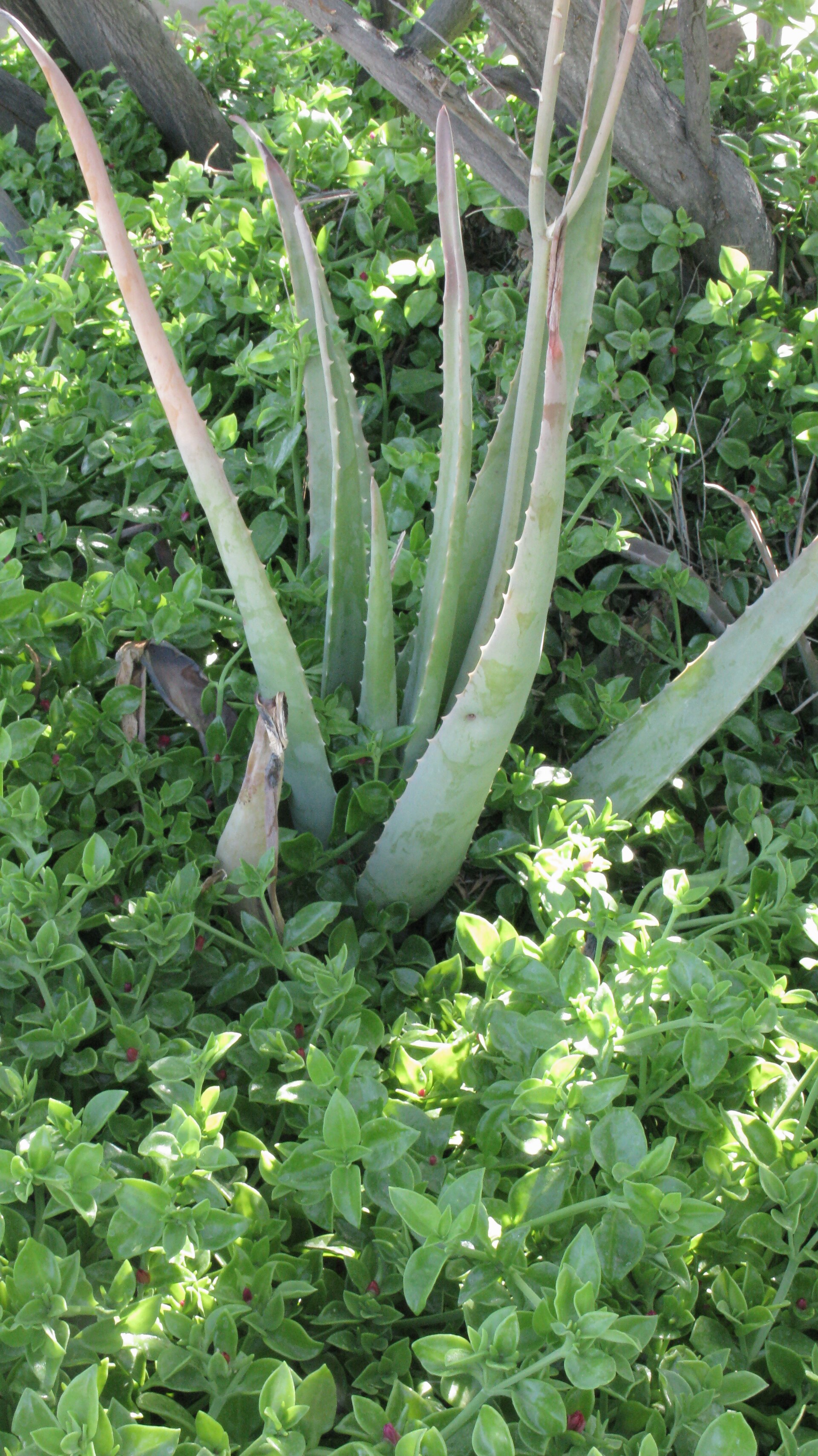
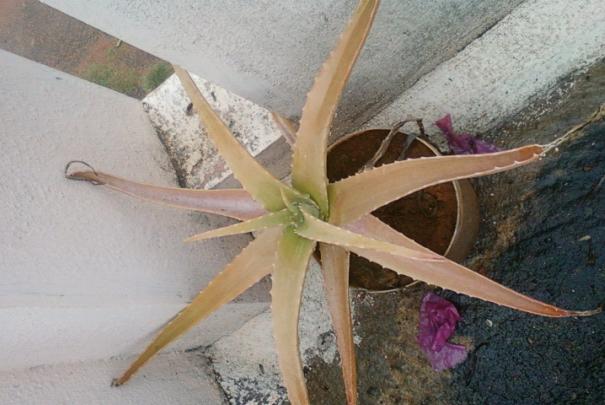


Photo credits: Sdm9093 (CC BY-SA 3.0) · Pamkel (CC BY 3.0) · Jrsanthosh (CC BY-SA 3.0)
Overview
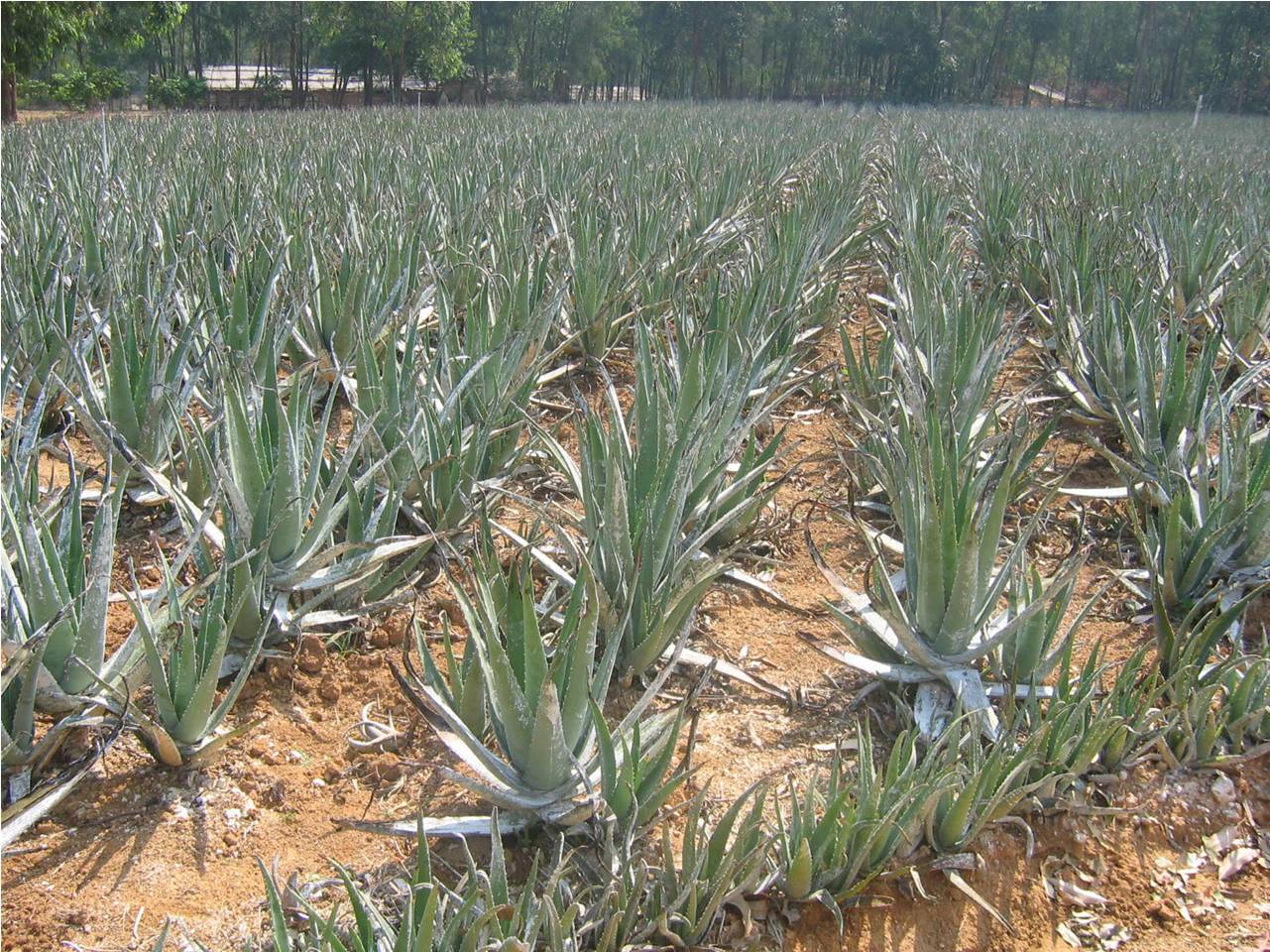
Aloe vera is a succulent with no obvious stem (or a very short one), forming dense clumps through offsets around the base. Leaves are arranged in a rosette, thick and succulent, 30–60 cm long and 4–8 cm wide, grey-green and often covered by a waxy bloom, with soft spiny teeth along the margins and a slightly concave surface. Each leaf has three layers: the outer rind, a yellow latex layer rich in bitter anthraquinones, and the clear inner gel rich in polysaccharides. Under favourable conditions it flowers in winter–spring on a 60–90 cm spike bearing many yellow tubular flowers.
According to Kew's Plants of the World Online, Aloe vera is native to the Hajar Mountains of northern Oman on the Arabian Peninsula, in desert and dry-shrubland vegetation. From there it spread across the tropics and subtropics and has naturalised around the Mediterranean, the Middle East, Asia, the Americas and the Caribbean. Today it is grown commercially on a large scale in India, China, Mexico, the Dominican Republic, North Africa, Southeast Asia and southern Europe for gel, cosmetics and beverages.
The clear gel makes up most of the leaf mass and is about 99% water; the dry matter is dominated by polysaccharides, notably acemannan (an acetylated mannan) together with glucomannan, arabinogalactan and galactogalacturan. The yellow latex between rind and gel contains bitter anthraquinones — aloin A/B (barbaloin), aloe-emodin and emodin — plus chromones such as aloesin and aloeresin A. The gel also holds amino acids, enzymes (for example bradykinase), vitamins and minerals, while the leaf carries organic acids and phenolics. Acemannan and aloin levels vary with cultivar, plant age, harvest season and gel-extraction method.
A review by Sánchez et al. (Molecules, 2020) and more recent assessments summarise Aloe vera's pharmacology: wound- and burn-healing support, anti-inflammatory, immunomodulatory, antioxidant, antimicrobial, antihyperglycaemic and (mainly in-vitro) anticancer effects. Acemannan stimulates macrophages to release cytokines and is licensed as a veterinary biological response modifier; aloesin inhibits tyrosinase (a skin-lightening aid), while aloin and aloe-emodin show anticancer cytotoxicity but are also the stimulant-laxative constituents. Practically, the gel is applied topically to soothe skin and blended into creams, cleansers and beverages, while the dried latex is the traditional laxative drug aloe.
On safety, the laxative anthraquinones of the latex are suspected of toxicity and genotoxicity with prolonged use; since 2002 the US FDA has required removal of aloe-containing laxative products, and the European Union restricts hydroxyanthracene derivatives (aloin) in food. Aloin-stripped gel is generally considered safe for topical use, but oral use and use in pregnancy warrant caution. On the IUCN Red List Aloe vera is Not Evaluated (NE) and is not listed by CITES; it is widely cultivated and not threatened, although many other wild Aloe species in the Arabian Peninsula and Madagascar face harvesting and habitat loss.
Life cycle
From seed to productOffsets
Aloe vera is propagated mainly by offsets around the base or by leaf cuttings: separate pups with 3–4 leaves, let the wound dry, then plant in loose soil.
Rooting & young plant
The offset roots within 2–3 weeks; the thick green leaves establish and a new rosette forms beside the mother plant.
Seedling
Young clumps hold 8–12 succulent leaves, accumulating water and polysaccharides; they need plenty of sun and little irrigation.
Mature plant
Mature clumps carry thick, blue-green leaves edged by soft spines and reaching 30–60 cm, storing water and polysaccharides such as acemannan.
Harvest
From month 18–24 outer leaves are cut regularly, roughly every 6–8 weeks, richest in gel when the flesh is thick and turgid. Leaves are washed; rind and latex are removed (latex kept separately), then the clear gel is milled, filtered and stabilised for cosmetics and beverages.
Distribution & origin
Share of recorded occurrences by region- India20%
- China16%
- Latin America (Mexico · Dominican Republic)16%
- North Africa (Egypt · Morocco)14%
- Arabian Peninsula (Oman · UAE — native)10%
- Southeast Asia (Thailand · Philippines)10%
- Southern Europe & others14%
Chemical composition
Relative content in agarwood resin- Polysaccharides (acemannan, glucomannan)Main gel component; immunomodulatory38%
- Anthraquinones (aloin A/B, aloe-emodin, emodin)In the latex; bitter, stimulant laxative12%
- Chromones (aloesin, aloeresin A)Tyrosinase inhibition, skin-lightening aid8%
- Amino acids & enzymesIncludes bradykinase and other gel enzymes14%
- Vitamins & mineralsVitamins A, C, E, B12 and minerals12%
- Others (organic acids/sugars, phenolics, lipids)Antioxidant and minor gel constituents16%
Uses
- Skincare: soothing, moisturising topical gel and burn support
- Cosmetic ingredient: creams, cleansers, body wash, shampoo
- Beverages and functional foods (aloin limits in many countries)
- Traditional laxative from dried latex (aloe) — now restricted
- Medical research: acemannan immunomodulation, aloesin skin lightening
- Ornamental and household first-aid plant
Properties
- Gel
- Clear, mucilaginous, nearly odourless
- Latex
- Yellow, intensely bitter
- Leaf
- Succulent, edged with soft spines
- Optimum temperature
- 15 – 35 °C; drought-tolerant, hates waterlogging
- Parts used
- Inner leaf gel and latex
Habitat & conservation
It needs full sun, 15–35 °C and sandy, free-draining soil; drought-tolerant but intolerant of waterlogging and prolonged cold. Natively it grows in the desert and dry-shrub communities of the Arabian Peninsula; today it grows wild and is cultivated throughout the tropics and subtropics.
Conservation
On the IUCN Red List Aloe vera is Not Evaluated (NE) and is not listed by CITES (A. vera is exempt from the CITES Appendix II listing that covers other Aloe species). Widely cultivated and naturalised, it is not threatened; however many other wild Aloe species in the Arabian Peninsula and Madagascar face harvesting and habitat loss.
References
- 1WHO Monographs on Selected Medicinal Plants, Vol. 1 — Aloe — World Health Organization (WHO), 1999
- 2WHO Monographs on Selected Medicinal Plants, Vol. 1 — Aloe Vera Gel — World Health Organization (WHO), 1999
- 3Plants of the World Online — Aloe vera (L.) Burm.f. — Kew Science, 2024
- 4Pharmacological Update Properties of Aloe vera and its Major Active Constituents (Molecules 25:1324) — Molecules (Sánchez et al.), 2020
- 5The green healer: an updated review on the phytochemistry of Aloe vera (Frontiers in Nutrition) — Frontiers in Nutrition (Abid et al.), 2025
- 6Pharmacological and Therapeutic Activities of Aloe vera (FSBH 3:e8) — Food Supplements and Biomaterials for Health (Kim et al.), 2023
- 7Aloe Vera Polysaccharides as Therapeutic Agents (Polysaccharides 6(2):36) — Polysaccharides (Matei et al.), 2025
- 8Kew Gardens — Aloe vera species profile (IUCN Not Evaluated) — Kew Gardens, 2024