All plant species
171 entries LC
LCAbies alba
Abies alba
Pinaceae
Abies alba, the European silver fir or silver fir, is a fir native to the mountains of Europe, from the Pyrenees north to Normandy, east to the Alps and the Carpathians, Slovakia, Slovenia, Croatia, Bosnia and Herzegovina, Montenegro, Serbia, and south to Italy, Bulgaria, Kosovo, Albania and northern Greece.
 VU
VUAfrican mahogany
Khaya senegalensis (Desr.) A.Juss.
Meliaceae (mahogany family)
African mahogany (Khaya senegalensis) is a large tree from West and Central Africa yielding handsome, durable mahogany timber; it is widely planted in Vietnam as a shade and timber tree.
 CR
CRAgarwood
Aquilaria crassna Pierre ex Lecomte
Thymelaeaceae family
Agarwood is resinous, fragrant wood formed when Aquilaria trees are wounded and secrete resin as a defence. It is among the most prized fragrance materials in the world.
 NE
NEAloe vera
Aloe vera (L.) Burm.f.
Asphodelaceae family
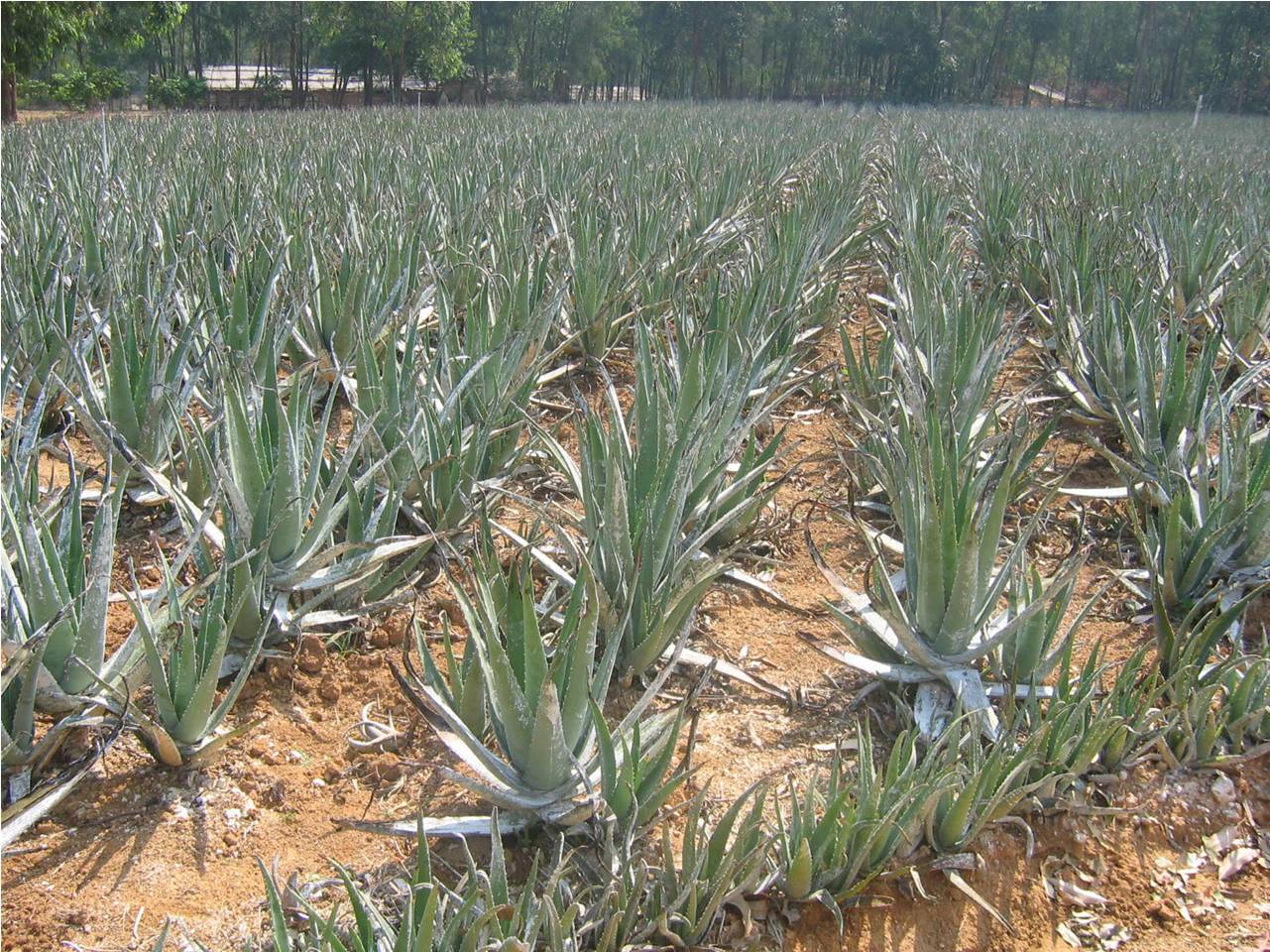
Aloe vera is a stemless succulent whose 30–60 cm leaves hold a clear, acemannan-rich gel and a yellow latex containing aloin — a staple of skincare, cosmetics, beverages and traditional medicine.
 LC
LCAlopecurus aequalis
Alopecurus aequalis
Poaceae
Alopecurus aequalis is a common species of grass known as shortawn foxtail or orange foxtail. It is native to much of the temperate Northern Hemisphere from Eurasia to North America. It is most commonly found in areas near fresh water, such as the margins of ponds and ditches.
 NE
NEAndrographis / Green chiretta
Andrographis paniculata
Acanthaceae family
Green chiretta (Andrographis paniculata), also called the 'king of bitters', is an annual herb in the Acanthaceae family native to India and Sri Lanka, widely cultivated across South and Southeast Asia as a cooling, detoxifying medicine for respiratory infections.
 NE
NEAnemone caroliniana
Anemone caroliniana
Ranunculaceae
Anemone caroliniana, the Carolina anemone, is a species of herbaceous flowering plant in the family Ranunculaceae. Plants grow (7)10 to 40 cm tall, from short tuber-like rhizomes that are 10–30 mm long. Stem leaves without petioles. Plants flowering early to mid spring with the flowers composed of 10 to 20 sepals (sometimes called tepals) normally white or soft rose colored but also purple, one flower per stem, the sepals are 10 to 22 mm long and 2–5 mm wide. Fruits in heads ovoid to subcylindric in shape, 17–25 mm long.
 NE
NEArabian jasmine
Jasminum sambac (L.) Aiton
Oleaceae family
Arabian jasmine (Jasminum sambac) is a fragrant shrub of the olive family with white flowers that release a rich sweet scent at night — the raw material for jasmine tea and prized jasmine absolute in perfumery.
 EN
ENArabica coffee
Coffea arabica L.
Rubiaceae family
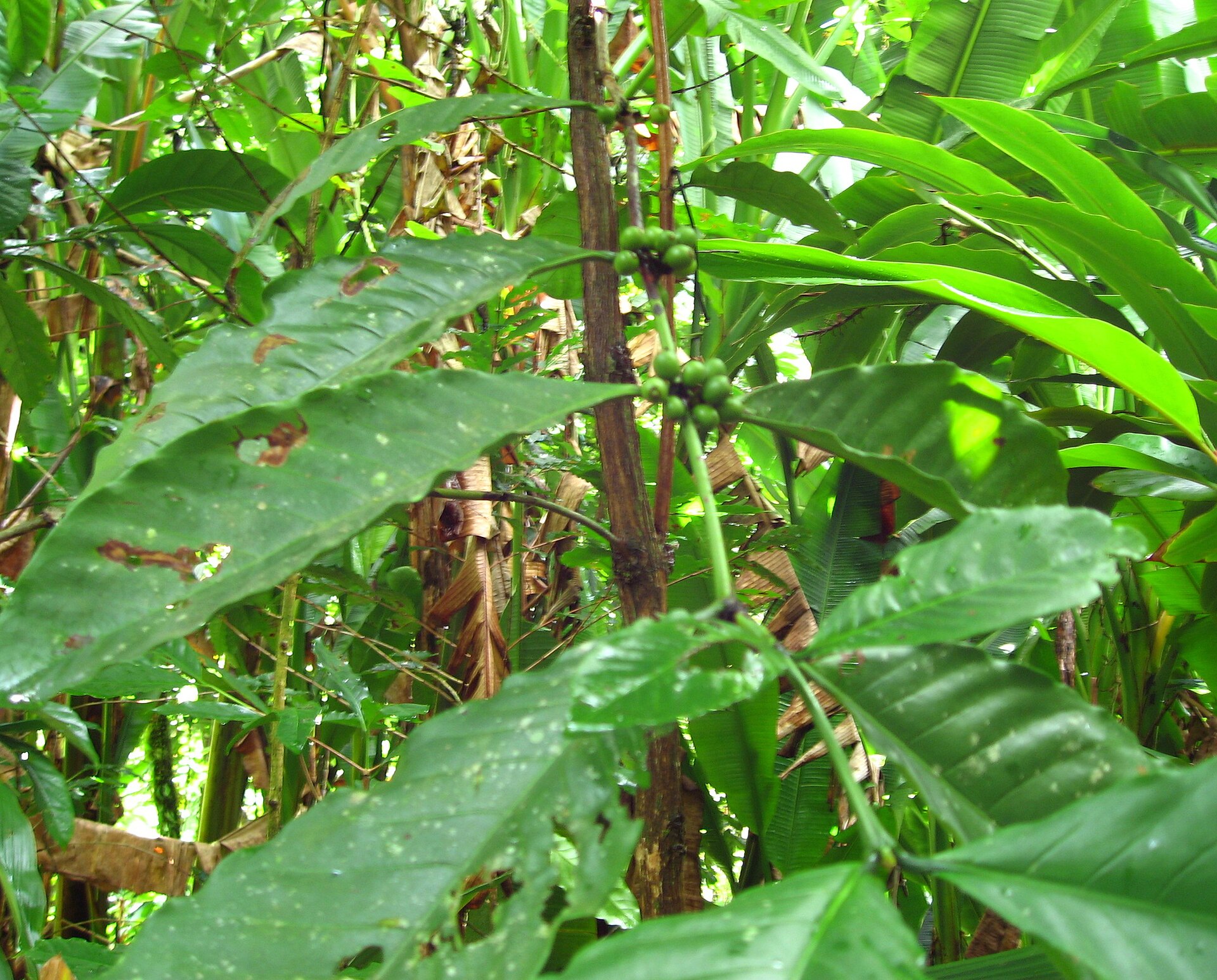
Arabica coffee (Coffea arabica) is an evergreen shrub of the coffee family whose red berries hold two beans; the world's most widely grown coffee species, native to highland Ethiopia and grown mainly in Vietnam's Central Highlands.
 LC
LCAreca nut
Areca catechu L.
Arecaceae (palm family)
Areca nut (Areca catechu) is a tall, slender single-stemmed palm whose seed is chewed with betel leaf and lime in the long-standing betel-chewing custom of Vietnam and Asia; its trunk is used for posts and rafters.
 NE
NEAristida vagans
Aristida vagans
Poaceae
Aristida vagans, the threeawn speargrass, is a species of grass native to Australia. Found in dry eucalyptus woodland or forest, it may reach 80 cm (30 in) tall. The specific epithet vagans is from Latin, meaning "wanderer". The plant was first collected by botanists in Sydney, and published in 1799 by the Spanish taxonomist Antonio José Cavanilles.
 LC
LCAsiatic pennywort
Centella asiatica (L.) Urb.
Apiaceae (carrot family)
Asiatic pennywort (Centella asiatica) is a small creeping herb of moist ground, rich in triterpene saponins (asiaticoside, madecassoside) that support wound healing, skin repair and cooling; its young leaves are eaten raw or juiced.