

Dong quai
Angelica sinensis (Oliv.) Diels
Dong quai (Angelica sinensis (Oliv.) Diels), also known as female ginseng, is a herbaceous plant belonging to the Apiaceae family. It is native to China and has been utilized traditionally for its purported medicinal properties.
No ratings yet — be the first!
Gallery
 Dong quaiDong quai
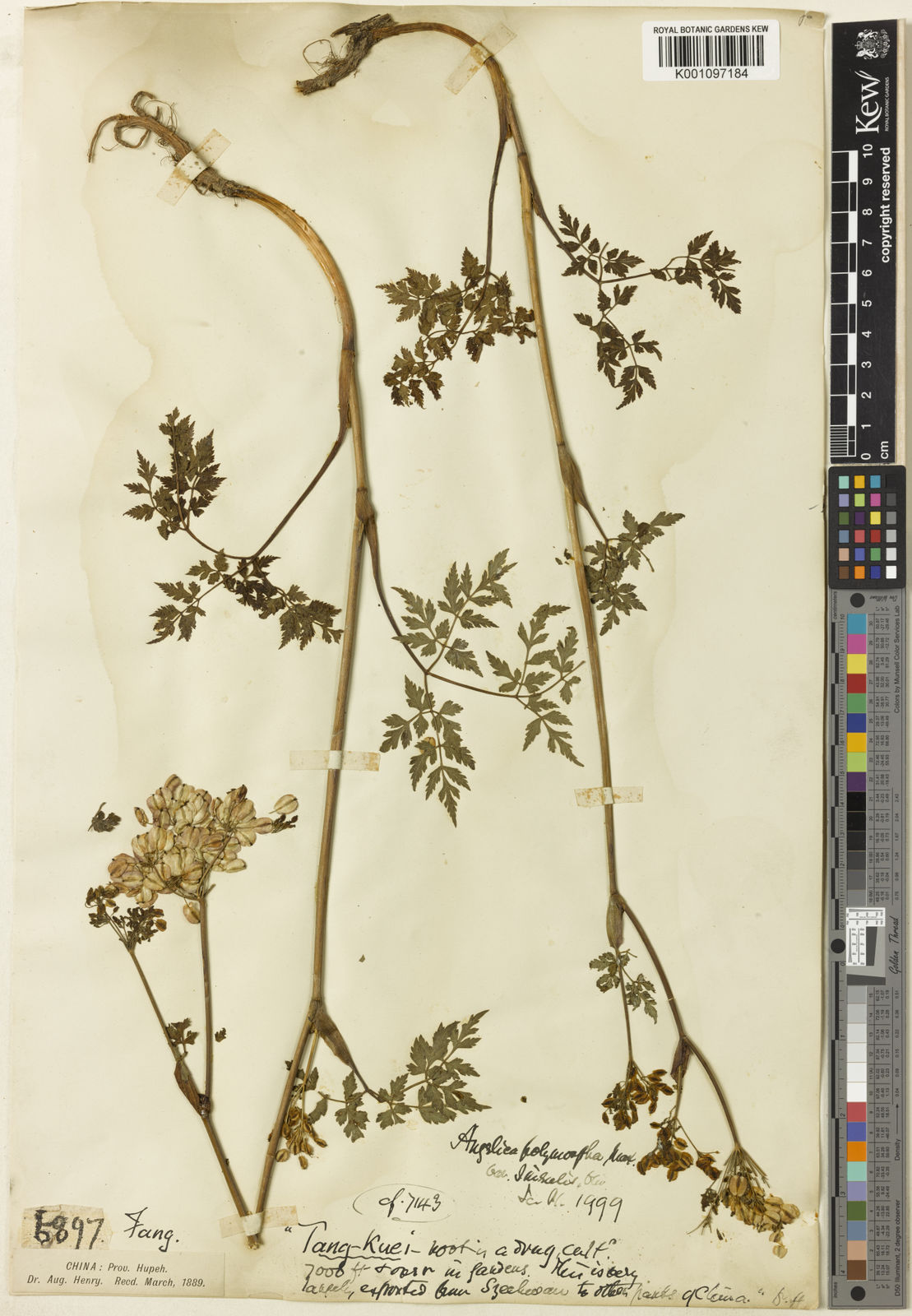 Dong quai
 Dong quai
 Dong quai
 Dong quai
 Dong quaiDong quaiDong quai
Overview
Angelica sinensis is a perennial herb typically growing in cool, high-altitude mountainous regions of East Asia. The plant exhibits a slender, erect stem reaching heights of up to 1.5 meters. It is characterized by its compound leaves, which are alternate and possess a distinctive aroma.
Updated by lebachungtdh@gmail.com · 10/15/2026
The flowers of Angelica sinensis are small, white, and arranged in umbel-shaped clusters. The root is the primary part of the plant utilized in traditional medicine, and it is a fleshy, nodular structure. The plant’s growth is associated with its adaptation to cooler, moist environments.
Updated by lebachungtdh@gmail.com · 10/15/2026
Thân rễ của đương quy là bộ phận được sử dụng làm thuốc, có màu nâu nhạt, hình trụ, vỏ ngoài trơn nhẵn. Rễ thường có nhiều nhánh, được coi là có dược chất cao nhất.
Updated by lebachungtdh@gmail.com · 10/15/2026
Uses
- Traditionally used in Chinese medicine.
- Commonly employed as a tonic to invigorate the blood.
- Believed to have properties that can promote circulation.
- Used in formulations for treating fatigue and weakness.
Habitat & conservation
Angelica sinensis is primarily found in cool, high-altitude mountainous regions of East Asia, particularly in China. It thrives in environments with moist soil and ample sunlight.
Conservation
Dong quai has not been assessed by the IUCN Red List (NE). As a medicinal plant that is harvested and cultivated, it benefits from sustainable collection and propagation to protect wild genetic resources.
References
- 1Wikipedia – Angelica sinensis — English Wikipedia,
- 2Kew POWO – Angelica sinensis — Plants of the World Online (Kew),
- 3Wikidata – Q2051387 — Wikidata,