
Lim
Erythrophleum fordii Oliv.
Lim (Erythrophleum fordii) is a valuable timber tree of southern China and Vietnamese tropical forests, yielding hard, durable, close-grained wood for pillars, bridges and boat building.
No ratings yet — be the first!
Gallery
 Lim xanh wood sample (Cirad xylotheque)Lim xanh tree
 Lim xanh leaves
 Lim xanh branch and leaves
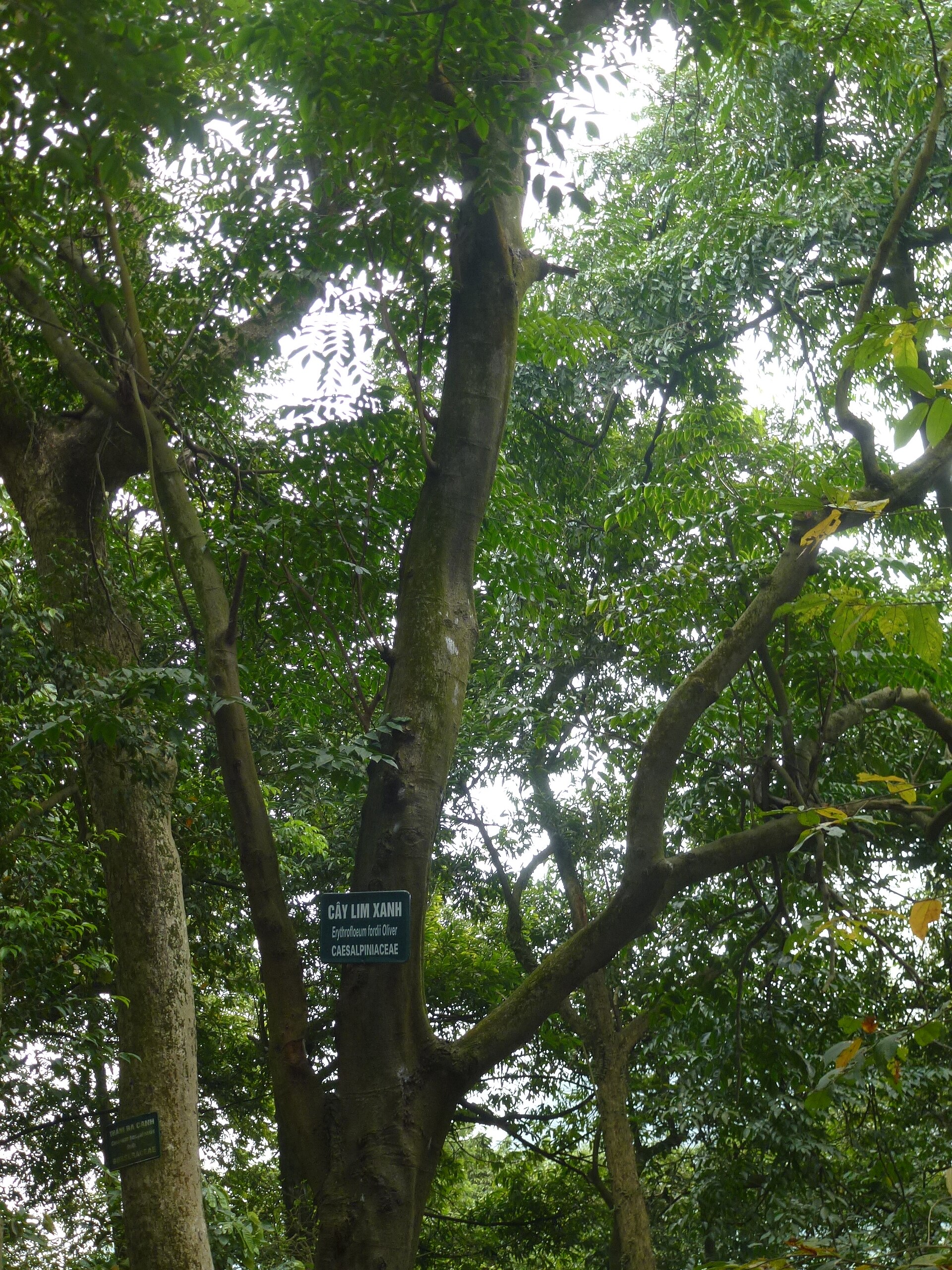 Lim xanh · photo 2
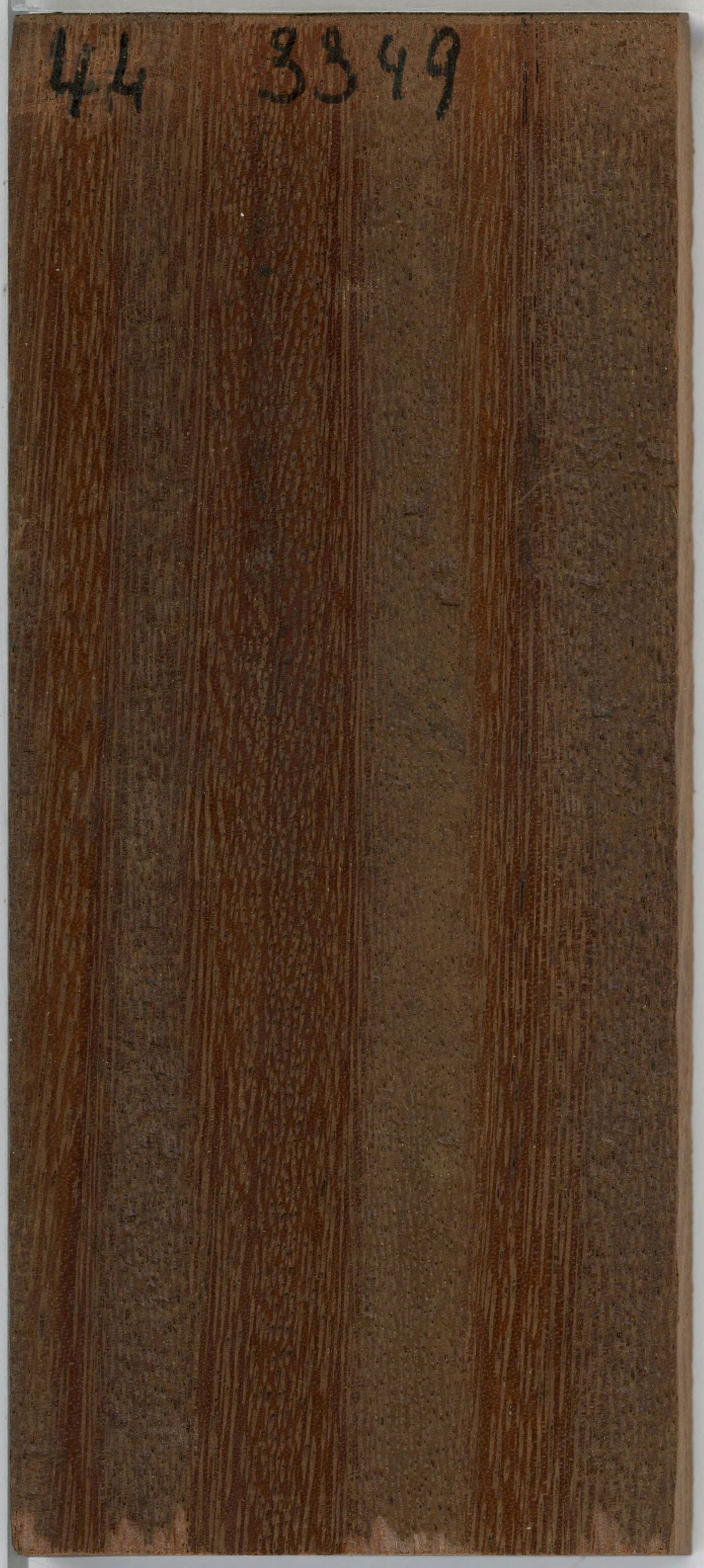 Lim xanh · photo 3Lim xanh wood sample (Cirad xylotheque)Lim xanh tree
Photo credits: Hungda (CC BY-SA 3.0) · Centre de coopération internationale en recherche agronomique pour le développement (France). Programme Bois. Producteur d'un fonds d'archives (Public domain)
Overview
The tree is usually about 10 m tall but can reach 30 m, with a dbh of up to 1.2 m and a broad crown. The wood is dark brown, close- and fine-grained, hard and heavy, highly resistant to termites and weather — among Vietnam's most prized hardwoods, favoured for centuries in traditional architecture.
Ranging from southern China into Indochina, it is often a dominant component of rain and monsoon forests up to about 800 m. Besides timber, its bark contains tannin used for dyeing cloth; Erythrophleum contains bitter alkaloids, so no part is used as food.
Life cycle
From seed to productSeed
Lim seeds develop in flat pods high in the crown; the flat, hard seed is kept somewhere cool and dry, then sown soon into deep, well-drained loam to retain viability.
Germination
Seeds germinate under the humid forest canopy in deep, well-drained loam; high humidity and canopy shade provide the right conditions.
Seedling
The seedling bears bipinnate leaves, prefers shade and grows slowly, gradually competing for light in the canopy.
Mature plant
After decades the tree reaches 10–30 m with a straight, dark-barked trunk; the hard, close-grained heartwood is fully formed.
Logging
Timber is harvested under control, sawn and dried for construction, boat building and furniture; bark is collected for tannin dye.
Distribution & origin
Share of recorded occurrences by region- Vietnam34%
- Southern China30%
- Taiwan12%
- Laos10%
- Cambodia8%
- Thailand and elsewhere6%
Chemical composition
Relative content in agarwood resin- CelluloseStructural cell-wall polymer44%
- HemicelluloseMatrix polysaccharide20%
- LigninGives rigidity and brown colour30%
- Extractives (tannin)Tannin in bark and wood6%
Uses
- Pillars, beams and brackets in traditional architecture
- Boat building, bridges and submerged structures
- Flooring, fine furniture and craftwork
- Bark tannin for dyeing and tanning
Properties
- Colour
- Dark brown
- Grain
- Close, fine
- Durability
- Very durable, termite-resistant
- Working quality
- Hard, heavy timber
Habitat & conservation
Tropical rain and monsoon forests on deep loamy soils, from lowlands to mountain slopes around 800 m; most common in southern China and Vietnam.
Conservation
Erythrophleum fordii is listed as Endangered (EN) on the IUCN Red List. In China, populations are largely reduced to lone trees around settlements and plantations cannot meet wood demand; in Vietnam it is nationally Red-Listed and heavily logged.
References
- 1Flora of China — Erythrophleum fordii — , 2010
- 2IUCN Red List — Erythrophleum fordii — , 2024
- 3Trees of Laos and Vietnam — A Field Guide to 100 Species — , 2004
- 4Nguồn ảnh: Hungda (CC BY-SA 3.0) / Taishuwmdiar (CC BY-SA 4.0) — Wikimedia Commons,