Pear
Pyrus pyrifolia (Burm.f.) Nakai
Pear (Pyrus pyrifolia) is a deciduous tree of the rose family; its round, crisp fruit has yellow-brown skin and a sweet, refreshing, juicy taste — eaten fresh or juiced and stewed; famous in cool highlands like Sa Pa and Mộc Châu.
No ratings yet — be the first!
Gallery
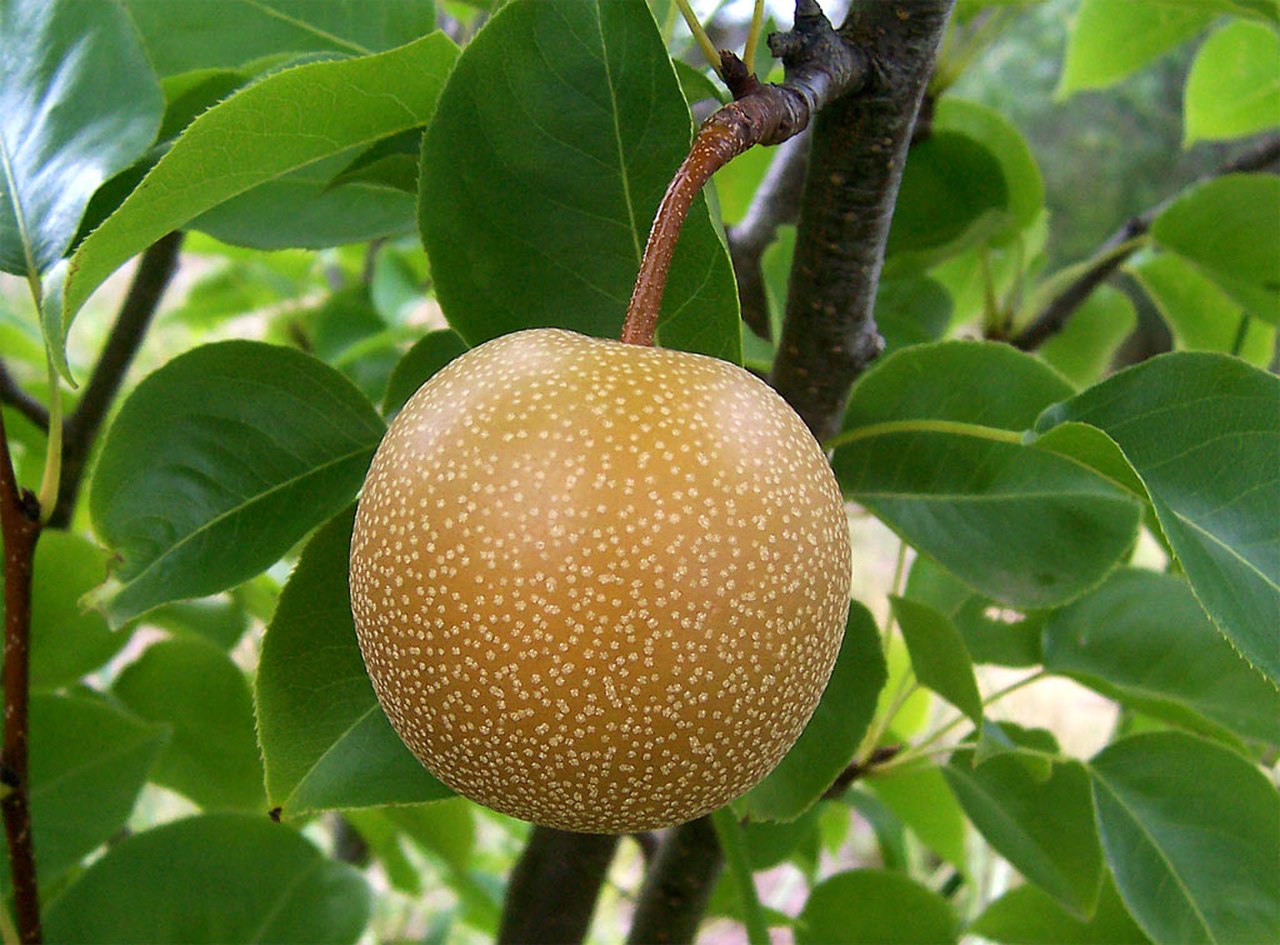
Pear fruitOverview
Pear is a deciduous tree 5–12 m tall with an open crown; its simple oval leaves have sharp-toothed margins and are slightly downy when young. White five-petalled flowers open before or with the leaves in spring. The pome is spherical, 5–10 cm across, with thin speckled yellow-brown skin; the flesh is crisp white, very juicy and mildly sweet, with a small seed core in the centre.
Pear originated in East Asia (China, Japan, Korea); in Vietnam it is grown in Sa Pa (Lào Cai), Mộc Châu (Sơn La) and Hà Giang. The fruit is eaten fresh, juiced, stewed with rock sugar (a cough remedy), and made into pear wine and jam. Traditional medicine regards pear as sweet and cooling, moistening the lungs, clearing heat and reducing phlegm; it is rich in fibre and vitamin C.
Distribution & origin
Share of recorded occurrences by region- China40%
- Japan & Korea20%
- Vietnam10%
- Others30%
Chemical composition
Relative content in agarwood resin- Dietary fibreSupports digestion40%
- Vitamin CAntioxidant30%
- Water and mineralsCooling30%
Uses
- Eaten fresh and juiced
- Stewed with rock sugar as a cough remedy
- Pear wine and jam
Properties
- Taste
- Sweet, refreshing, crisp, juicy
- Value
- Moistens lungs, clears heat
Habitat & conservation
Cool temperate to subtropical with cold winters; deep, well-drained soil.
Conservation
Widely cultivated; not threatened.
References
- 1Kew Science – Plants of the World Online: Pyrus pyrifolia — Kew (Plants of the World Online), 2026
- 2Wikipedia – Pyrus pyrifolia — Wikipedia, 2026