

Rosemary
Salvia rosmarinus Spenn.
Rosemary (Salvia rosmarinus) is a mint-family shrub with fragrant needle-like leaves used to season meat and for essential oil; rich in rosmarinic acid and antioxidants; grown in sunny, well-drained sites; popular in Vietnam.
No ratings yet — be the first!
Gallery
 Rosemary — Mature shrubRosemary — Plant
 Rosemary — Branches
 Rosemary — Flowers
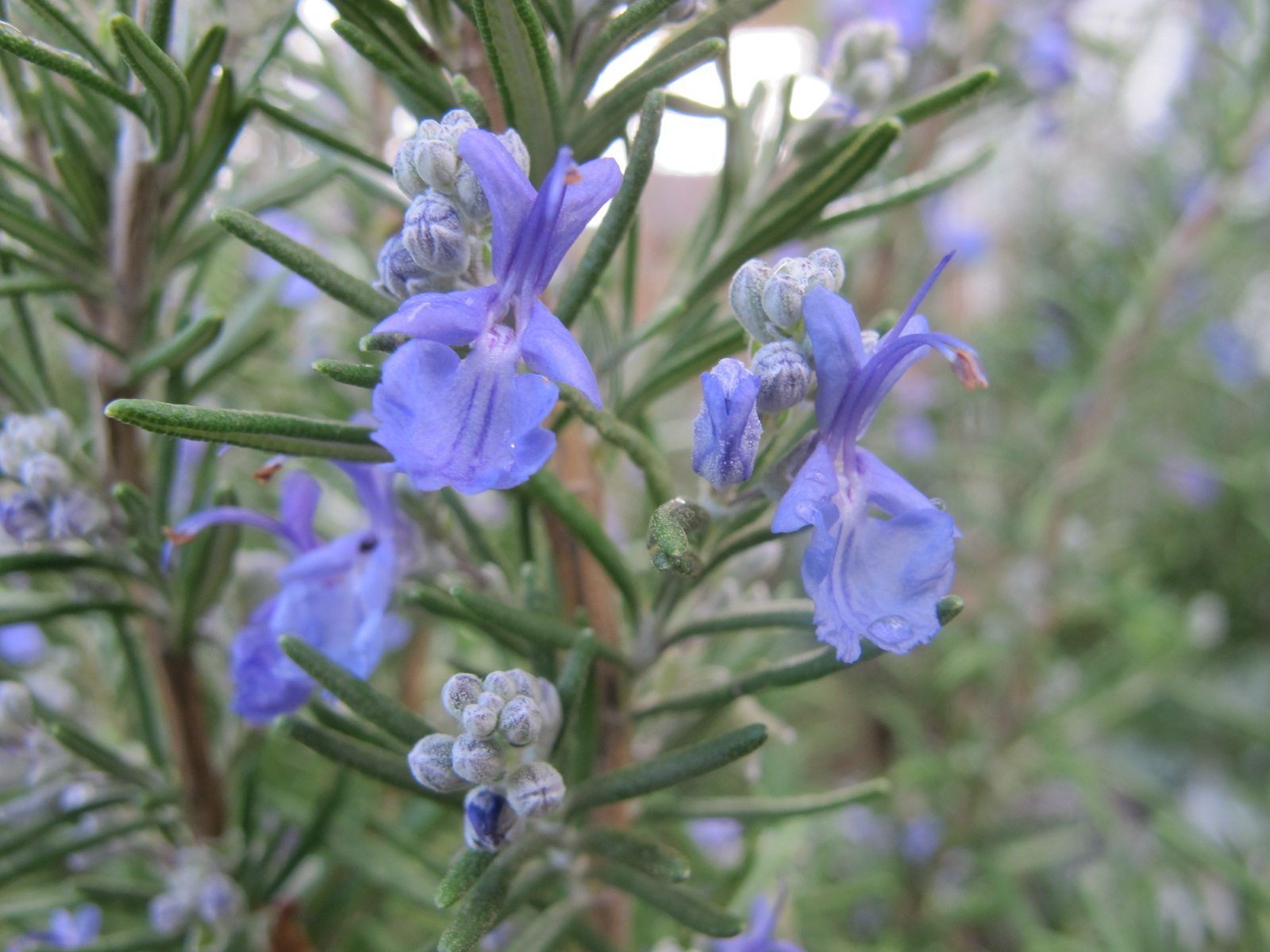 Rosemary — Flower close-up
 Rosemary — Dried branchesRosemary — Mature shrubRosemary — Plant
Overview
Rosemary (Salvia rosmarinus, synonym Rosmarinus officinalis) is an evergreen shrub of the mint family (Lamiaceae), 0.5–1.5 m tall, with prostrate or erect branches and a woody base. The leaves are narrow and needle-like, 2–4 cm long, glossy green above, densely white-hairy beneath, with rolled margins and a characteristic pungent aroma. The flowers are blue or pale violet, with a clear upper and lower lip, arranged in whorls around the branches at the leaf axils; they bloom mainly in spring and summer. The fruit is four small nutlets. The whole plant is fragrant from essential oil; both fresh and dried leaves are usable, making rosemary a famous herb of Mediterranean cuisine and medicine.
Rosemary originates from the Mediterranean (Spain, Italy, Greece) and has been an icon of European cuisine and culture since antiquity; today it is grown worldwide. In Vietnam it is cultivated mainly in Da Lat, Sapa, the Central Highlands and other cool regions; the leaves season lamb, chicken and fish, and are used for roasting, stir-fry, focaccia and herb salts. Leaves and oil contain 1,8-cineole, camphor, alpha-pinene plus rosmarinic acid, carnosol and caffeic acid — powerful antioxidant polyphenols; the oil is used in perfumes, shampoos, soaps and food flavourings. Folk use of leaf infusions supports memory, circulation and digestion; research records antibacterial, anti-inflammatory and liver-protective activity.
Life cycle
From seed to productPlant
Evergreen shrub with fragrant needle leaves.
Branches and leaves
Branchlets with needle leaves, white-hairy beneath.
Flowers
Blue-violet flowers in whorls.
Mature shrub
Large rosemary bush in the garden.
Distribution & origin
Share of recorded occurrences by region- Mediterranean (Spain, Italy, Greece)35%
- Western Europe & North America25%
- Vietnam & East Asia20%
- Others20%
Chemical composition
Relative content in agarwood resin- Essential oil (1,8-cineole, camphor, alpha-pinene)Pungent30%
- Polyphenols (rosmarinic acid, carnosol)Antioxidant25%
- Flavonoids15%
- Fats & cellulose20%
- Water & minerals10%
Uses
- Food: chopped leaves season lamb, chicken, fish; roast, stir-fry, focaccia, herb salt
- Medicine: supports memory, circulation, digestion; antioxidant (rosmarinic acid)
- Oil & cosmetics: perfumes, shampoos, soaps; food flavouring
- Farming: ornamental, hedging, balcony; easy cuttings; year-round leaf harvest
Properties
- Growth form
- Evergreen shrub, prostrate or erect
- Leaf
- Narrow needle, glossy above, white-hairy below
- Flower
- Blue/pale violet, profuse
- Aroma
- Pungent, persistent; dried leaves keep aroma
Habitat & conservation
Rosemary likes full sun, dry warm Mediterranean-type climate and well-drained, slightly alkaline soil; it tolerates drought well but dislikes waterlogging. Propagated by cuttings or seed; grown in pots or beds with regular pruning. In Vietnam it grows in cool areas (Da Lat, Sapa, the Central Highlands); drainage must be ensured in the rainy season.
Conservation
A widely cultivated species, not threatened; not listed by IUCN/CITES. Modern taxonomy places Rosmarinus officinalis within the genus Salvia.
References
- 1Plants of the World Online — Salvia rosmarinus Spenn. — Kew Science, 2026
- 2Rosemary — mô tả, lịch sử, sử dụng — Wikipedia tiếng Anh, 2026
- 3Hương thảo — thảo mộc, canh tác ở Việt Nam — Wikipedia tiếng Việt, 2026
- 4Salvia rosmarinus — axit rosmarinic, tinh dầu, hoạt tính chống oxy hóa — Nghiên cứu dược liệu, 2023
- 5Nguồn ảnh: T137 (CC BY-SA 3.0) / Krzysztof Ziarnek (CC BY-SA 4.0) / Syrio (CC BY-SA 4.0) — Wikimedia Commons,
- 6Nguồn ảnh: Margalob (CC BY-SA 4.0) / Roger Culos (CC BY-SA 4.0) / Christian Ferrer (CC BY 4.0) — Wikimedia Commons,