Sacred lotus
Nelumbo nucifera Gaertn.
Sacred lotus (Nelumbo nucifera) is a rhizomatous aquatic herb with flowers 15–30 cm across and seeds that can germinate after more than 1,000 years. Its leaves are rich in nuciferine while the seed embryo (plumule) holds liensinine, isoliensinine and neferine, alkaloids studied for cardiovascular, metabolic and anticancer activity.
No ratings yet — be the first!
Gallery
 Lotus — Flower budSen · ảnh 1
 Lá xanh
 Sen · ảnh 3
 Lotus — Plant
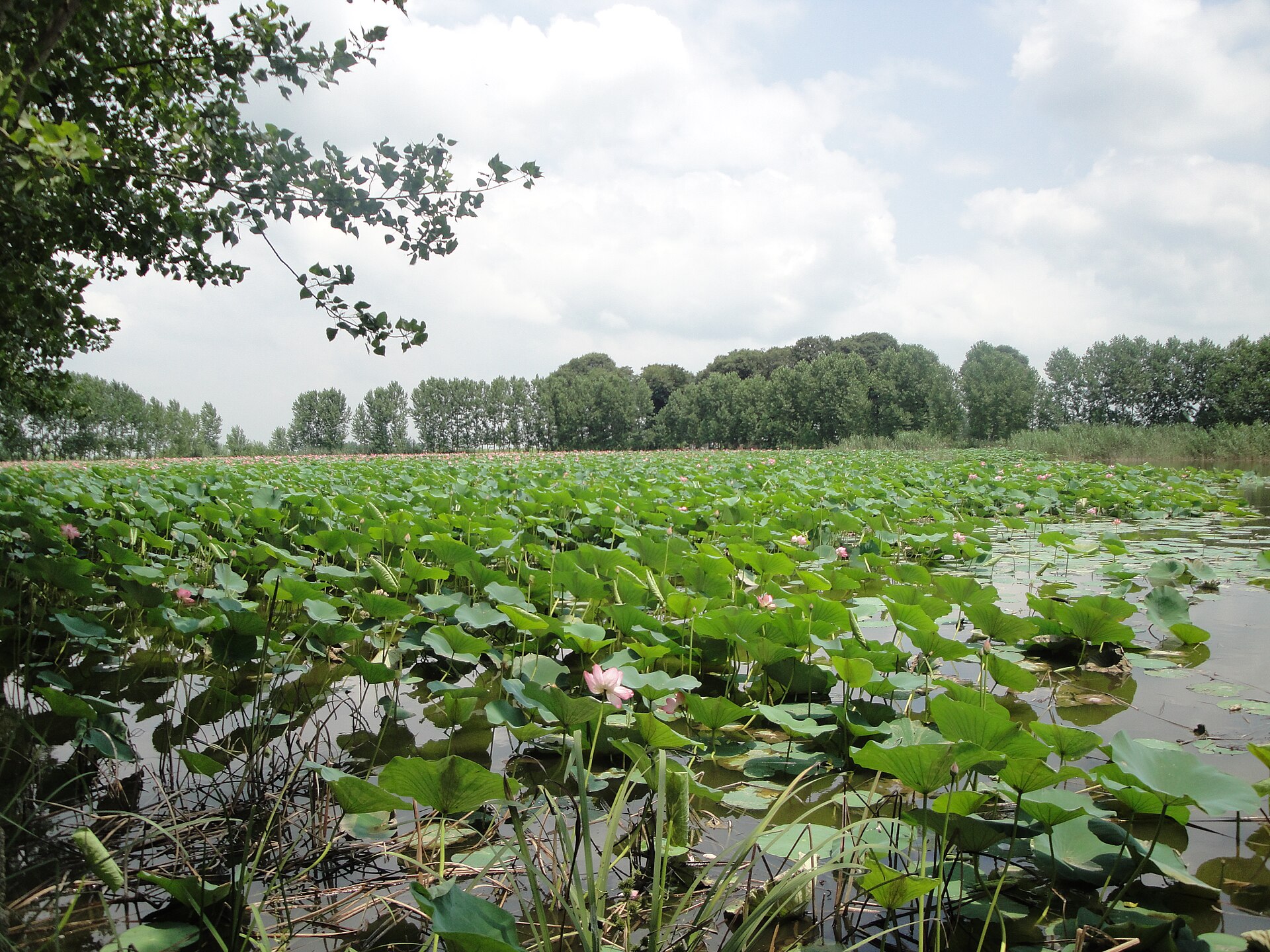
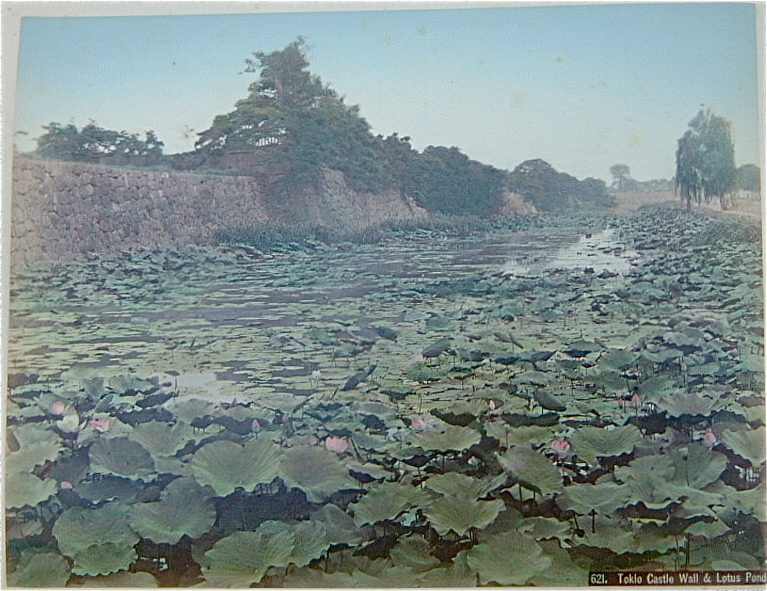
 Lotus — FlowerLotus — Flower budSen · ảnh 1
Photo credits: Pesare amol (CC BY-SA 3.0) · Kusakabe Kimbei (Public domain) · Bùi Thụy Đào Nguyên (CC BY-SA 3.0)
Overview
Sacred lotus is a perennial aquatic herb whose rhizome (lotus root) creeps through mud; petioles 1–2 m long raise peltate leaves above the water. The large bisexual flower, 15–30 cm across, is thermogenic and warms to 30–36 °C to attract beetle pollinators; each flower opens over 3–4 consecutive mornings before fading. Seeds have a very hard coat and deep embryo dormancy, retaining viability for centuries — a Chinese specimen germinated after more than 1,000 years.
According to Kew POWO, Nelumbo nucifera has a very wide native range: from Ukraine and northern Iran across the Caucasus, the Russian Far East, China, Japan, Korea, the Indian subcontinent, Southeast Asia and New Guinea to northern and north-eastern Australia. It has been introduced and cultivated in the Americas, Africa and many Pacific islands. The family Nelumbonaceae contains a single genus, Nelumbo, with just two species: N. nucifera (Asia–Oceania) and N. lutea (the Americas), separated only geographically, not reproductively.
Lotus accumulates benzylisoquinoline alkaloids (BIAs) in almost all tissues; at least 59–61 BIAs have been identified, falling into three groups: 1-benzylisoquinolines, aporphines and bisbenzylisoquinolines. The leaves are rich in aporphines such as nuciferine and roemerine, whereas the seed embryo (plumule) concentrates bis-BIAs including liensinine, isoliensinine, neferine and nelumboferine. Notably, most lotus BIAs are R-conformers, in contrast to the S-conformers typical of Ranunculales. Besides alkaloids, lotus contains flavonoids (quercetin, kaempferol, rutin), phenolic acids, tannins and polysaccharides; its genome was published in 2013.
In East Asian medicine, lotus leaf clears heat, the plumule calms the mind and lowers blood pressure, and the seed tonifies spleen and kidney; lotus root, stems and seeds are staple foods. Modern research focuses on the alkaloids: nuciferine shows anti-obesity, lipid-lowering and hypoglycaemic effects; neferine is anti-arrhythmic, anti-hypertensive and anticancer and inhibits Ca2+-dependent membrane fusion by SARS-CoV-2; liensinine and isoliensinine suppress cancer cells by inducing apoptosis. A 2023 review notes that lotus alkaloids have low bioavailability that can be improved with nanoliposomes or microcapsules.
The plumule and leaf carry potent alkaloids, so standardised preparations are advisable and overuse should be avoided; caution is warranted in pregnancy, in cardiac patients on medication and in young children. The species is not fully assessed — Kew records the IUCN status as Data Deficient (DD), while some regional assessments (India) list it as Least Concern (LC). The main risks are loss of wetlands and pond pollution, plus erosion of native landraces through hybridisation; widespread cultivation and long-lived seeds mean the species is not at high extinction risk.
Life cycle
From seed to productRhizome division
Lotus is grown mainly from rhizome divisions: healthy eyed sections are split and pressed into the mud; lotus seed can still be sown and keeps its germination power for centuries.
Sprouting & floating leaves
Rhizome eyes break and rise to the surface; round floating leaves appear first, followed by emergent leaves standing above the water.
Seedling
The rhizome creeps in the mud, sending up roots and leaf stalks; rolled young leaves emerge and open into floating peltate blades.
Mature plant
The mature plant grows in 0.3 – 1.5 m of muddy water under full sun at 25 – 35 °C; leaf stalks 1 – 2 m long hold peltate blades afloat.
Flowering & seeding
The flower opens for three to four mornings, warmed by thermogenesis and pollinated by beetles; after wilting the receptacle swells into a showerhead pod holding the seeds.
Harvest
Seeds are collected when the pods dry, rhizomes are pulled from the mud in autumn and winter, while young stalks and flowers are picked through the growing season.
Distribution & origin
Share of recorded occurrences by region- China30%
- India · South Asia20%
- Southeast Asia (Vietnam · Thailand · Indonesia…)20%
- Japan · Korea · Taiwan12%
- Australia · New Guinea5%
- Iran · Caucasus · Ukraine5%
- Other (introduced to the Americas · Africa)8%
Chemical composition
Relative content in agarwood resin- Nuciferine (aporphine, leaf)Anti-obesity, lipid- and glucose-lowering24%
- Liensinine · isoliensinine (bis-BIA, plumule)Anticancer, cardioprotective, antioxidant20%
- Neferine (bis-BIA, plumule)Anti-arrhythmic, anti-hypertensive, anticancer16%
- Roemerine & other aporphines (leaf)Mild sedative, anti-inflammatory12%
- Flavonoids (quercetin, kaempferol, rutin)Antioxidant, vascular protective16%
- Phenolic acids, tannins & othersCo-occurring constituents12%
Uses
- Culinary: lotus root, stems, seeds, sweet soup, plumule tea
- Traditional medicine: leaf clears heat, plumule calms the mind and lowers blood pressure
- Lotus-leaf tea and supplements (lipid-lowering support)
- Alkaloid research: nuciferine (metabolism), neferine/liensinine (cardiovascular, cancer)
- Cosmetics and skincare from leaf and flower extracts
- Water-garden ornament and religious symbol (Buddhism · Hinduism)
Properties
- Air channels in rhizome
- 7 – 13 channels
- Rhizome colour
- Pale ivory
- Flavour
- Sweet, starchy and crisp
- Pond-mud pH
- 5.5 – 7.5
Habitat & conservation
Shallow freshwater wetlands such as ponds, lakes, swamps, floodplains and lagoons, roughly 0.3–1.5 m deep, in warm-temperate to tropical climates; it favours thick organic-rich mud and full sun.
Conservation
Kew records the IUCN status as Data Deficient (DD); some regional assessments, such as India's, list it as Least Concern (LC). Because lotus is widely cultivated across Asia it is not globally threatened with extinction; the main risks are wetland loss, pond pollution and the erosion of native landraces through hybridisation. Long-lived seeds help conserve genetic resources over the long term.
References
- 1Plants of the World Online — Nelumbo nucifera Gaertn. — , 2024
- 2Sacred lotus — Nelumbo nucifera (IUCN Red List status: Data Deficient) — , 2024
- 3Wang Z. et al. Alkaloids from lotus (Nelumbo nucifera): recent advances in biosynthesis, pharmacokinetics, bioactivity, safety and industrial applications. Crit Rev Food Sci Nutr 63(21):4867–4900 — , 2023
- 4Lotus (Nelumbo nucifera) benzylisoquinoline alkaloids: chemical profiling, extraction, pharmacology and biosynthesis. Vegetable Research 4:e004 — , 2024
- 5Genome of the sacred lotus Nelumbo nucifera Gaertn. — , 2013
- 6Bhat S., Joghee S., Iyer M.S. The Therapeutic Potential of Nelumbo nucifera: A Comprehensive Review. Int J Health Allied Sci 12(4) — , 2023
- 7GRIN Taxonomy — Nelumbo nucifera Gaertn. — , 2024
- 8An updated review on pharmacological properties of neferine — a bisbenzylisoquinoline alkaloid from Nelumbo nucifera — , 2021
- 9Nguồn ảnh: FreCha (CC BY-SA 4.0) — Wikimedia Commons,
- 10Nguồn ảnh: Peripitus (CC BY-SA 4.0) — Wikimedia Commons,
- 11Nguồn ảnh: Frank "Fg2" Gualtieri (Public domain) — Wikimedia Commons,