Tea plant
Camellia sinensis (L.) Kuntze
Green tea is the unfermented leaf of Camellia sinensis, the plant behind the world's most consumed beverage after water, rich in catechins (EGCG), caffeine and L-theanine.
No ratings yet — be the first!
Gallery
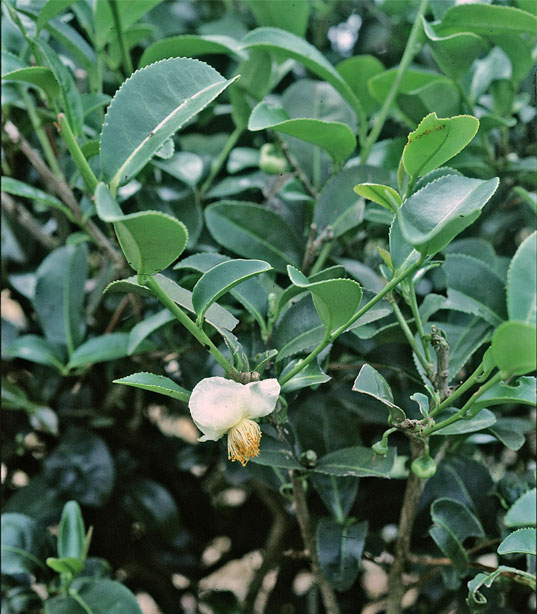
 Green tea — Flower (tea plant)Trà xanh
 Trà xanh
 Trà xanh
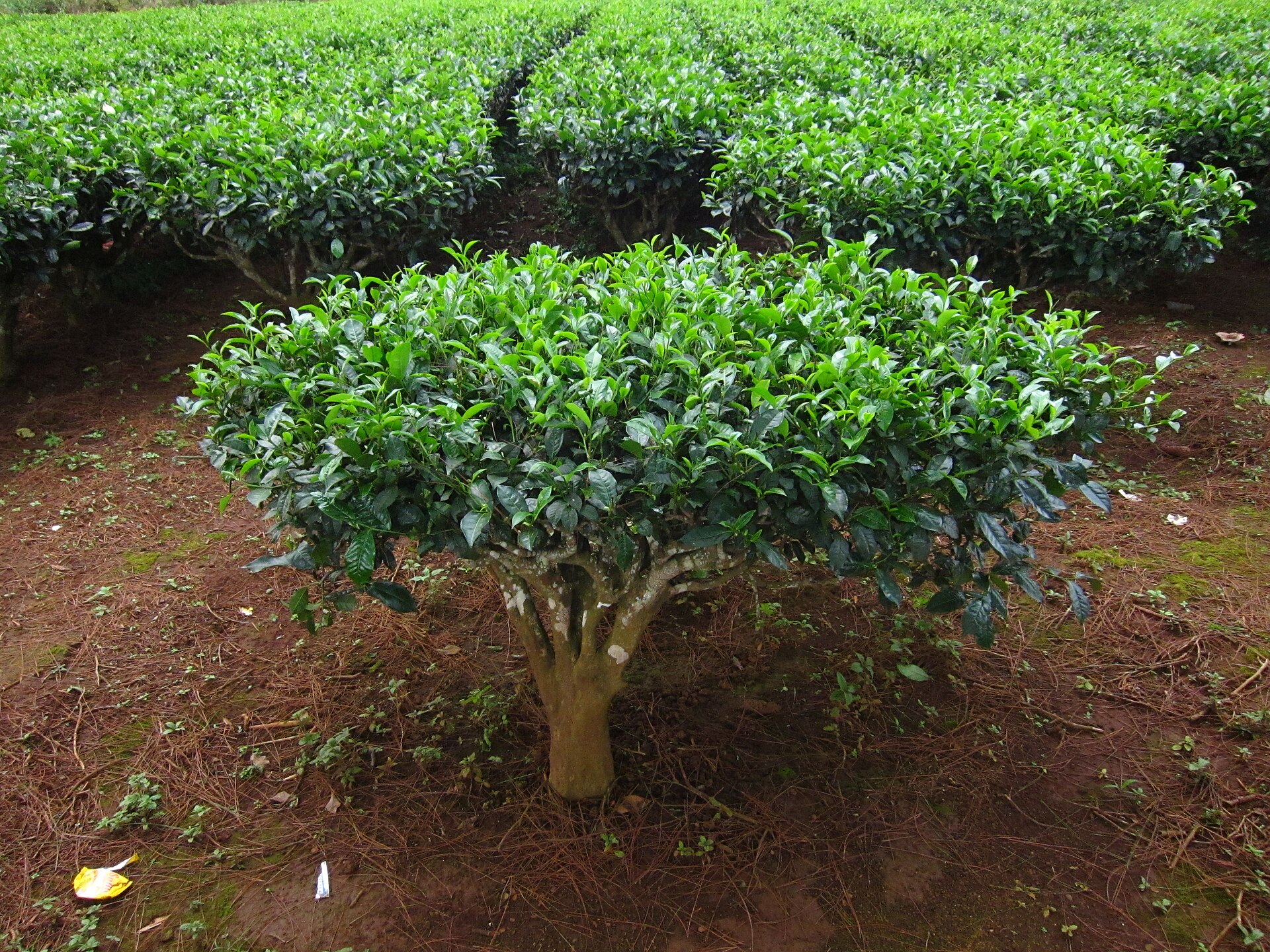
 Green tea — Tea plantation
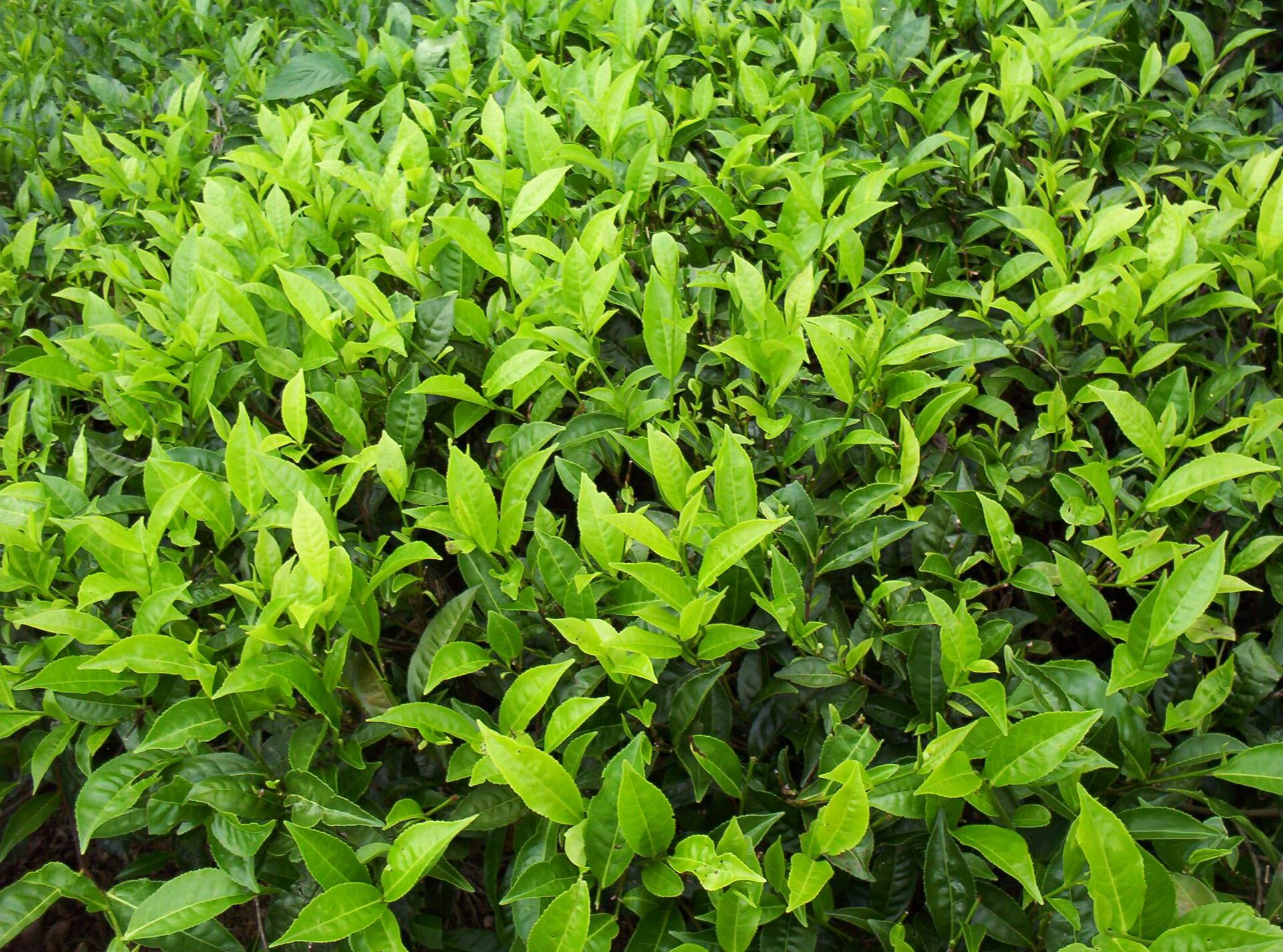
 Green tea — Tea leavesGreen tea — Flower (tea plant)Trà xanh
Photo credits: Prenn (CC BY-SA 3.0) · Author/Source: Chamara Ratnaweera (Public domain) · The original uploader was Simona Chesauan at Romanian Wikipedia. (CC BY-SA 3.0)
Overview
The tea plant (Camellia sinensis) is a shrub or small tree, reaching 10–15 m in the wild but usually kept at 0.8–1.2 m in plantations for plucking. Leaves are evergreen and glossy with toothed margins, and the white five-petalled flowers have yellow stamens. All true teas — green, white, oolong, black and pu-erh — come from this one species and differ mainly in the degree of polyphenol oxidation. The plant favours a humid climate with acidic soil (pH 4.5–5.5), good drainage and frequent mist; higher-altitude gardens give finer leaf because of cooler temperatures and diffused light.
According to Plants of the World Online (Kew), the native range of tea is East Himalaya to South China and northern Indochina, including Hainan. Domesticated in China millennia ago, it is now grown throughout the tropics and subtropics: China and India lead production, followed by Kenya, Sri Lanka, Vietnam, Indonesia, Turkey and Japan. Tea is propagated mainly by cuttings and comes into picking about three years after planting.
Tea leaves contain catechins — led by epigallocatechin gallate (EGCG), usually 50–60% of total catechins — with total catechins at least 8% of the dried leaf according to the European Pharmacopoeia. They also contain 2–4% caffeine, the amino acid L-theanine (~1% of dry weight) that gives the umami finish, plus theobromine, flavonol glycosides and minerals. Green tea is unfermented, so its catechins remain intact, whereas black tea oxidises them into theaflavins and thearubigins.
Tea is the world's second most consumed beverage after water, taken as hot tea, iced tea, matcha and food flavouring; in Chinese, Japanese and East Asian traditional medicine it is used to promote alertness, aid digestion and cool the body. On clinical evidence, a meta-analysis of 55 randomised trials (Frontiers in Nutrition, 2023) found that green tea supplementation improved some cardiovascular risk factors such as total and LDL cholesterol; recent reviews (Molecules, 2025; Ferrari et al., 2025) note EGCG's potential in metabolism, antioxidant defence and cancer, though cancer-trial results remain mixed and inconclusive. EFSA assessed the safety of green tea catechins in 2018.
Tea drunk in moderation is generally safe; however, high-dose green tea extracts — especially EGCG taken on an empty stomach above about 800 mg/day — carry a risk of liver injury, and EFSA advises limiting supplemental doses. The caffeine in tea can cause insomnia and palpitations; pregnant women should limit intake. For conservation, Camellia sinensis is assessed by the IUCN as Data Deficient (DD; Rivers & Wheeler, e.T62037625A62037628, 2018) because the size and trend of the wild population are unknown; as a globally cultivated crop it is not threatened, and conservation priorities are landraces and heritage cultivars.
Life cycle
From seed to productTip cutting
Tea is grown mainly from cuttings: 10–15 cm soft tip shoots from vigorous mother bushes are inserted into loose, moist media in a shaded nursery; seed is reserved for new varieties.
Rooting & sprouting
Roots and new shoots appear after 4–8 weeks; young plants are moved to hardening beds until sturdy enough for the field.
Seedling
Seedlings need several months to harden off before field planting.
Mature plant
Plucking can begin after about three years; regular pruning keeps bushes low and stimulates new shoots.
Harvest
Leaves are plucked to the 'one bud plus one or two leaves' standard, with the spring flush (March–May) prized most and mechanical plucking common on large estates. The leaf is then withered, rolled (and oxidised for black tea), fired and shaped; for green tea oxidation is halted early by heating to preserve catechins.
Distribution & origin
Share of recorded occurrences by region- China42%
- India18%
- Vietnam10%
- Sri Lanka7%
- Kenya6%
- Japan · Taiwan · Rest of East Asia17%
Chemical composition
Relative content in agarwood resin- Catechins (EGCG)Main polyphenols, astringency40%
- CaffeineNatural stimulant20%
- L-theanine & amino acidsUmami and sweet finish15%
- Other polyphenols & tanninsTheaflavins when oxidised15%
- Vitamins & mineralsLeaf micronutrients10%
Uses
- A global beverage: hot tea, iced tea, cold brew
- Food ingredient: matcha, confectionery, tea-flavoured drinks
- Traditional medicine in China, Japan and East Asia
- Clinically studied for cardiovascular risk factors (cholesterol, LDL)
- EGCG studied in metabolism and cancer prevention (mixed results)
- Extract and supplement ingredient (with safe-dose limits)
Properties
- Tea type
- Unfermented (green tea)
- Liquor colour
- Pale yellow-green
- Taste
- Light astringency, sweet umami finish
- Aroma
- Fresh, grassy aroma
Habitat & conservation
Humid tropical and subtropical climate; acidic soil (pH 4.5–5.5) with good drainage and frequent mist. Higher-altitude gardens (often above 1,000 m) yield finer leaf thanks to cooler temperatures and diffused light.
Conservation
Camellia sinensis is assessed by the IUCN as Data Deficient (DD; Rivers & Wheeler, e.T62037625A62037628, 2018): it is widely cultivated and naturalised in many countries, but the size and trend of the wild population are unknown. Grown on millions of hectares, tea is not globally threatened; conservation focuses on landraces and heritage cultivars in its native range (East Himalaya to South China and northern Indochina).
References
- 1Camellia sinensis (L.) Kuntze — Plants of the World Online — , 2026
- 2Camellia sinensis — IUCN Red List assessment (Rivers & Wheeler, e.T62037625A62037628) — , 2018
- 3Ph. Eur. 04/2018:2668 — Green tea (Camellia sinensis non fermentata folium) — , 2018
- 4Scientific opinion on the safety of green tea catechins — , 2018
- 5The effects of green tea supplementation on cardiovascular risk factors: a systematic review and meta-analysis — , 2023
- 6Epigallocatechin Gallate (EGCG): Pharmacological Properties, Biological Activities and Therapeutic Potential — , 2025
- 7Catechins and Human Health: Breakthroughs from Clinical Studies — , 2025
- 8Flora of China, Vol. 12 — Theaceae — , 2007
- 9Nguồn ảnh: Muhirehussein12 (CC BY-SA 4.0) — Wikimedia Commons,
- 10Nguồn ảnh: VickyOmondi / Brian Oballa (CC0) — Wikimedia Commons,