Peppermint
Mentha × piperita L.
Peppermint (Mentha × piperita L.) is a hybrid mint from water mint (M. aquatica) crosses with spearmint (M. spicata), in the family Lamiaceae, native to Europe and Central Asia according to Kew's Plants of the World Online. Its leaf oil contains 30–55% menthol and 14–32% menthone; menthol activates the TRPM8 cold receptor to create a cooling sensation and blocks calcium channels to relax smooth muscle — the basis of its antispasmodic use, its role in irritable bowel syndrome, and its standing as a flavouring in confectionery, pharmacy and cosmetics.
No ratings yet — be the first!
Gallery
 Peppermint — Candy (product)Lá bạc hà
 Bạc hà · ảnh 2
 Đồng bạc hà
 Peppermint — Plant
 Peppermint — Tea (product)Peppermint — Candy (product)Lá bạc hà
Photo credits: Kızıl (CC BY-SA 4.0) · Simon Eugster --Simon 13:07, 2 July 2006 (UTC) (CC BY-SA 3.0) · KENPEI (CC BY-SA 3.0)
Overview
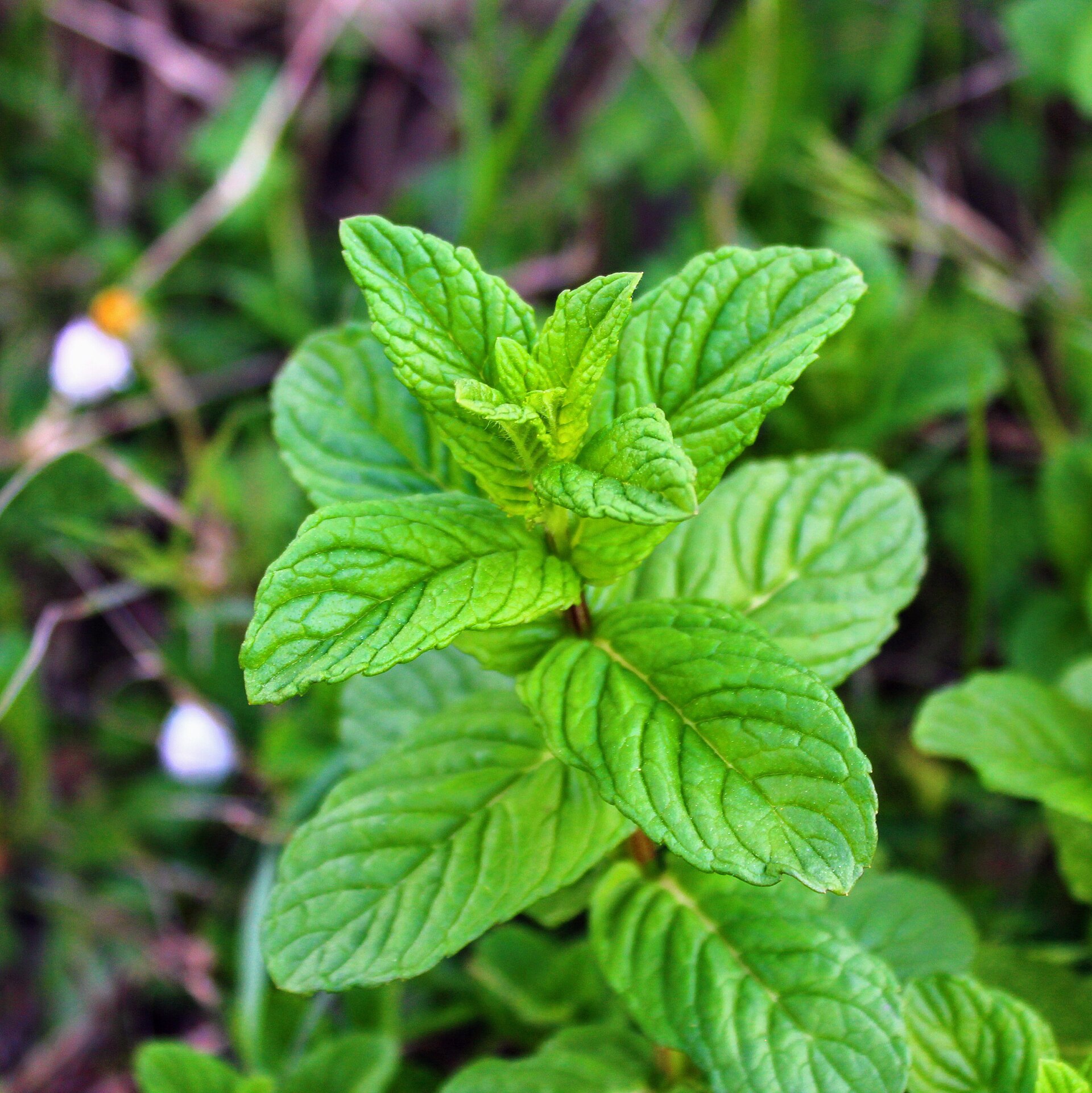
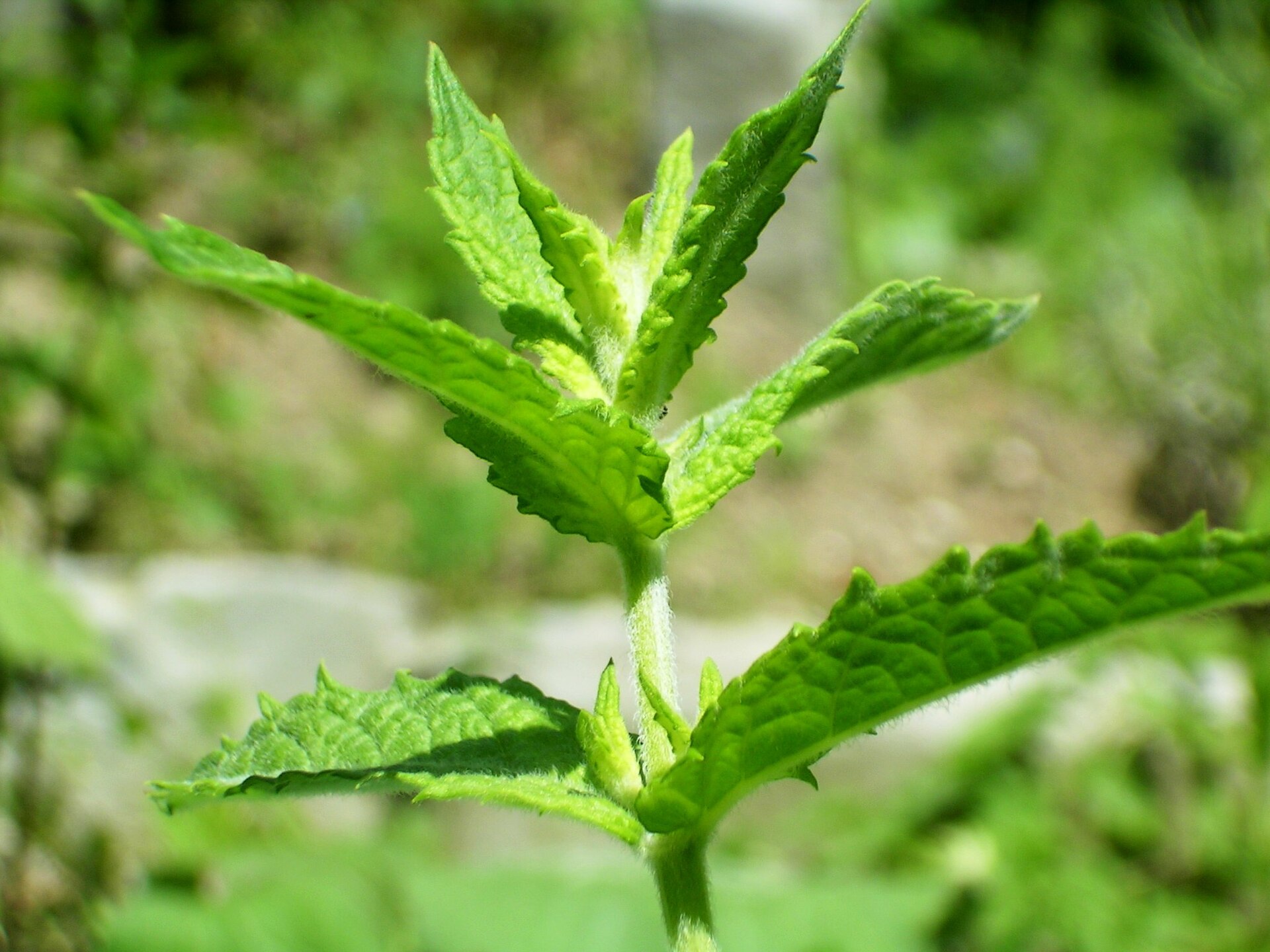
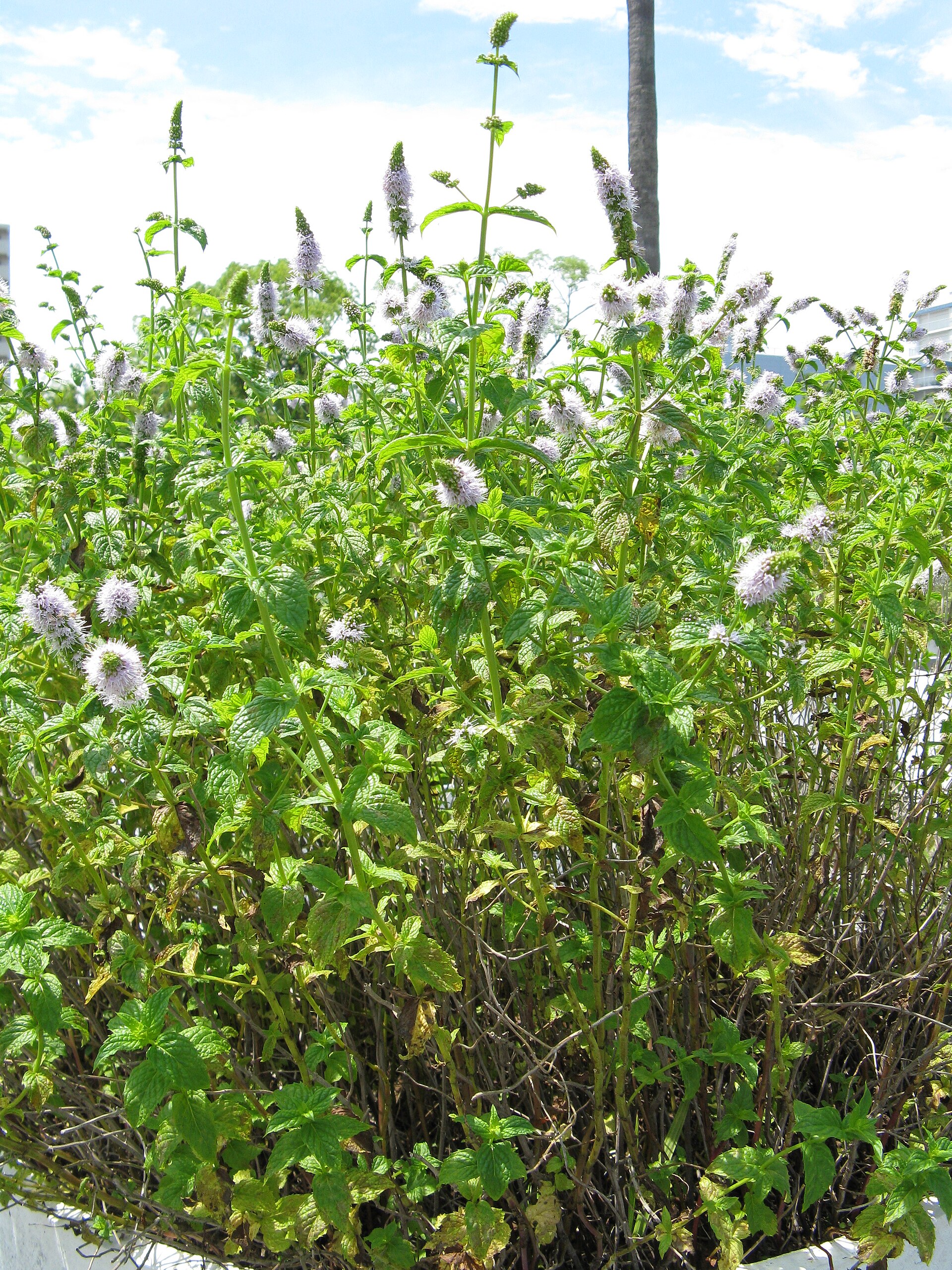
Peppermint (Mentha × piperita) is a perennial herb, a hybrid between water mint (Mentha aquatica) and spearmint (Mentha spicata), growing 30–90 cm and sometimes up to 1 m tall. The stems are square, erect and branched, often tinged red-purple; the opposite leaves are ovate to lanceolate, 4–9 cm long and 1.5–4 cm wide, with serrated margins, dark green surfaces and scattered oil glands (peltate trichomes). Small lilac flowers are grouped into terminal spikes in mid- to late summer; because it is a hybrid, the flowers are largely sterile and viable seed is rarely produced. The plant spreads widely by creeping stolons that form dense mats, so it is propagated mainly by cuttings and division.
According to Kew's Plants of the World Online the native range of Mentha × piperita is Europe to Central Asia, in the temperate biome, with the hybrid formula M. aquatica × M. spicata. It is a long-cultivated plant that has become established and naturalised in many humid temperate regions worldwide. Today the main producing areas are the United States (Washington, Oregon and Idaho), India (the plains of Uttar Pradesh), Europe (the UK, France and Germany), China and Egypt; it is also grown in Vietnam, mainly on a small scale for fresh leaves and oil distillation.
Steam distillation of the leaves yields peppermint oil whose main components are menthol (30–55%) and menthone (14–32%), accompanied by menthyl acetate, menthofuran (1–9%), 1,8-cineole, limonene, isomenthone, neomenthol and small amounts of pulegone; menthofuran is a characteristic marker of peppermint and rises when the crop is harvested too early. (−)-Menthol predominates; it activates the TRPM8 cold receptor (McKemy et al., Nature, 2002) to produce the cooling sensation and inhibits L-type calcium channels in smooth muscle, giving the oil its antispasmodic action. ISO 856 specifies the compositional ranges for the two traditional trade types, American and English (Mitcham) peppermint oil.
Peppermint has relatively strong clinical evidence for digestive complaints: the meta-analysis by Alammar et al. (BMC Complementary and Alternative Medicine, 2019), covering 12 randomised trials, showed that enteric-coated peppermint oil is safe and effective at relieving abdominal pain and global symptoms in adults with irritable bowel syndrome (IBS), and the systematic review and meta-analysis by Khanna et al. (Journal of Clinical Gastroenterology, 2014) reached a similar conclusion for short-term treatment. The mechanism is thought to involve menthol blocking calcium channels and relaxing intestinal smooth muscle. In addition, the review by McKay and Blumberg (Phytotherapy Research, 2006) covers the antispasmodic, antibacterial and antioxidant activities of peppermint tea, while the oil is used widely as a flavouring (confectionery, chewing gum, toothpaste, mouthwash), in cough remedies and cooling balms, and diluted topically for tension headache.
On safety, peppermint is GRAS as a flavouring and has been assessed by the Cosmetic Ingredient Review (International Journal of Toxicology, 2001). Peppermint oil can, however, cause heartburn and gastro-oesophageal reflux, so people with severe reflux should avoid it; enteric-coated capsules are designed to prevent release in the stomach. Caution is needed with gallstones or bile-duct obstruction, and the oil should not be applied to the face or nose of infants because menthol can trigger reflex apnoea. Pulegone is hepatotoxic at high doses in animals, but its level in peppermint oil is low (unlike pennyroyal); prolonged high-dose use is still best avoided. For conservation, the IUCN lists the hybrid as Not Evaluated and it is not in CITES; as a sterile, vegetatively propagated cultigen grown worldwide, peppermint is not threatened in the wild and its genetic resources are maintained mainly through clonal lines.
Life cycle
From seed to productStolon cutting
Peppermint is a hybrid that rarely sets viable seed; it is propagated mainly from stolons — 10–15 cm sections with nodes pressed into moist soil.
Sprouting
Nodes on the stolons send up shoots and fibrous roots within 1–2 weeks; the young plants anchor themselves and start spreading sideways.
Seedling
Young shoots form clumps while stolons creep sideways and raise new plants, letting mint cover the ground within a season.
Mature plant
Plants reach 30–90 cm and produce purple flower spikes in midsummer; leaf oil content peaks shortly before full bloom.
Harvest
Leafy tops are cut and steam-distilled into menthol-rich oil meeting the ranges specified in ISO 856.
Distribution & origin
Share of recorded occurrences by region- United States38%
- India18%
- Europe (UK, France, Germany)15%
- China12%
- Egypt7%
- Other regions10%
Chemical composition
Relative content in agarwood resin- MentholCooling via TRPM8; blocks calcium channels to relax smooth muscle45%
- MenthonePungent, cooling top note20%
- Menthyl acetateSoft fruity sweetness8%
- MenthofuranCharacteristic marker, rises with early harvest7%
- 1,8-CineoleLight camphoraceous note, expectorant support5%
- OthersLimonene, isomenthone, neomenthol, low pulegone and viridiflorol15%
Uses
- Flavouring for confectionery, chewing gum, baked goods and beverages
- Pharmacy: enteric-coated capsules for IBS (Alammar 2019; Khanna 2014), cough remedies and cooling balms
- Oral care: toothpaste, mouthwash and dental floss
- Perfumery, cosmetics and room fragrances
- Peppermint tea and refreshing drinks; digestive support (McKay & Blumberg 2006)
- Diluted topical oil to ease tension headache
Properties
- Scent
- Cooling, pungent, minty
- Taste
- Bitter-cool, lingering
- Cooling mechanism
- Activates the TRPM8 receptor
- Distillation
- Steam distillation of leaves
Habitat & conservation
A temperate-origin plant that favours cool, moist climates and deep, fertile, well-drained yet consistently moist loam (pH 6–7.5); it often grows along streams and ditches with shallow groundwater. It tolerates sun to half-shade and spreads rapidly by stolons into dense mats, but is poor at withstanding drought and hot dry winds. POWO places the hybrid in the temperate biome.
Conservation
Not Evaluated by the IUCN and not listed in CITES. Mentha × piperita is a largely sterile hybrid cultivated and propagated vegetatively worldwide, and its naturalised populations are not threatened. Conservation priorities are to maintain clonal lines and local landraces — especially the traditional Mitcham type — in gene banks and field collections, and to control mint rust (Puccinia menthae), the main threat to productivity.
References
- 1Plants of the World Online — Mentha × piperita L. — Kew Science, 2024
- 2ISO 856 — Oil of peppermint (Mentha × piperita L.) — International Organization for Standardization (ISO), 2006
- 3The impact of peppermint oil on the irritable bowel syndrome: a meta-analysis of the pooled clinical data — BMC Complementary and Alternative Medicine 19:21 (Alammar et al.), 2019
- 4Peppermint Oil for the Treatment of Irritable Bowel Syndrome: A Systematic Review and Meta-analysis — Journal of Clinical Gastroenterology 48(6):505 (Khanna et al.), 2014
- 5Identification of a cold receptor reveals a general role for TRP channels in thermosensation — Nature 416:52 (McKemy, Neuhausser & Julius), 2002
- 6A review of the bioactivity and potential health benefits of peppermint tea (Mentha piperita L.) — Phytotherapy Research 20(8):619 (McKay & Blumberg), 2006
- 7Final Report on the Safety Assessment of Mentha Piperita (Peppermint) Oil, Mentha Piperita Leaf Extract, Mentha Piperita Leaf, and Mentha Piperita Leaf Water — International Journal of Toxicology 20(Suppl 3):61 (CIR), 2001
- 8Nguồn ảnh: Pfefferminze natur peppermint (CC BY 3.0) / congerdesign (CC0) / Mikereichold (CC BY 3.0) — Wikimedia Commons,