
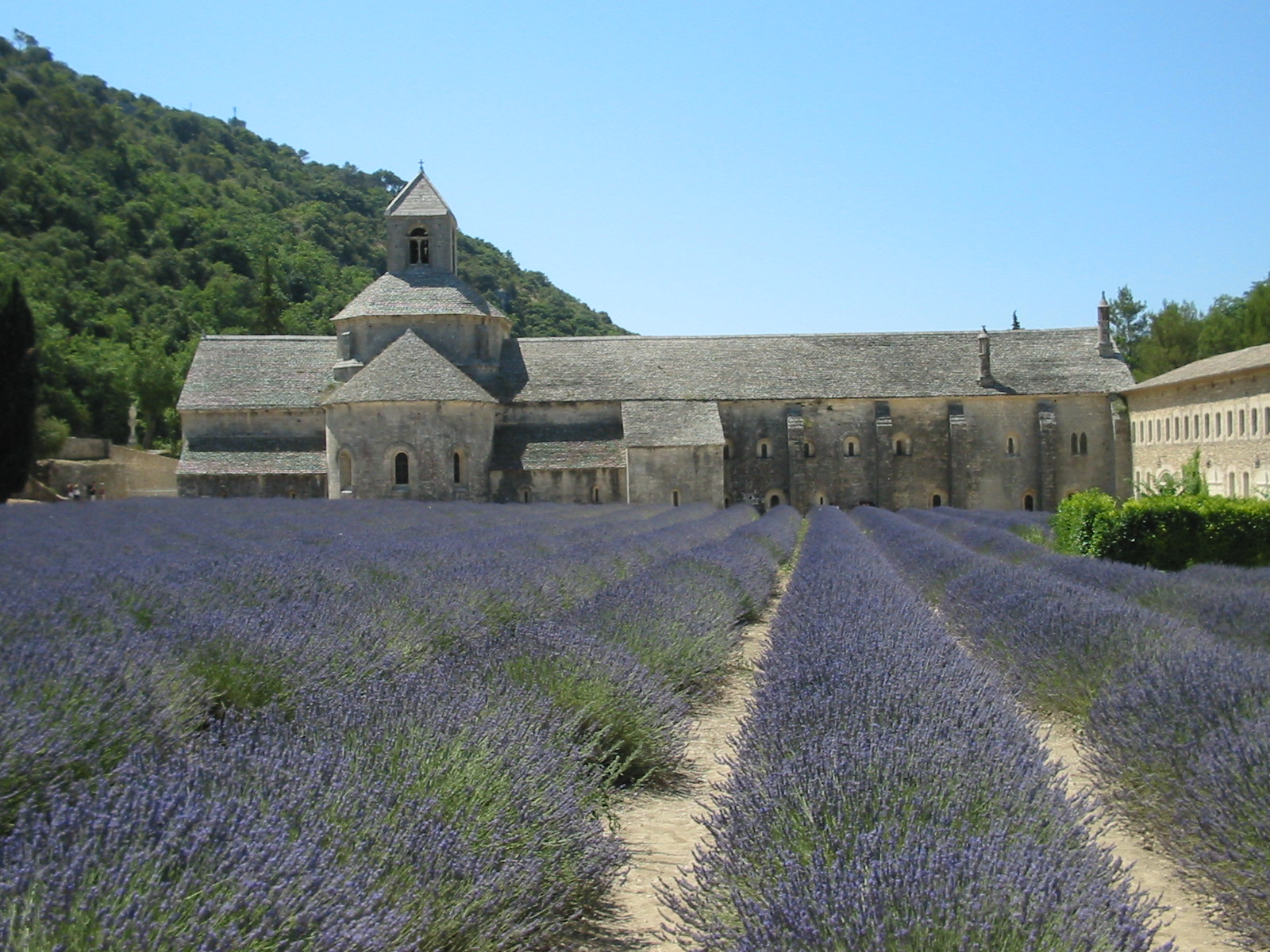
Lavender
Lavandula angustifolia Mill.
Lavender (Lavandula angustifolia Mill.) is a low aromatic subshrub of the mint family Lamiaceae, native from north-eastern Spain to Italy according to Kew's Plants of the World Online. True lavender oil is rich in linalool and linalyl acetate (60–75%) with low camphor, giving a clean, sweet floral note; it is a classic perfumery oil and an aromatherapy material studied clinically for anxiety, while the hybrid lavandin (Lavandula × intermedia) accounts for most industrial output.
No ratings yet — be the first!
Gallery
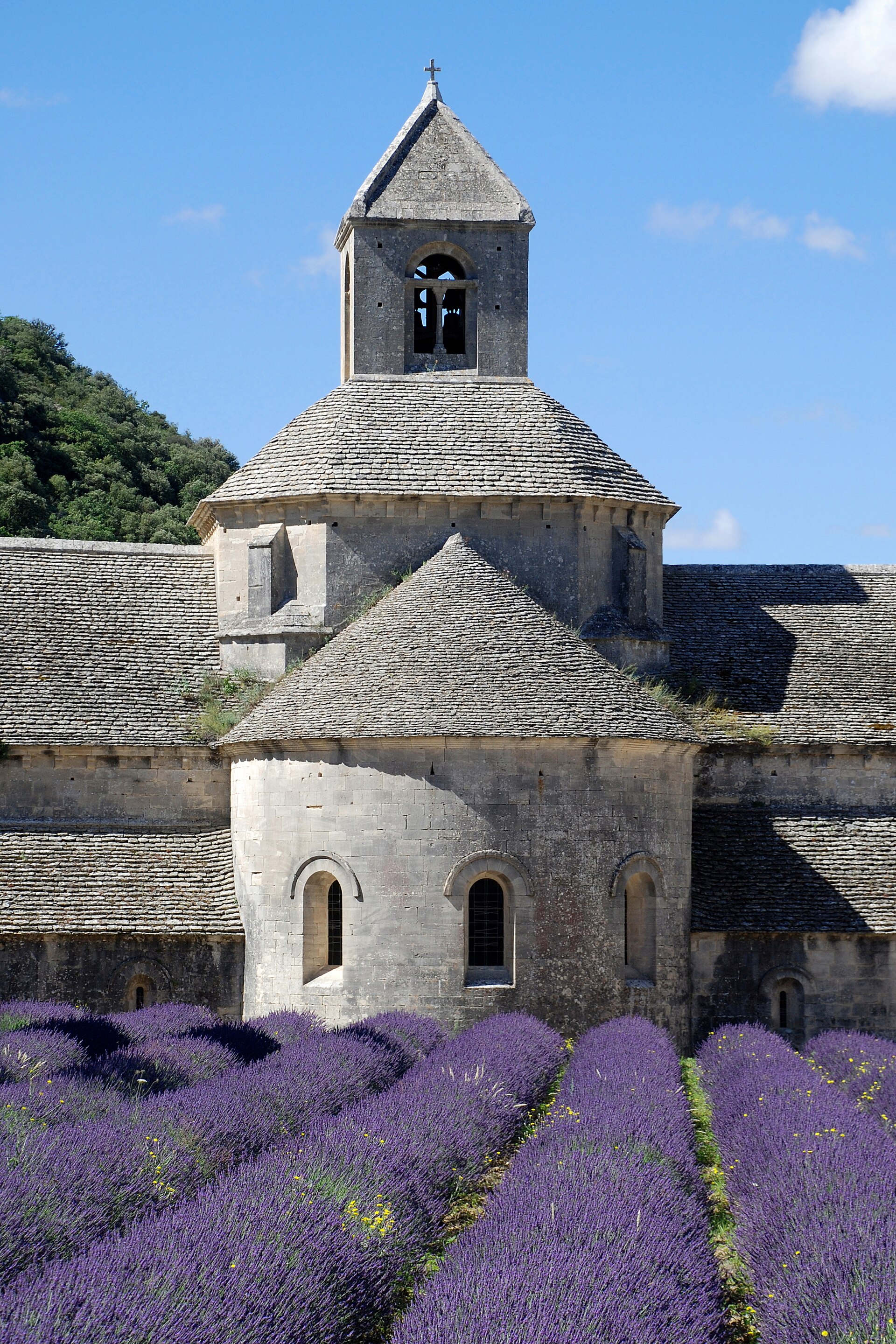 Lavender · photo 3Lavender field
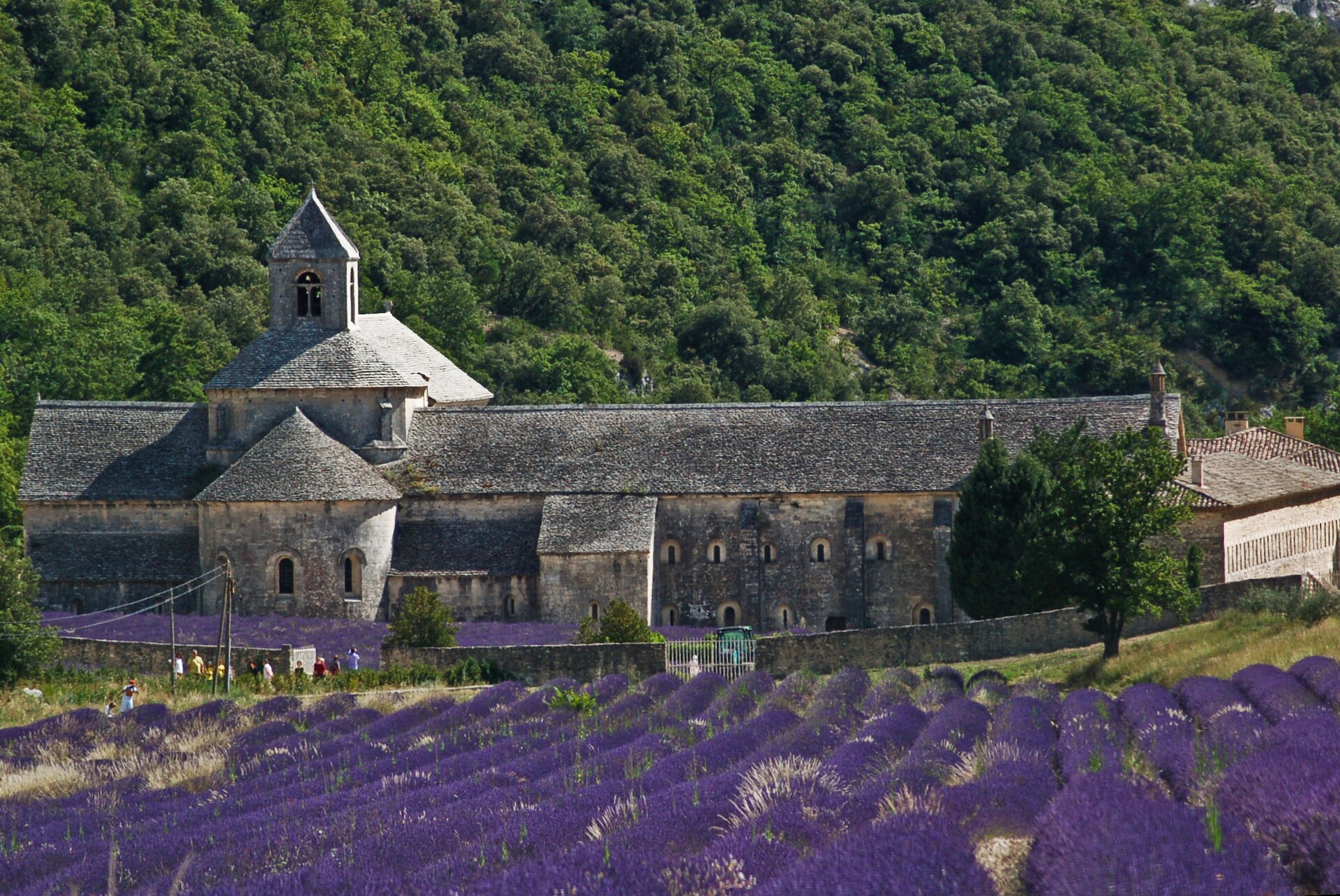 Lavender · photo 2Lavender · photo 3Lavender field
Photo credits: Brice (CC BY-SA 3.0) · Guillaume 1995 (Public domain) · EmDee (CC BY-SA 3.0)
Overview
Lavender (Lavandula angustifolia) is a low, densely branched aromatic subshrub 0.3–1 m tall, square in its young growth and woody at the base. The opposite leaves are narrow-linear to lanceolate, 2–8 cm long, grey-green, finely downy beneath and dotted with oil glands; the blades are almost stalkless with slightly rolled-back margins. The inflorescence is a firm 4–8 cm terminal spike made up of closely packed whorls with purple bracts and calyces. The flowers are small and two-lipped, deep violet-blue, with four stamens and one ovary, and a distinctly 13-ribbed calyx. It blooms from June to August in the Northern Hemisphere, and its long taproot makes the plant drought-tolerant.
According to Kew's Plants of the World Online the native range of Lavandula angustifolia runs from north-eastern Spain to Italy in the temperate biome — the limestone hills and inland belt of the western Mediterranean. Major commercial growing regions are Haute-Provence (France), the Kazanlak Valley (Bulgaria), the plains of Castile (Spain), Italy and England, while in Asia the species is also cultivated in Xinjiang and Yunnan (China). A distinction is drawn between true lavender, which gives the premium, refined oil, and the hybrid lavandin (Lavandula × intermedia), a cross between L. angustifolia and L. latifolia that yields more oil and accounts for most industrial production.
True lavender oil contains a combined 60–75% of linalool and linalyl acetate, the two components that dominate its soft, clean, sweet floral character, accompanied by low levels of camphor, 1,8-cineole, terpinen-4-ol, lavandulol and lavandulyl acetate. ISO 3515 specifies the oil of Lavandula angustifolia and tightly limits pungent components such as camphor to guarantee a premium grade. Linalool is a monoterpene alcohol with mild sedative and anxiolytic action; linalyl acetate is a readily volatile ester that, with linalool, forms the principal fraction. The glandular trichomes on flowers and leaves hold the oil, reaching peak density and content at full bloom, so harvest timing determines oil quality.
Lavender is used in perfumery as a base note and fixative, in cosmetics, soaps, linens and sachets, in cooking in small amounts (bakes and drinks), and through lavender honey. On the medical side, the review by López et al. (Frontiers in Pharmacology, 2017) sets out the central-nervous-system targets of the oil, in which linalool and linalyl acetate act on GABAergic and serotonergic systems and on NMDA receptors. The randomised, double-blind, controlled trial by Kasper et al. (International Journal of Neuropsychopharmacology, 2014) showed that oral lavender oil capsules (Silexan) significantly reduce symptoms in generalised anxiety disorder, against placebo and with efficacy comparable to paroxetine. The review of clinical studies by Manzoor et al. (Food Science & Nutrition, 2025) reinforces the anxiolytic effect, while Sanna et al. (Frontiers in Pharmacology, 2019) recorded relief of neuropathic pain in a mouse model.
On safety, linalool and linalyl acetate in the oil oxidise on prolonged exposure to air to form hydroperoxides, which are well-documented contact allergens; fresh oil should be used, properly diluted, patch-tested on skin, kept away from the eyes and out of children's reach. Cases of prepubertal breast development in boys have been reported in connection with topical products containing lavender oil, so it should not be applied to children over long periods. The oil should not be taken internally except in controlled preparations, and pregnant women and people on sedatives should use it with caution. For conservation, the IUCN lists the species as Not Evaluated and it is absent from CITES; commercial plantings cover tens of thousands of hectares in France, Bulgaria and Spain and wild collection is only local, but genetically pure wild stands risk being diluted by crosses with lavandin.
Life cycle
From seed to productSeed
Lavender seeds are tiny and are sown shallowly on free-draining limestone soil, kept evenly moist with plenty of light.
Germination
Lavender seed germinates slowly and needs light and moist limestone soil; in the wild it typically follows the rainy months.
Seedling
The young plant forms grey-green tufts with a penetrating taproot; a cold winter triggers summer flowering.
Mature plant
The mature subshrub grows 0,3–1 m tall with narrow grey-green leaves and violet flower spikes, thriving in full sun on free-draining limestone soil.
Full bloom
From June to August the fields turn violet across the hillsides; flower linalyl acetate peaks at full bloom.
Harvest
Flowering tops are cut and steam-distilled the same day into oil meeting the ISO 3515 specification.
Distribution & origin
Share of recorded occurrences by region- France40%
- Bulgaria18%
- Spain12%
- Italy9%
- China8%
- England & other regions13%
Chemical composition
Relative content in agarwood resin- Linalyl acetateSweet floral, volatile, the fixative note36%
- LinaloolClean, soft floral note with mild sedative and anxiolytic action34%
- CamphorPungent; kept low to meet ISO 35156%
- Lavandulyl acetateCharacteristic ester, a marker of true lavender oil5%
- 1,8-Cineole & terpinen-4-olLight camphoraceous-herbal note at low levels6%
- OthersLavandulol, geraniol, octen-3-ol and traces13%
Uses
- Perfumery: base note and fixative
- Aromatherapy oil and anxiolytic capsules (Silexan, Kasper et al. 2014)
- Cosmetics, soaps, linens and sachets
- Culinary accent in small doses, dried flowers and lavender honey
- CNS research: anxiolytic and analgesic effects (López et al. 2017; Sanna et al. 2019)
- Ornamental hedging, flowering-field landscaping and tourism
Properties
- Scent
- Soft floral, sweet, clean
- Flower colour
- Purple to violet
- Standard
- ISO 3515 (true lavender oil)
- Distillation
- Steam distillation of flowering tops
Habitat & conservation
Open limestone hills and the inland belt of the western Mediterranean, on fast-draining sandy-gravelly soil with plenty of sun and dry summers; the plant favours neutral to alkaline pH and, with a deep taproot, tolerates drought well but not waterlogging or late frosts. POWO places the species in the temperate biome, where it grows naturally in clumps on hillsides and calcareous grassland.
Conservation
Not Evaluated by the IUCN and not listed in CITES. Lavender is commercially grown over tens of thousands of hectares in France, Bulgaria and Spain, so genetic resources are maintained mainly through crops, and wild collection is only local. Conservation priorities are protecting genetically pure wild populations in north-eastern Spain, southern France and Italy, avoiding introgression with lavandin (L. × intermedia) and other hybrids that would dilute them, and managing fungal and chlorotic problems that reduce the quality of plantings.
References
- 1Plants of the World Online — Lavandula angustifolia Mill. — Kew Science, 2024
- 2ISO 3515 — Oil of lavender (Lavandula angustifolia Mill.) — International Organization for Standardization (ISO), 2002
- 3ISO 3054 — Essential oil of lavandin Abrial — International Organization for Standardization (ISO), 2017
- 4Exploring Pharmacological Mechanisms of Lavender (Lavandula angustifolia) Essential Oil on Central Nervous System Targets — Frontiers in Pharmacology 8:280 (López et al.), 2017
- 5Lavender oil preparation Silexan is effective in generalized anxiety disorder — a randomized, double-blind comparison to placebo and paroxetine — International Journal of Neuropsychopharmacology 17(5):859 (Kasper et al.), 2014
- 6A Comprehensive Review on Anxiolytic Effect of Lavandula angustifolia Mill. in Clinical Studies — Food Science & Nutrition 13 (Manzoor et al.), 2025
- 7Lavender (Lavandula angustifolia Mill.) Essential Oil Alleviates Neuropathic Pain in Mice With Spared Nerve Injury — Frontiers in Pharmacology 10:472 (Sanna et al.), 2019