Coconut palm
Cocos nucifera L.
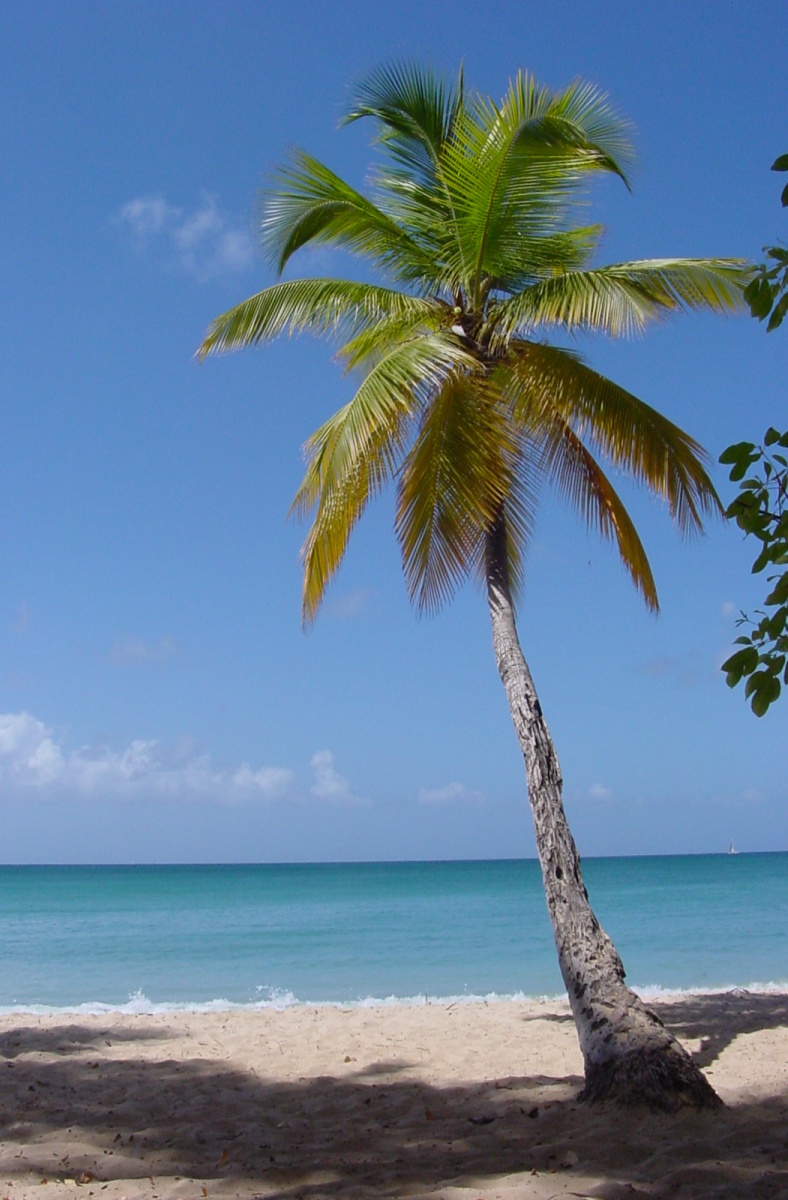
The coconut palm (Cocos nucifera) is a tropical coastal palm whose fruit supplies water, kernel, shell and fibre; almost every part of the tree is put to use in households and industry.
No ratings yet — be the first!
Gallery
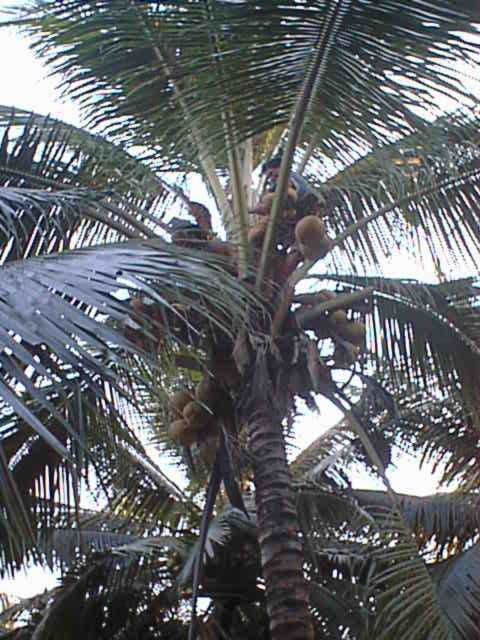
 Coconut — FruitTán cây xanh
 Cây xanh trong nắng
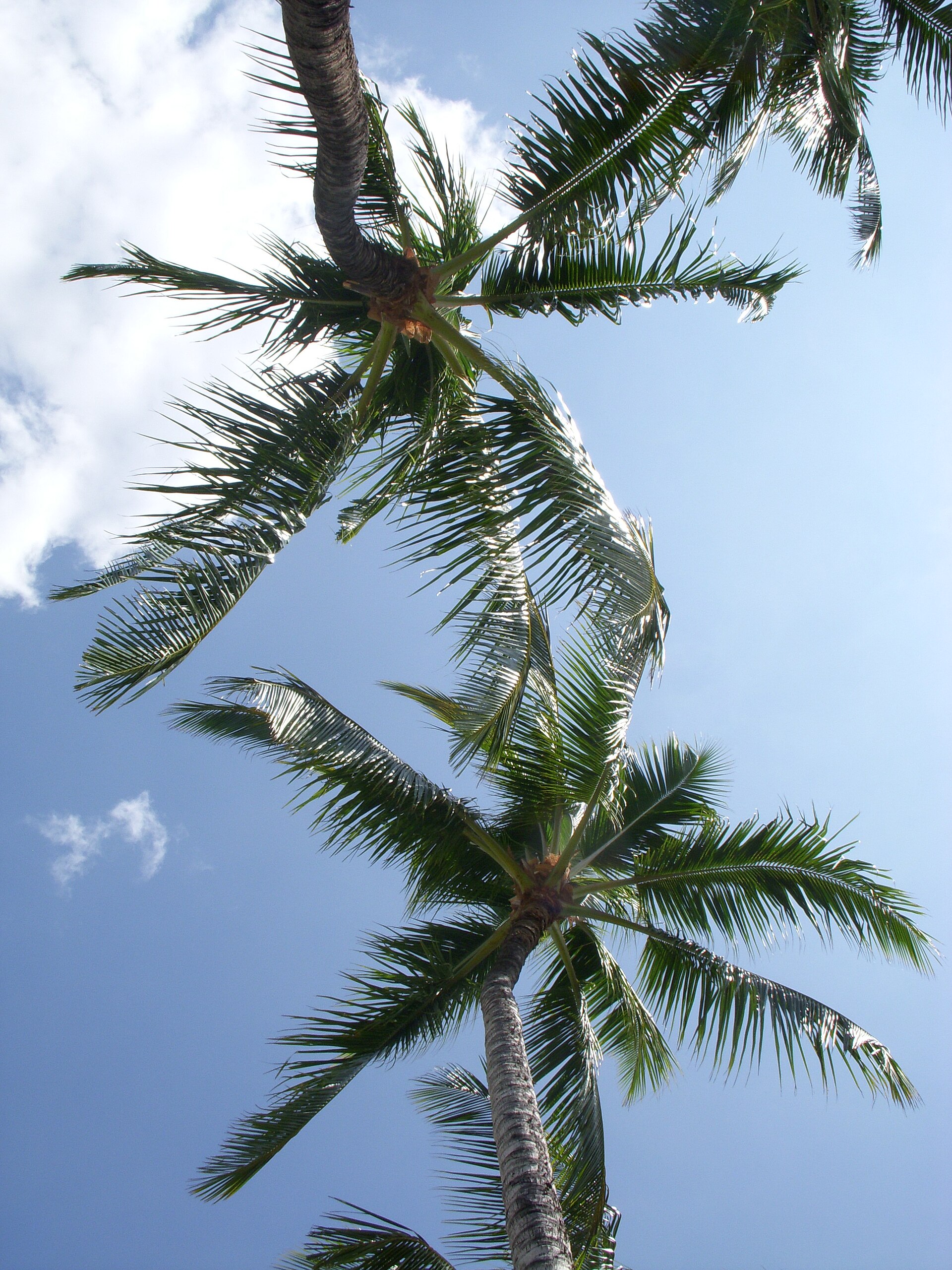 Dừa · ảnh 3
 Coconut — Tree
 Coconut — Tree with fruitCoconut — FruitTán cây xanh
Photo credits: Patrick Verdier, Free On Line Photos (Copyrighted free use) · Kborland (CC BY-SA 3.0) · Millerhr (Public domain)
Overview
Coconut grows along tropical coasts from the Indian to the Pacific Ocean. Fruit matures in 11 – 12 months; its hard shell and air pores let it float, drifting across oceans for thousands of kilometres — a classic case of water dispersal. Two main forms exist: tall palms (cross-pollinated) and dwarf palms (mostly self-pollinating).
Coconut water is drunk fresh; dried kernel (copra) is pressed into coconut oil, while fresh kernel is ground into cream for cooking. Coir makes mats, brushes and growing media; shells become charcoal and fuel; fronds are used for wrapping, roofing and weaving. Indonesia, the Philippines and India lead production, while Vietnam is strong in processing and export.
Life cycle
From seed to productSeed
Mature nuts fall or drift seaward; the hard shell and about four air pores let the seed float and drift thousands of kilometres.
Germination
On warm, moist ground the seed sprouts in 3 – 4 months, the shoot pushing through one of the shell pores.
Seedling
Seedlings live on the mother kernel for the first year or two, then grow rapidly once they get full light.
Mature plant
The mature palm grows 15 – 25 m tall in full sun and yields roughly 50 – 200 nuts a year.
Flowering & fruiting
The spathe holds male flowers above and female flowers below; insects pollinate them and the fruit ripens in 11 – 12 months.
Harvest
Harvesters climb or use long poles to cut the bunches; nuts are de-watered, copra is pressed for oil, and husk and shell feed industry.
Distribution & origin
Share of recorded occurrences by region- Indonesia26%
- Philippines20%
- India16%
- Brazil & Sri Lanka10%
- Vietnam & Thailand9%
- Other regions19%
Chemical composition
Relative content in agarwood resin- Lipids (coconut oil)Rich in lauric acid; 60 – 65% of copra60%
- Fibre & carbohydratesCellulose and mannans in the kernel22%
- Phenolics & aromaSignature coconut aroma7%
- ProteinsLow, about 5 – 7% of copra6%
- Minerals & vitaminsPotassium and manganese in the water5%
Uses
- Fresh coconut water and coconut cream/milk from the kernel
- Coconut oil for cooking and cosmetics
- Coir for mats, brushes and growing media
- Shell and endocarp for charcoal and biomass fuel
- Fronds for food wrapping, roofing and weaving
Properties
- Lauric acid in oil
- 45 – 50%
- Coconut water pH
- 4.5 – 6.0
- Copra moisture
- ≈ 6%
- Fresh kernel colour
- White
Habitat & conservation
Tropical coasts and lowlands on sandy, free-draining soils, fairly salt-tolerant, with full sun and saline wind; 27 – 32 °C and 1,000 – 2,500 mm of rain a year.
Conservation
Not Evaluated (NE) by the IUCN; the species is pantropic through human transport and naturalises on tropical beaches. Main threats are sudden death syndromes (Ganoderma fungi) in Indonesia, cadang-cadang viroid disease in the Philippines, water pollution and loss of local landraces.
References
- 1Statistical Bulletin — Coconut Community Countries — , 2024
- 2FAOSTAT — Crops and livestock products — , 2023
- 3Plants of the World Online — Cocos nucifera — , 2023
- 4Nguồn ảnh: Clintacc (CC0) — Wikimedia Commons,
- 5Nguồn ảnh: David Adam Kess (CC BY-SA 4.0) — Wikimedia Commons,