Cashew
Anacardium occidentale L.
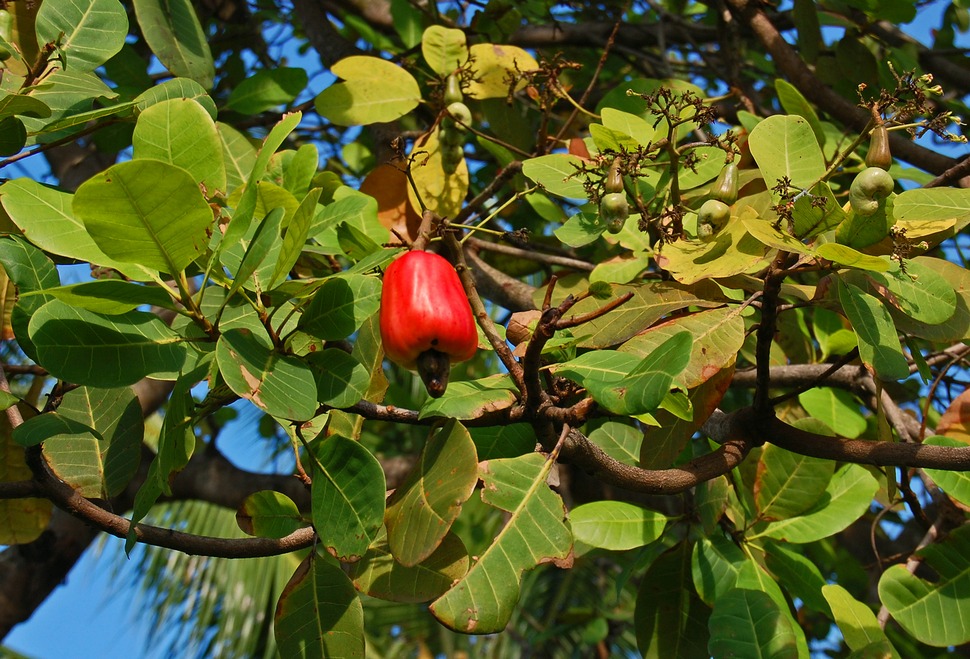
The cashew (Anacardium occidentale) is a tree native to north-eastern Brazil that bears a crisp nut hanging below a juicy accessory fruit called the cashew apple. Brazil leads raw nut output, while Vietnam is the world's largest exporter of processed kernels.
No ratings yet — be the first!
Gallery
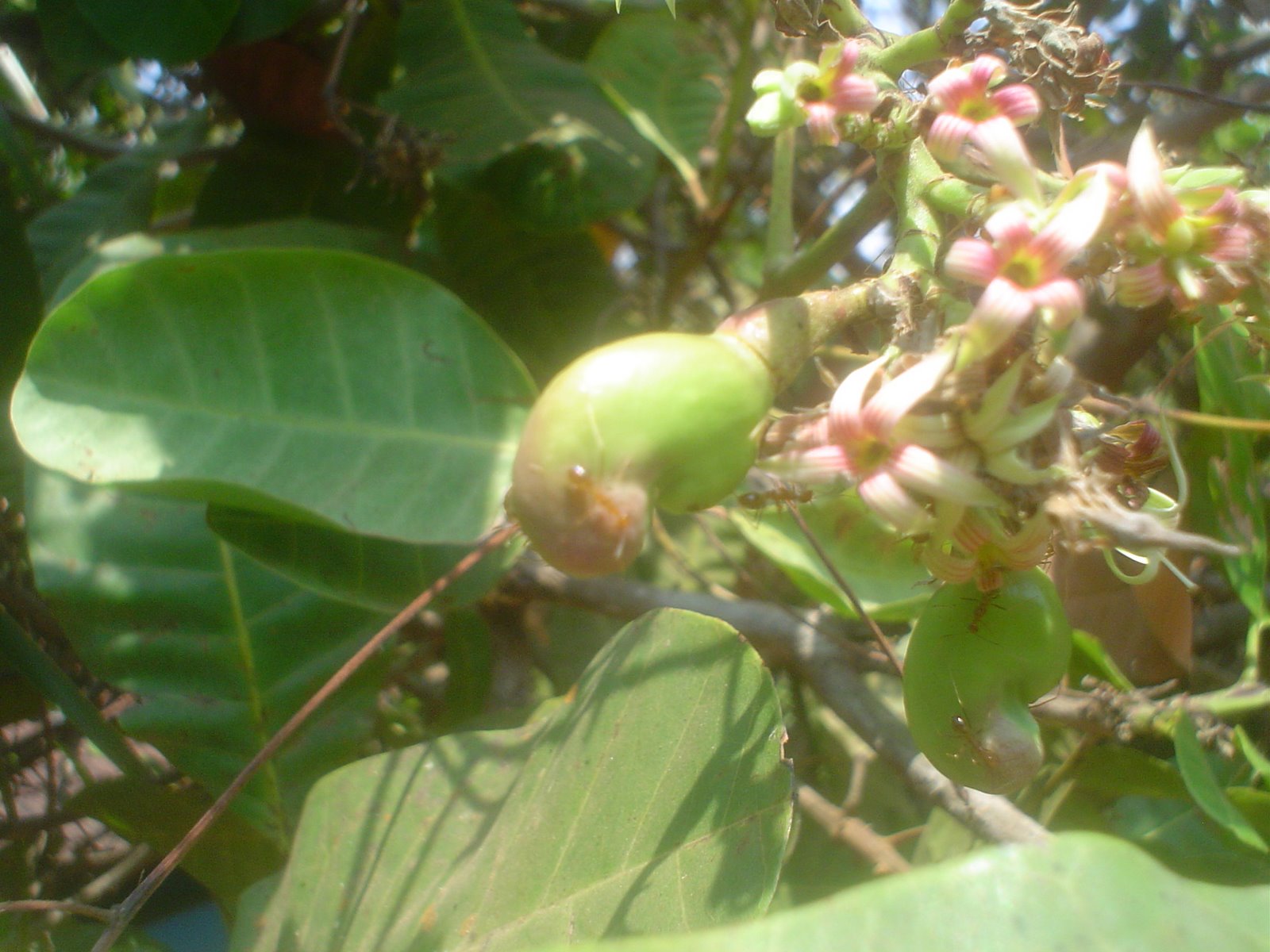
 Cashew — False fruit & nutsĐiều · ảnh 1
 Điều · ảnh 2
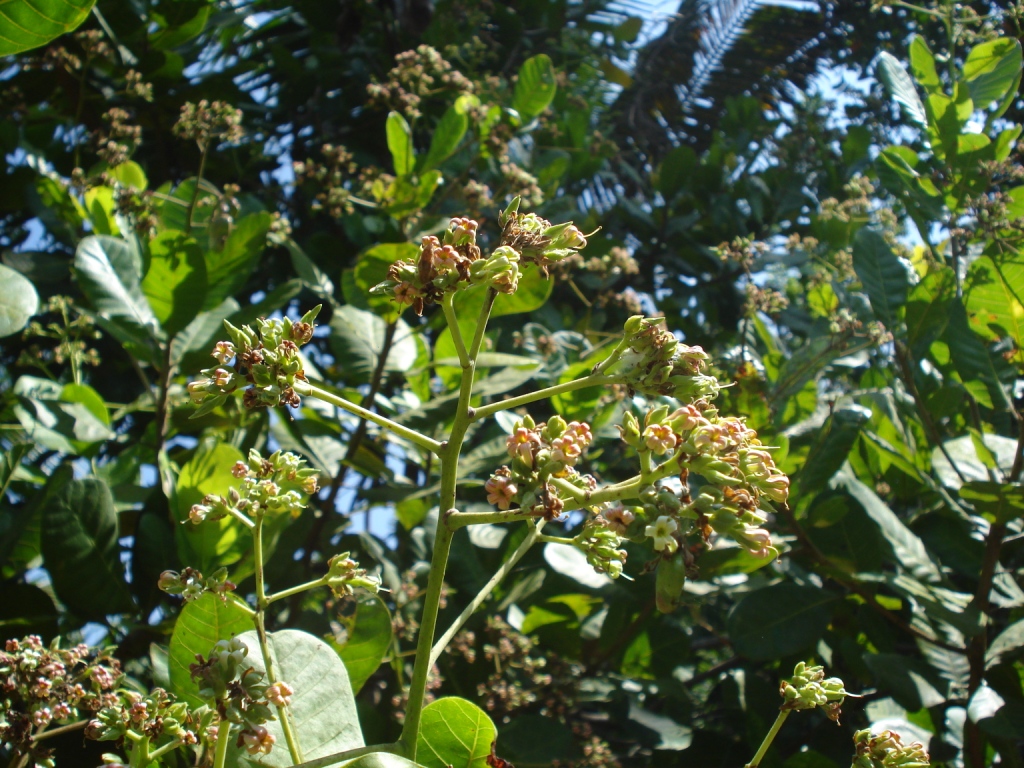 Điều · ảnh 3
 Cashew — Tree & fruit
 Cashew — Fruit stalk & nutCashew — False fruit & nutsĐiều · ảnh 1
Photo credits: Wibowo Djatmiko (Wie146) (CC BY-SA 3.0) · Sidheeq at ml.wikipedia (Public domain) · Aruna at Malayalam Wikipedia (CC BY-SA 3.0)
Overview
The tree grows 8 – 12 m tall with large glossy leaves and drops its leaves in the dry season of its native range. The fruit has two parts: the cashew apple is a swollen, juicy accessory structure, while the true fruit is the kidney-shaped nut hanging below. Light-loving and reasonably drought-tolerant, it is often planted as a windbreak and shade tree in dry tropics.
The hard shell yields cashew nut shell liquid (CNSL) rich in anacardic acid, cardol and urushiol — skin-irritating compounds used industrially in brake linings, paints and epoxy resins. Kernels must be steamed or roasted to remove irritants before eating; they are 45 – 50% lipid and rich in protein, eaten roasted, salted or processed into butter and milk.
Life cycle
From seed to productSeed
Cashew seeds are large and lose viability quickly, so they are sown soon after extraction.
Germination
In warm, humid conditions the seed germinates within a few weeks.
Seedling
Seedlings grow fast, love full sun and tolerate drought; they are often used as live fences or temporary shade in orchards.
Mature plant
The mature tree grows 8 – 12 m tall with large glossy leaves; it is light-loving and drought-tolerant, dropping its leaves in the native dry season.
Flowering & fruiting
Small greenish bisexual flower clusters develop into the swelling cashew apple with the nut hanging below, ripening 2 – 3 months later.
Harvest
Ripe fruits are picked or gathered; nuts are separated, steamed or roasted to remove shell liquid, then shelled, dried and graded for export.
Distribution & origin
Share of recorded occurrences by region- Brazil30%
- Vietnam16%
- India12%
- Côte d'Ivoire9%
- Tanzania & Mozambique10%
- Other regions23%
Chemical composition
Relative content in agarwood resin- LipidsKernel holds 45 – 50% oil42%
- ProteinsKernel protein roughly 18 – 25%21%
- Carbohydrates & fibreStarch and cellulose15%
- Anacardic acids & phenolicsIn shell liquid, naturally antifungal14%
- Minerals & vitaminsMagnesium, phosphorus, vitamin K8%
Uses
- Eaten roasted and salted as a global snack
- Processed into cashew butter, milk, confectionery and bakery
- Shell liquid used in brake linings, paints and industrial resins
- Windbreak, shade and soil-improvement tree in dry tropics
Properties
- Kernel colour
- Creamy ivory
- Flavour
- Rich, nutty, faintly sweet
- Shell liquid (CNSL)
- Contains anacardic acid and cardol
- Export kernel moisture
- ≤ 5%
Habitat & conservation
Dry tropics on sandy lateritic, well-drained soils with full sun and 500 – 1,500 mm of rain a year. Native to Ceará and Piauí in Brazil, it tolerates drought and goes deciduous in dry spells.
Conservation
Not Evaluated (NE) by the IUCN because the species is widely cultivated. Native genetic resources in north-east Brazil are contracting with land conversion, and clonal plantations need a broad parent base. Carpenter bees (Xylocopa) are the main pollinators.
References
- 1FAOSTAT — Crops and livestock products — , 2023
- 2Tree Nuts: World Markets and Trade — , 2024
- 3Plants of the World Online — Anacardium occidentale — , 2023
- 4Nguồn ảnh: Dr. Raju Kasambe (CC BY-SA 3.0) — Wikimedia Commons,
- 5Nguồn ảnh: Strobilomyces / Agnieszka Kwiecień (CC BY-SA 3.0) — Wikimedia Commons,