Winged dipterocarp
Dipterocarpus alatus Roxb. ex G.Don
Winged dipterocarp (Dipterocarpus alatus) is a tall tree of the Mekong Delta's seasonal forests, yielding durable construction timber and oleoresin ('hard oil') used for varnish and caulking boats.
No ratings yet — be the first!
Gallery
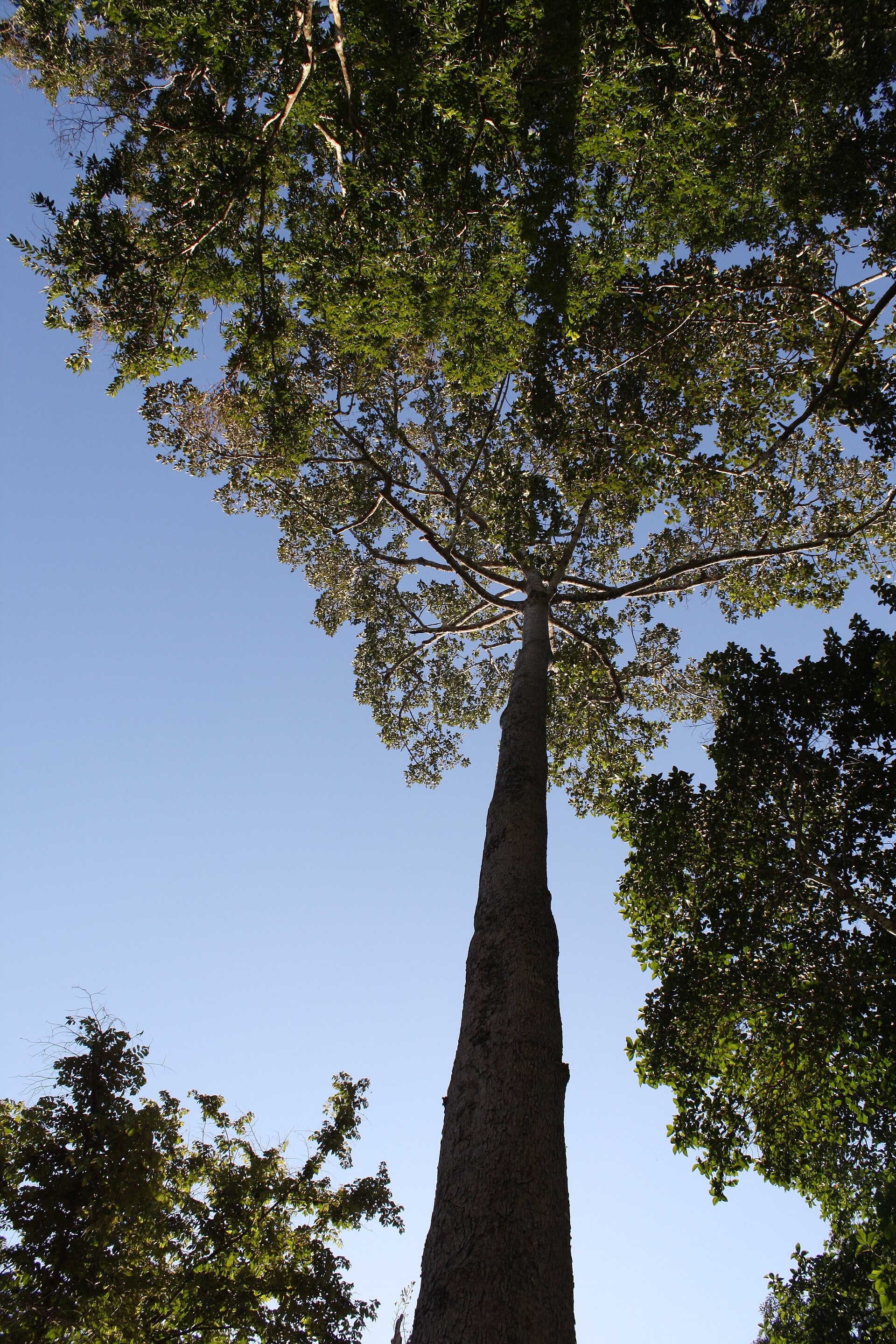
 Winged dipterocarp (Dipterocarpus alatus)Seasonal dipterocarp forest
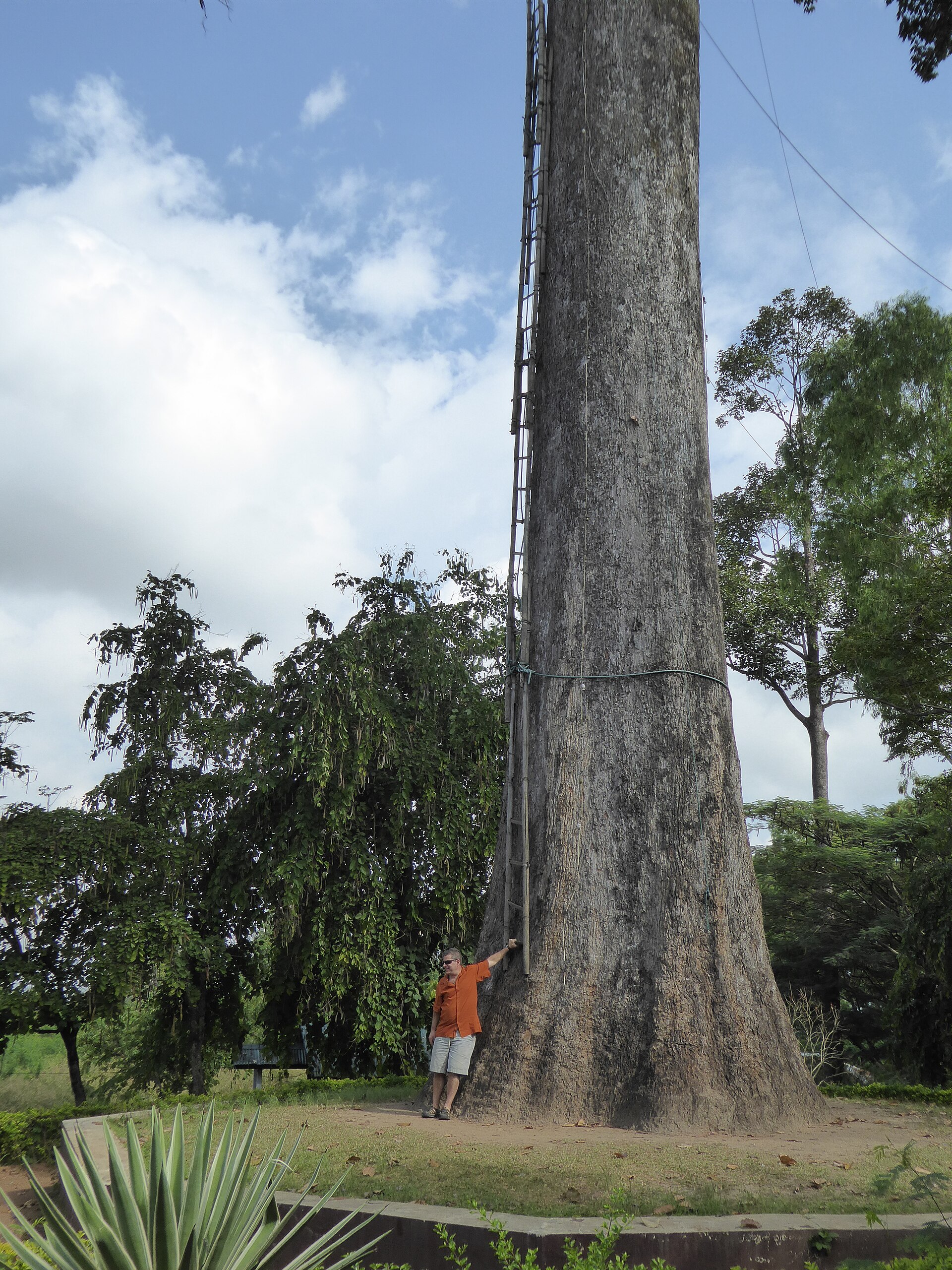 Evergreen canopyWinged dipterocarp (Dipterocarpus alatus)Seasonal dipterocarp forest
Photo credits: josh jackson (CC BY 2.0) · Roedel (CC BY-SA 4.0)
Overview
An evergreen 25–40 m tall with a straight, grey trunk; the fruit bears two large wings — exactly what the name Dipterocarpus, 'two-winged fruit', means. Trunk and branches exude a sticky, clear oleoresin, the traditional 'hard oil' of Vietnam and Cambodia.
Ranging from India to Vietnam, it grows mainly in seasonal dipterocarp (open-canopy) forest, often on land seasonally flooded along Mekong Delta rivers. The wood is straight-grained, hard, durable and moisture-resistant, used for boats, bridges and pillars; the resin serves paints, polishing, boat caulking and torches. IUCN lists the species as Vulnerable (VU) owing to seasonal-forest loss and over-exploitation.
Life cycle
From seed to productSeed
Huong seed sits in the two-winged fruit, which glides on the wind before dropping; sow soon after collection to keep viability.
Germination
The fruit lands on moist ground at the onset of the rains and germinates quickly in canopy gaps, where the soil is still wet and light reaches the floor.
Seedling
The seedling grows in seasonal forest and tolerates short flooding; its young leaves are broad and finely hairy.
Mature plant
Reaching 25–40 m with a straight trunk; when the bark is cut, oleoresin flows out and dries on the surface.
Logging
Resin is tapped and boiled into hard oil for varnish and caulking; sawn timber goes to boats, bridges and pillars.
Distribution & origin
Share of recorded occurrences by region- Cambodia26%
- Vietnam24%
- Thailand22%
- Laos14%
- Myanmar9%
- India and Bangladesh5%
Chemical composition
Relative content in agarwood resin- CelluloseStructural cell-wall polymer42%
- HemicelluloseMatrix polysaccharide20%
- LigninGives the wood rigidity28%
- Oleoresin (terpenes & resin)The 'hard oil' resin in the trunk10%
Uses
- Boat building and bridges
- Pillars, flooring, roofing and structural timber
- Paints, polishing and lacquer
- Caulking boats and waterproofing timber
- Torches and traditional lamp fuel
Properties
- Colour
- Yellowish- to red-brown
- Grain
- Straight, even, fine
- Durability
- Durable, moisture-resistant
- Resin
- Sticky, clear oleoresin
Habitat & conservation
Seasonal tropical dipterocarp and deciduous forest, often on seasonally flooded land along rivers; ranging from India through Indochina.
Conservation
Dipterocarpus alatus is listed as Vulnerable (VU) by IUCN. Mekong Delta seasonal forest has shrunk sharply under agricultural conversion while resin and timber are still taken from wild stands, and seedlings regenerate slowly on denuded land.
References
- 1Dipterocarpus alatus — Plants of the World Online — Royal Botanic Gardens, Kew, 2024
- 2Gums, Resins and Latexes of Plant Origins (Non-Wood Forest Products 6) — FAO, 1995
- 3The Red List of Dipterocarpaceae — IUCN — Dipterocarpaceae Red List, 2023