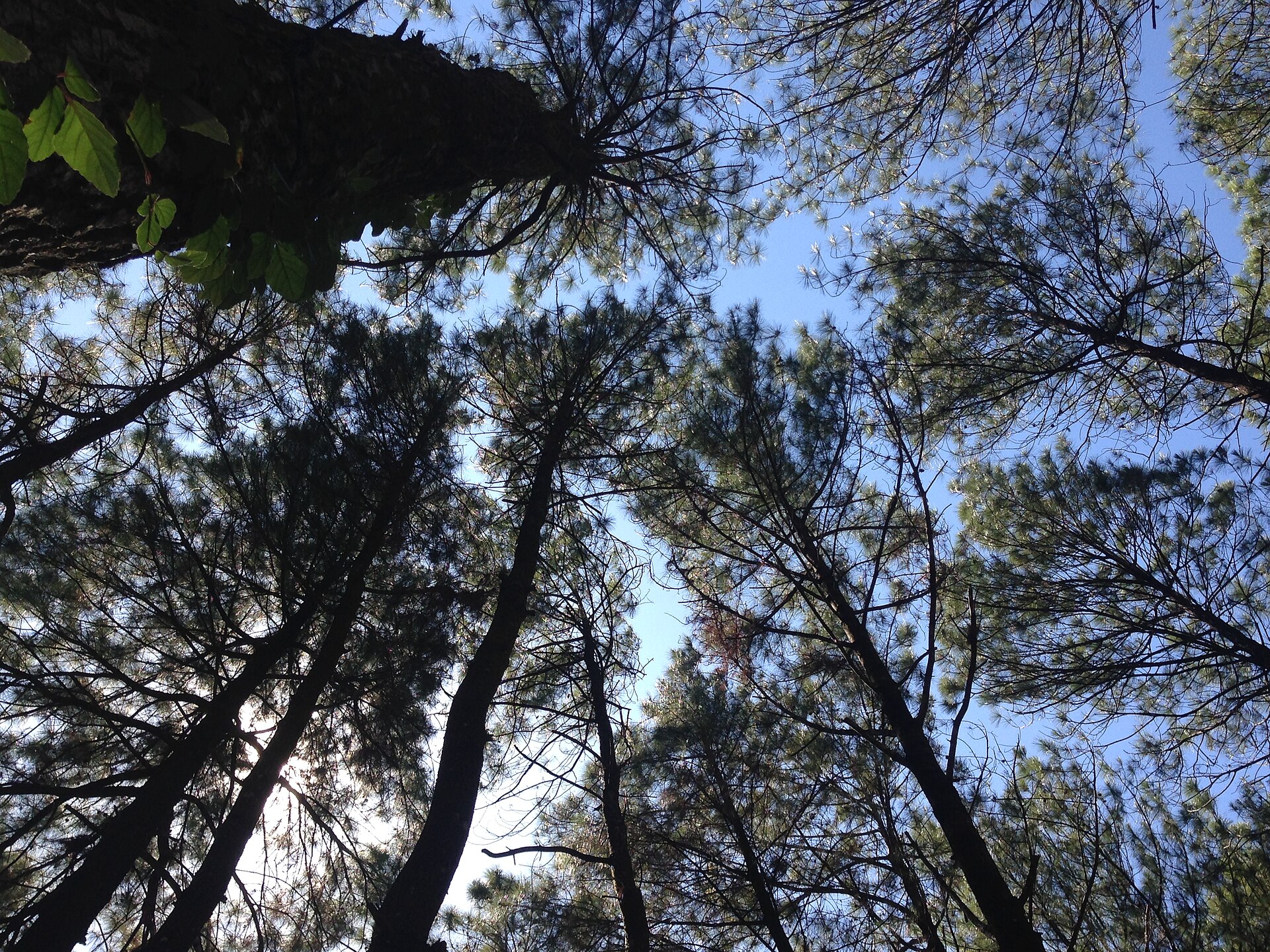
Merkus pine
Pinus merkusii Jungh. & de Vriese
Merkus pine (Pinus merkusii) is a two-needled pine ranging from Myanmar and Thailand through Laos and Vietnam to Sumatra, yielding turpentine resin and construction timber.
No ratings yet — be the first!
Gallery
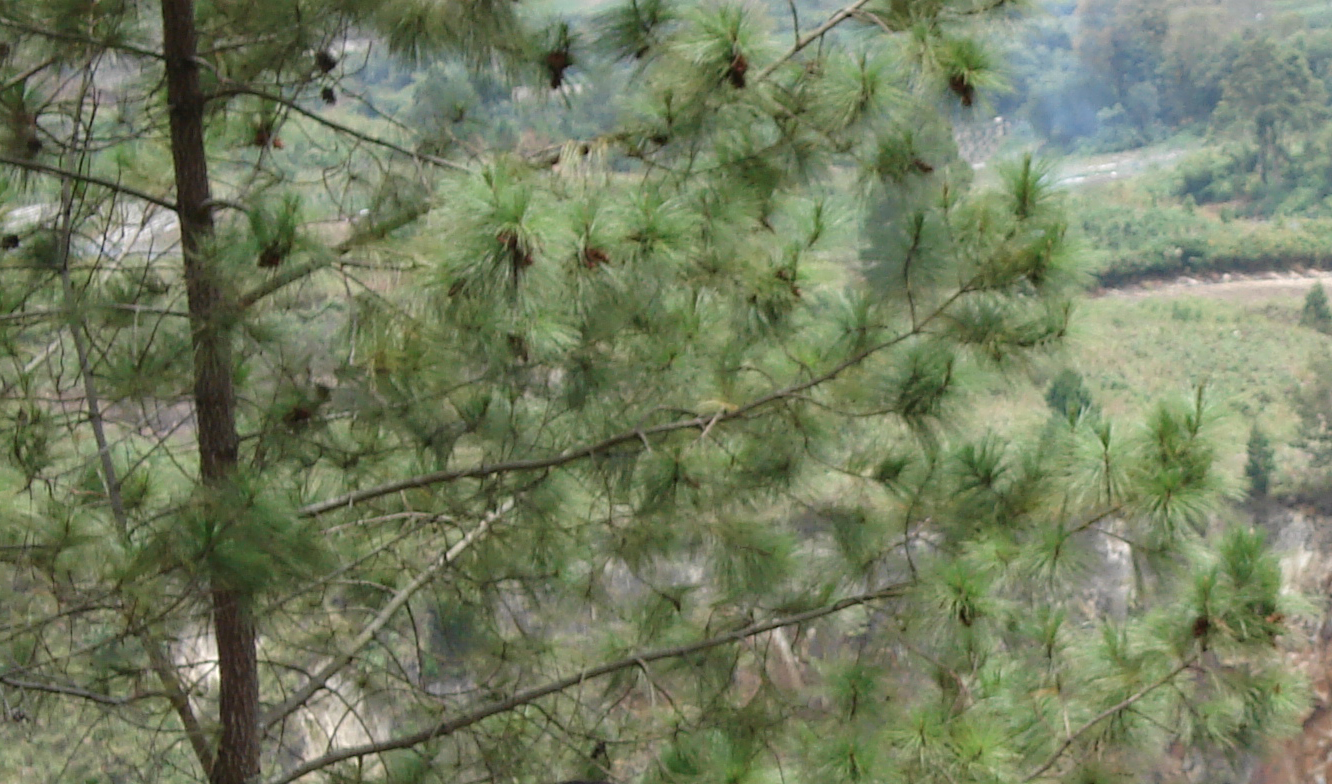 Merkus pine · photo 3Pine forest
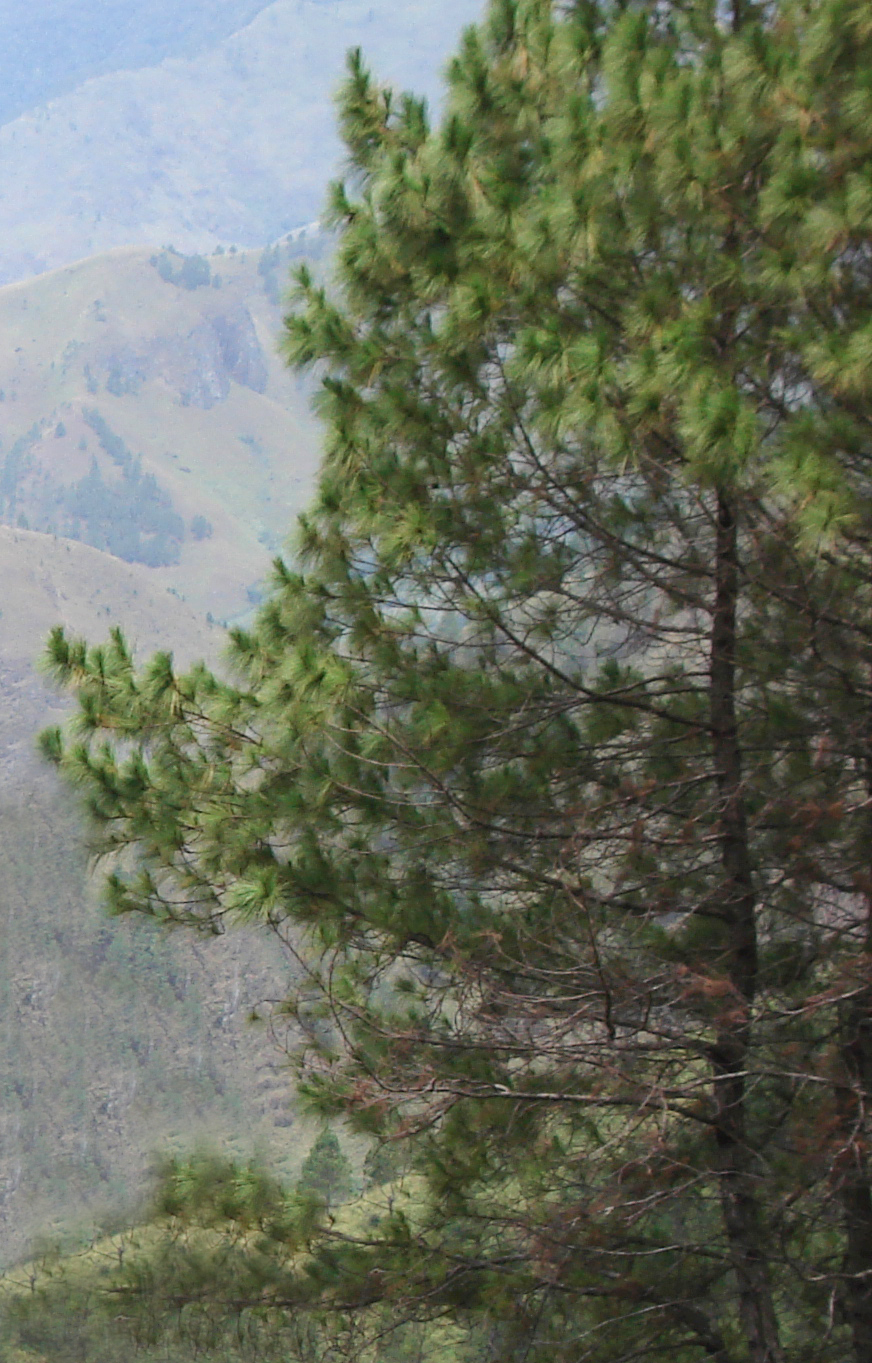 Merkus pine · photo 2Merkus pine · photo 3Pine forest
Photo credits: mohd fahmi on Flickr (CC BY-SA 2.0) · Ani Nur Agustin (CC BY-SA 4.0)
Overview
An evergreen 20–40 m tall forming open woodlands on poor soils and tolerant of periodic grass fires — the Sumatran population lies entirely south of the equator. Each bundle holds two long needles; the thick, deeply fissured bark shields the tree from fire.
The species yields turpentine rich mainly in alpha- and beta-pinene, distilled into resin for paints, adhesives and plastics; Vietnam maintains large pine plantations with industrial resin tapping. The light, straight-grained wood suits posts, boards, joinery and pulp, while pine stands protect hillsides against erosion.
Life cycle
From seed to productSeed
Merkus pine seeds are winged and drift down from mature cones; keep them cool and sow early to retain viability.
Germination
Seeds germinate on bare mineral soil, especially after seasonal forest fires, when the ground cover has burned away.
Seedling
Seedlings grow in light-demanding clusters with soft two-needled foliage, drought-tolerant on poor hillside soils.
Mature plant
Reaching 20–40 m, the tree builds turpentine in trunk and roots beneath thick fissured bark; male and female cones grow separately.
Logging
Resin is tapped and drilled, then distilled into turpentine and rosin; sawn wood serves construction and pulp.
Distribution & origin
Share of recorded occurrences by region- Vietnam30%
- Thailand25%
- Laos16%
- Indonesia (Sumatra)12%
- Cambodia and Myanmar10%
- Philippines7%
Chemical composition
Relative content in agarwood resin- CelluloseStructural cell-wall polymer42%
- HemicelluloseMatrix polysaccharide16%
- LigninGives the wood rigidity27%
- Alpha-pinene (turpentine)Main component of pine turpentine10%
- Other extractives (rosin, acids)Rosin and diterpene acids5%
Uses
- Turpentine and rosin distilled from resin
- Construction timber, posts, boards and joinery
- Pulpwood and chipboard feedstock
- Resin for paints, adhesives and coatings
- Shelterbelts and hillside erosion control
Properties
- Colour
- White to pale pinkish
- Grain
- Straight, coarse with knots
- Density
- 0.45 – 0.65 g/cm³
- Scent
- Pine-scented
Habitat & conservation
Open pine woodland and wooded grassland on poor soils, subject to seasonal fires; ranging from Myanmar and Thailand through Laos and Vietnam to Sumatra and the Philippines.
Conservation
Pinus merkusii is classified as Vulnerable (VU) by IUCN. Wild stands decline through timber felling, over-tapping and land conversion, while the species is widely planted in Indonesia and Vietnam for resin and timber.
References
- 1Pinus merkusii — The IUCN Red List of Threatened Species — IUCN, 2013
- 2Gums, Resins and Latexes of Plant Origins (Non-Wood Forest Products 6) — FAO, 1995
- 3Pinus merkusii — Plants of the World Online — Royal Botanic Gardens, Kew, 2024