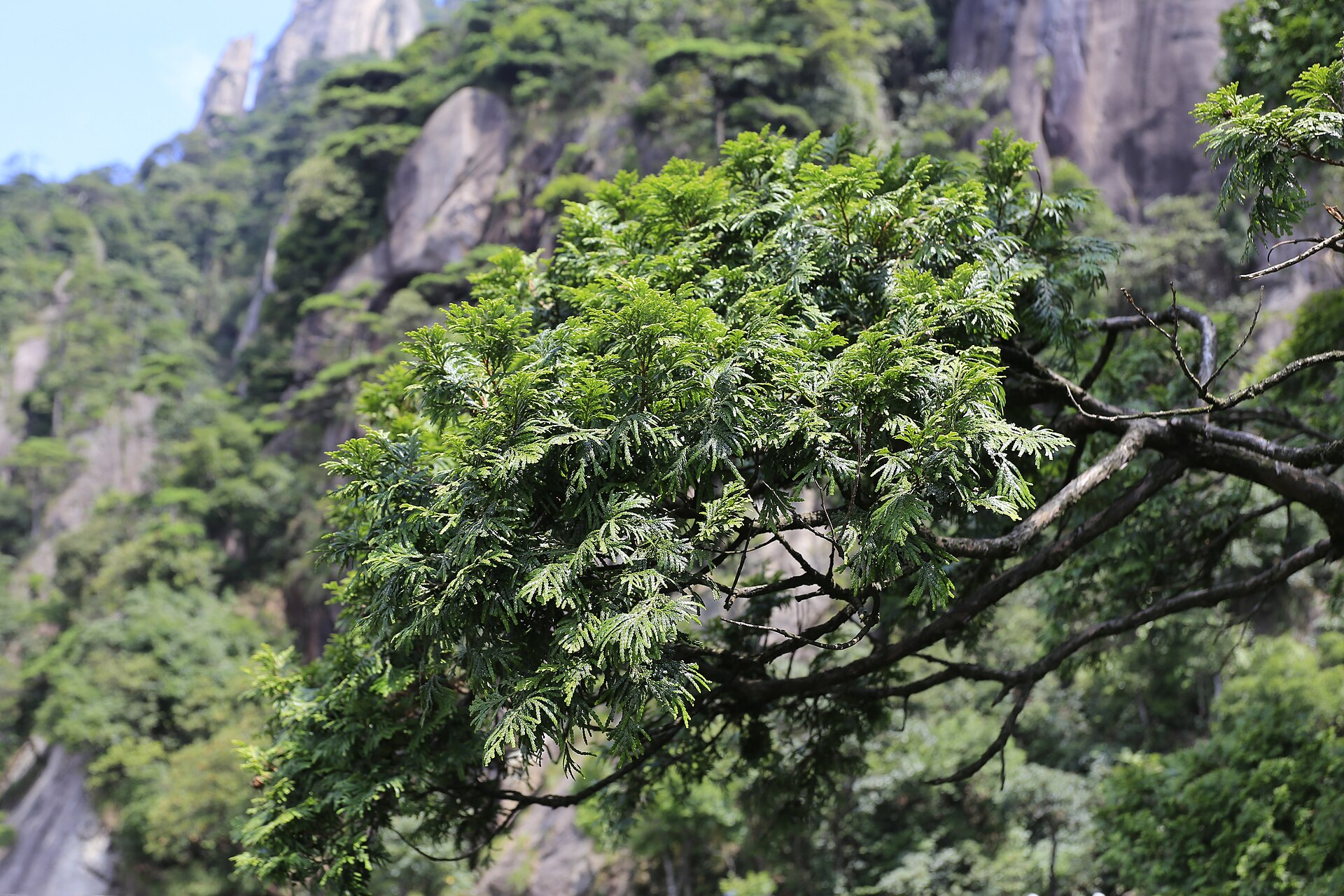
Fujian cypress
Fokienia hodginsii (Dunn) A.Henry & H.H.Thomas
Fujian cypress (Fokienia hodginsii) is a valuable conifer with light-scented, durable, rot-resistant timber, growing in montane evergreen forests of Southeast Asia and southern China.
No ratings yet — be the first!
Gallery
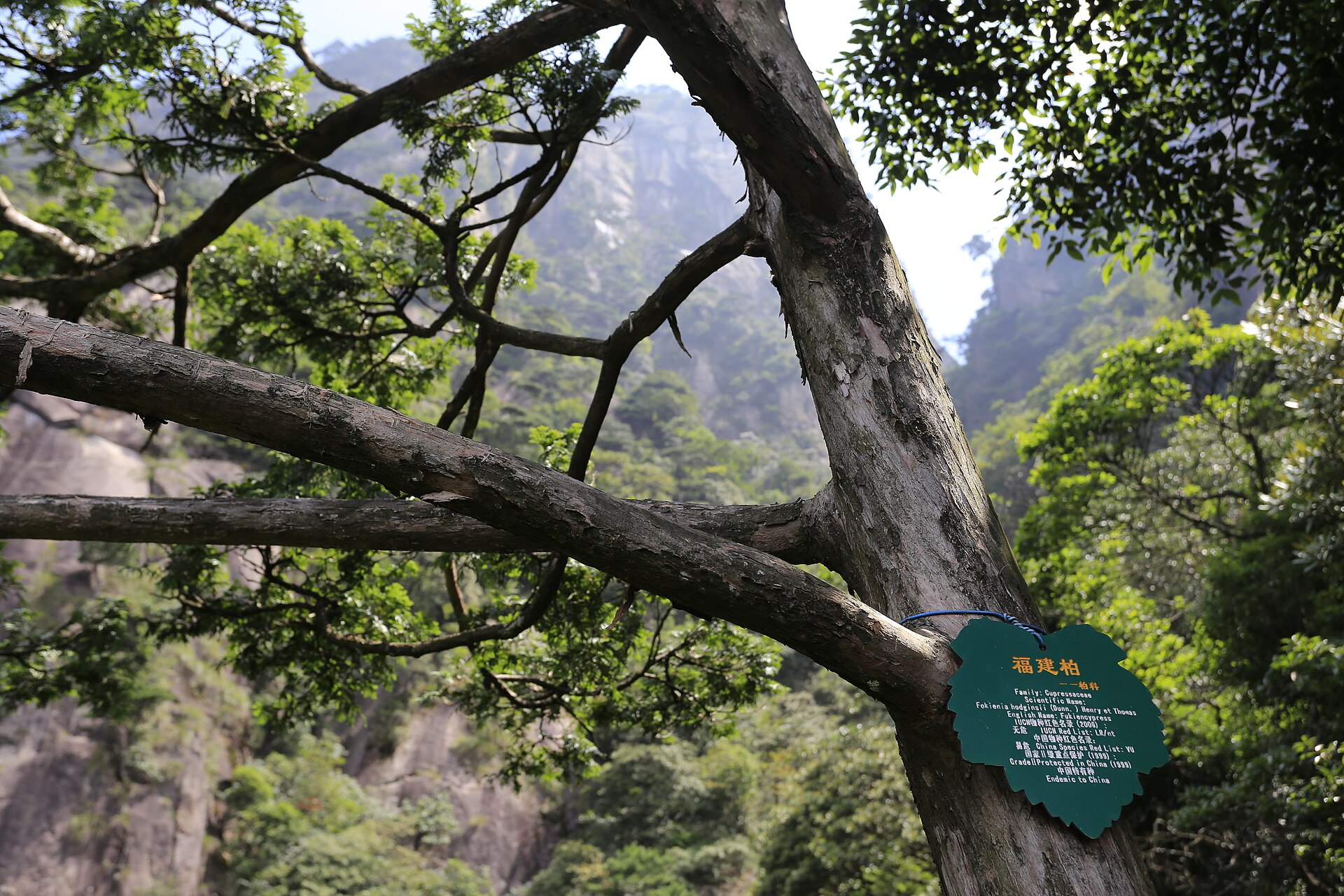 Fujian cypress · photo 3Fujian cypress · photo 1
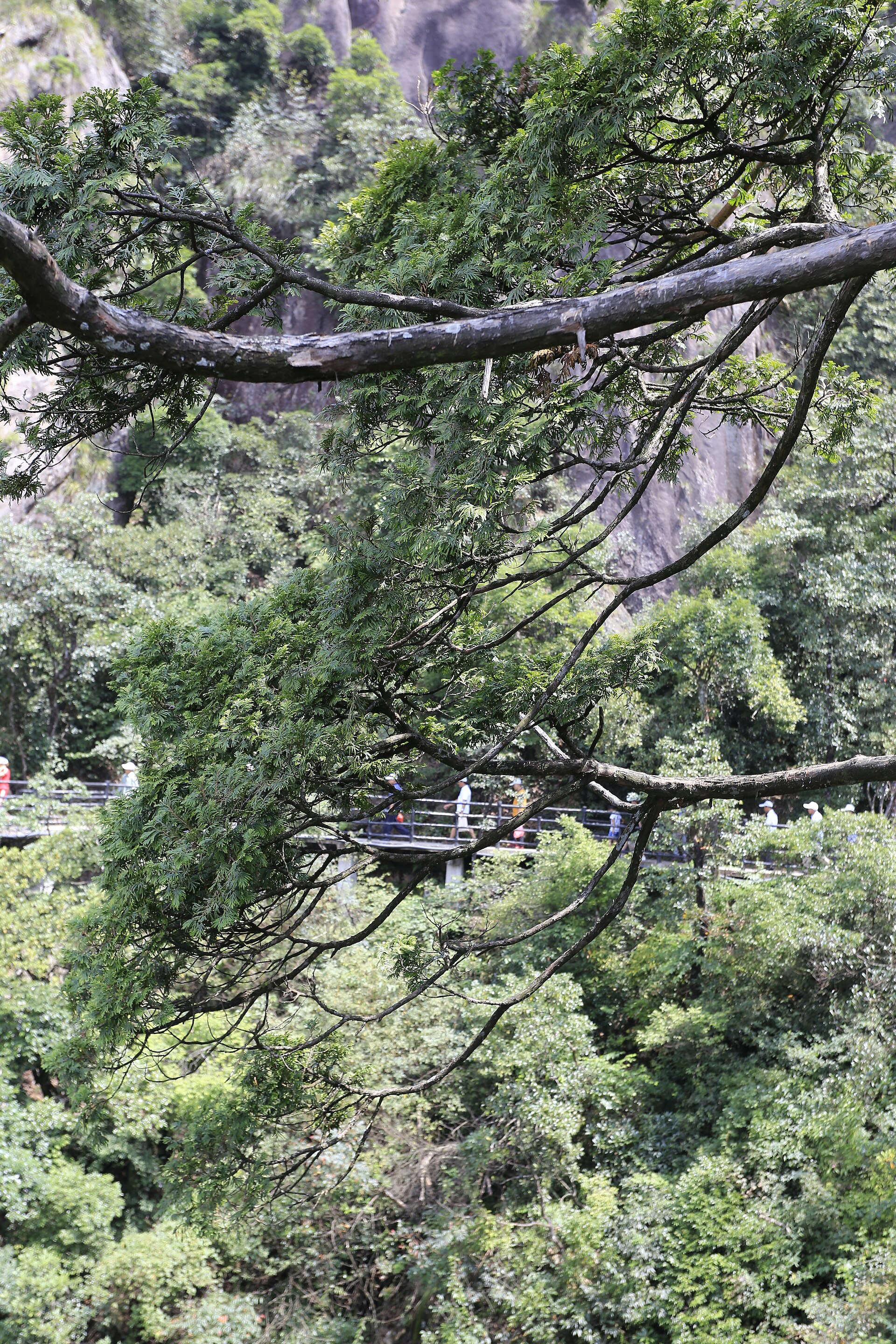 Fujian cypress · photo 2Fujian cypress · photo 3Fujian cypress · photo 1
Photo credits: Zhangzhugang (CC BY-SA 4.0)
Overview
An evergreen 20–30 m tall, its trunk occasionally exceeding 1 m across; bark flakes in scales and the cone-shaped crown is ornamental. The scale leaves release a scent when crushed; the wood is light, fine-grained, pleasantly aromatic, durable and insect-resistant — popular for furniture, boxes, trays and carving.
A Tertiary relict, the species is a living survivor of ancient conifer forests, ranging from southern and eastern China through Vietnam, Laos, Thailand and Myanmar. It favours moist montane evergreen forest rather than seasonal dipterocarp woods. The timber also serves posts, boards and outdoor framing, while its aromatic foliage is studied for essential oil.
Life cycle
From seed to productSeed
Po mu seeds are small and winged, falling from mature cones in the canopy; keep them cool and sow early to retain viability.
Germination
Seeds germinate beneath the moist montane canopy, where shade and cool air favour emergence.
Seedling
The seedling grows slowly with fragrant, bright-green scale leaves; it prefers shade and cool conditions and establishes well in canopy gaps.
Mature plant
At 20–30 m with trunks over 1 m across and flaking bark, its conical crown stands out in montane evergreen forest.
Logging
Timber is sawn and dried for furniture, carving and framing; aromatic foliage is distilled in essential-oil research.
Distribution & origin
Share of recorded occurrences by region- China35%
- Vietnam22%
- Laos16%
- Thailand11%
- Myanmar9%
- Other regions7%
Chemical composition
Relative content in agarwood resin- CelluloseStructural cell-wall polymer44%
- HemicelluloseMatrix polysaccharide21%
- LigninGives the wood rigidity29%
- Essential oil & aromaticsResponsible for the characteristic scent6%
Uses
- Furniture, boxes, trays and craftwork
- Carving and wooden statuary
- Posts, boards and construction framing
- Ornamental planting and mountain shelterbelts
Properties
- Colour
- Pale yellow to light brown
- Grain
- Fine, straight
- Scent
- Pleasantly aromatic
- Durability
- Durable, rot- and insect-resistant
Habitat & conservation
Moist montane evergreen and mixed forests on deep soils; ranging from southern and eastern China through Vietnam, Laos, Thailand and Myanmar.
Conservation
Fokienia hodginsii is classified as Vulnerable (VU) by IUCN. The aromatic timber is heavily harvested and trees are dug up for their value, while montane forests shrink; slow regeneration makes populations hard to recover after logging.
References
- 1Fokienia hodginsii — The IUCN Red List of Threatened Species — IUCN, 2014
- 2Fujian cypress and two other threatened tree species in three protected areas of Vietnam — Journal of Forest Research, 2017
- 3Fokienia hodginsii — Plants of the World Online — Royal Botanic Gardens, Kew, 2024