
Onion
Allium cepa L.
The onion (Allium cepa) is the most widely cultivated Allium, grown for its bulb; its pungency comes from sulfur compounds, and it is rich in quercetin, potassium and vitamin C.
No ratings yet — be the first!
Gallery
 Onion — Flowers (var. cepa)Onion — Bulb
 Onion — Bulbs at market
 Onion — Flowers
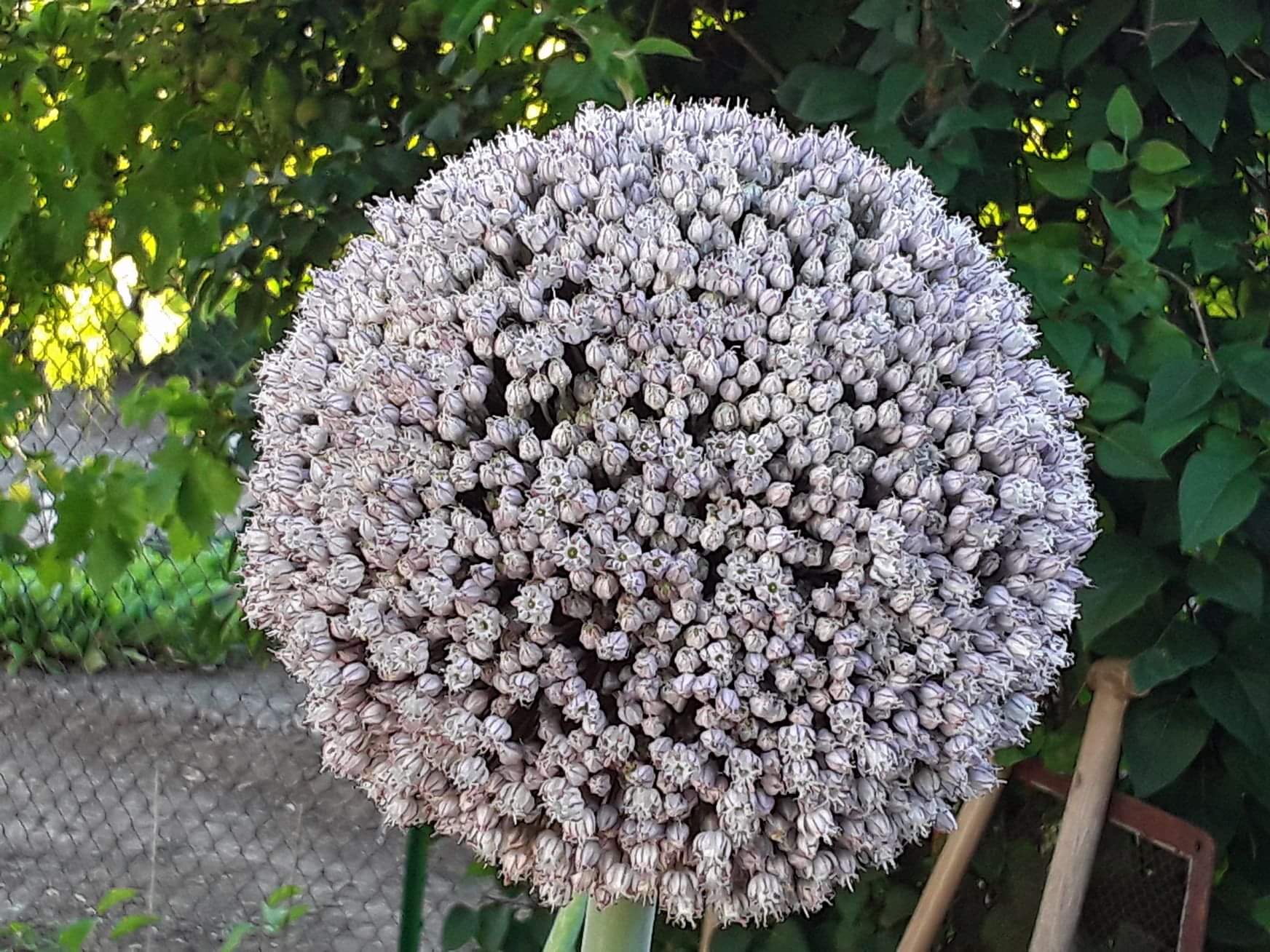 Onion — Umbellate inflorescence
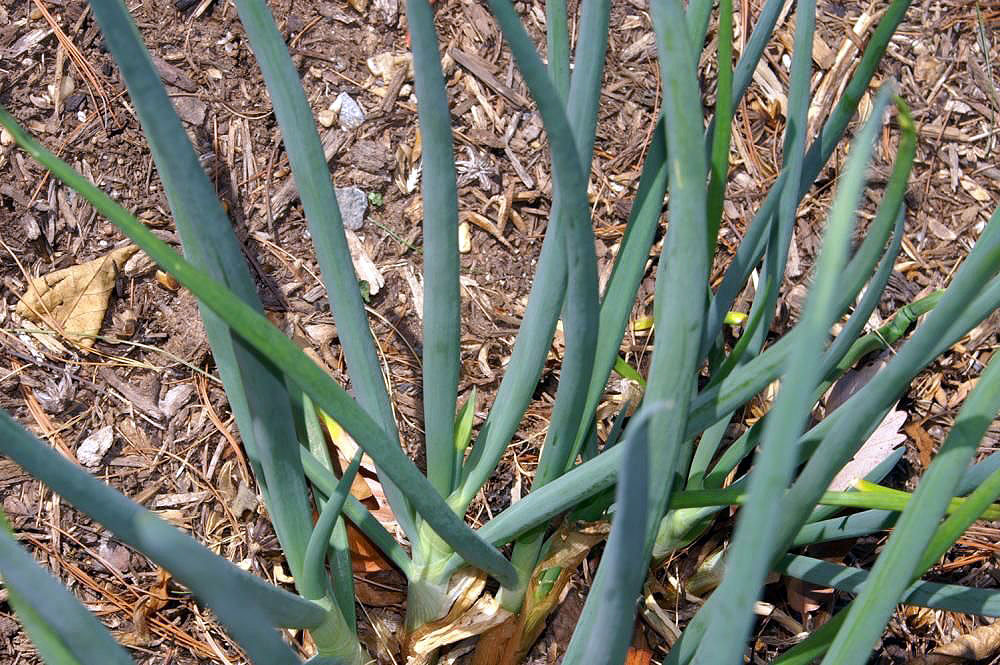
 Onion — Plants in a bedOnion — Flowers (var. cepa)Onion — Bulb
Overview
A biennial or perennial usually grown as an annual and harvested in its first season. Leaves are hollow and bluish-green in a fan; the bulb swells when a certain day-length is reached. The bulb is made of shortened, compressed underground stems wrapped in fleshy scales (modified leaves) around a central bud. The flower scape rises with a spherical umbel of white-greenish flowers. The species is known only from cultivation — its ancestral wild form is unknown — and originates in Central and Southwest Asia.
The onion is used mainly for its bulb as a vegetable and flavouring: as a base for frying (mirepoix, sofrito), stir-fried with beef, in salads, burgers, soups or pickled. The bulb is rich in potassium, selenium, vitamin C and the flavonoid quercetin; sulfur compounds (DMS, DDS, DTS, DTTS) cause its pungency, while propanethial S-oxide forms the irritant that makes you cry when slicing. In traditional medicine the onion is antibacterial (including E. coli and Salmonella), anti-inflammatory, and is used to stimulate circulation and sweating in cold weather.
Life cycle
From seed to productSeedling & foliage
Hollow bluish-green leaves grow in a fan; seedlings are fairly cold-hardy.
Bulbing
Once day-length is sufficient the fleshy scales swell into a bulb.
Flowering
The scape rises with a spherical white-greenish umbel and then sets seed.
Harvest & storage
When tops die down the bulbs are lifted, cured and stored in a dry, cool place.
Distribution & origin
Share of recorded occurrences by region- Central · Southwest Asia (origin)35%
- Europe20%
- East Asia (China, Japan, Korea)20%
- Grown worldwide (incl. Vietnam)25%
Chemical composition
Relative content in agarwood resin- Sulfur compounds (thiosulfinates, propanethial S-oxide)Cause pungency and tears when sliced30%
- Quercetin (flavonoid)Antioxidant25%
- Potassium & seleniumKey minerals in the bulb20%
- Vitamins C, B6, folateMicronutrients15%
- Soluble sugars & fructansGive sweetness when browned10%
Uses
- Base for frying in many cuisines (mirepoix, sofrito); in Vietnam stir-fried with beef, in soups and burgers
- Eaten raw in salads, pickled or roasted
- Traditional medicine: antibacterial, anti-inflammatory, stimulates circulation and sweating
Properties
- Bulb
- Fleshy scales around a central bud
- Leaf
- Hollow, bluish-green, fan-shaped
- Flower
- Spherical white-greenish umbel
- Taste
- Pungent, sweetens when cooked
Habitat & conservation
Known only from cultivation, favouring temperate climates and grown worldwide, including Vietnam (winter–spring crop in the north). Bulbing depends on day-length, so sowing dates are critical.
Conservation
Not Evaluated on the IUCN Red List. The onion is cultivated globally and no wild form exists, so as a crop it is not threatened.
References
- 1Plants of the World Online — Allium cepa L. — Kew Science, 2026
- 2Onion (Allium cepa) — mô tả, phân loại, dinh dưỡng — English Wikipedia, 2026
- 3Hành tây — giống, sử dụng, dinh dưỡng, tác dụng — Vietnamese Wikipedia, 2026
- 4FoodData Central — Onions, raw — USDA, 2024
- 5Nguồn ảnh: Colin (CC BY-SA 3.0) — Wikimedia Commons,
- 6Nguồn ảnh: CHK46 (CC BY-SA 4.0) — Wikimedia Commons,
- 7Nguồn ảnh: Mehdi (CC BY-SA 3.0) — Wikimedia Commons,
- 8Nguồn ảnh: Granja Escuela Lar (CC BY-SA 4.0) — Wikimedia Commons,
- 9Nguồn ảnh: Salicyna (CC BY-SA 4.0) — Wikimedia Commons,
- 10Nguồn ảnh: David J. Stang (CC BY-SA 4.0) — Wikimedia Commons,