
Shallot
Allium ascalonicum L.
The shallot (Allium ascalonicum) is an amaryllis-family herb with small purple-skinned bulbs that are pungent and sweet, fried in oil, used as a seasoning or pickled; pungent and warming, it aids digestion and wards off colds; widely grown in Vietnam.
No ratings yet — be the first!
Gallery
 Shallot — Pickled shallotsShallot — Plant
 Shallot — Field
 Shallot — Flowers
 Shallot — Bulbs
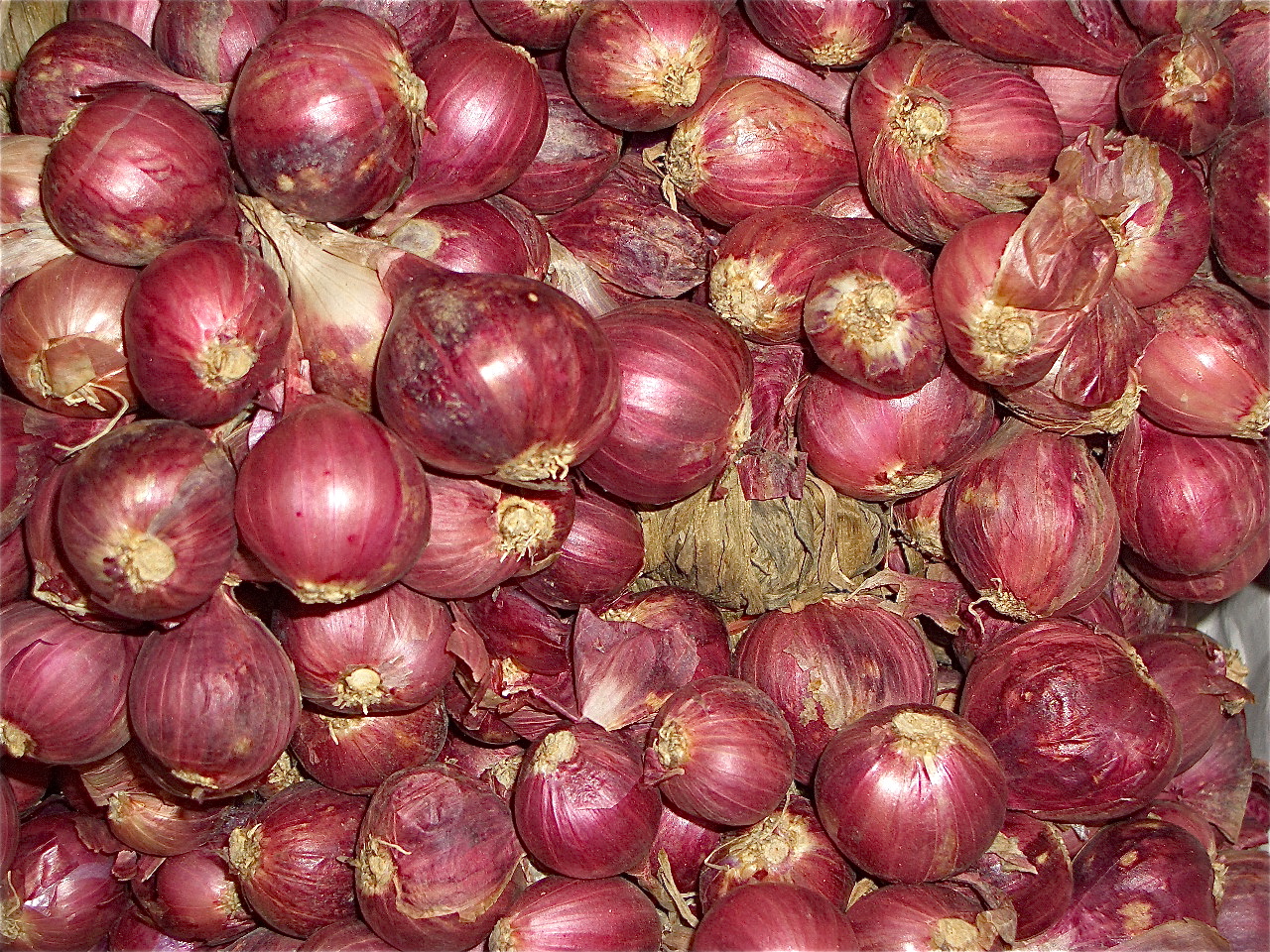 Shallot — Purple bulbsShallot — Pickled shallotsShallot — Plant
Overview
The shallot (Allium ascalonicum) is a perennial herb of the amaryllis family (Amaryllidaceae), growing in clumps of several small bulbs, 20–50 cm tall. The leaves are hollow, cylindrical and green, soft, tasting of onion but milder; their bases swell into bulbs. The shallot bulbs are small, ovoid to nearly round, 2–4 cm across, with thin purplish-red or violet-brown skin and whitish flesh veined with violet. The flowers form a round umbel atop the scape, small, greenish-white to pale purple; the plant rarely flowers in hot regions and is grown mainly for its bulbs. Both bulbs and leaves are used as seasoning.
The shallot is believed to originate in Western/East Asia and has long been grown across Europe, Asia and the Americas; in Vietnam it is widely grown in the Mekong Delta, famous for the Vinh Chau shallot brand in Soc Trang. Shallot bulbs are a key seasoning: fried crisp in oil for pho broth and garnishing, chopped for braising and stir-fries, used to season soups, and pickled to eat with banh chung and banh giay at Tet. In folk medicine the shallot is pungent and warming, said to open the qi, reduce phlegm and sweating, aid digestion and ward off colds; it is steamed or eaten raw at the onset of a cold.
Life cycle
From seed to productPlant
Clump of green hollow leaves from a cluster of bulbs.
Field
Grown in beds on well-drained sandy soil.
Flower
Round umbel of small white flowers on a scape.
Harvested bulbs
Small purple-skinned bulbs, dried for long storage.
Distribution & origin
Share of recorded occurrences by region- Vietnam (Mekong Delta — Vinh Chau)25%
- Southeast & East Asia20%
- Europe25%
- West & Central Asia15%
- Others15%
Chemical composition
Relative content in agarwood resin- Sulphur compounds (allicin)Antibacterial30%
- Flavonoids (quercetin)20%
- Fructans & inulin15%
- Essential oil15%
- Others (protein, carbohydrates)20%
Uses
- Crisping: fried shallots for pho broth and as garnish
- Seasoning: chopped for braises, stir-fries, soups, broth
- Tradition: pickled shallots eaten with banh chung, banh giay at Tet
- Folk medicine: pungent-warming, expectorant, wards off colds, aids digestion; steamed when catching cold
Properties
- Growth form
- Clump of tubular leaves, cluster of bulbs
- Bulb
- Small, purple skin, white flesh
- Leaf
- Hollow, green, soft
- Scent
- Pungent, characteristic allium aroma
Habitat & conservation
The shallot likes warm, dry, sunny climates and sandy, loose, well-drained soil. Grown from setts (bulbs) or seed; planted in beds, watered moderately, harvested when leaves yellow. In Vietnam the famous specialist area is Vinh Chau (Soc Trang) with white coastal sands.
Conservation
A widespread cultivated species, not threatened; not listed by IUCN/CITES. The shallot is sometimes treated as a cultivar group of the onion (Allium cepa).
References
- 1Plants of the World Online — Allium ascalonicum L. — Kew Science, 2026
- 2Shallot — mô tả, nguồn gốc, trồng trọt — Wikipedia tiếng Anh, 2026
- 3Hành tím — cây trồng Vĩnh Châu (Sóc Trăng), giá trị ẩm thực — Tư liệu nông nghiệp Việt Nam, 2024
- 4Allium ascalonicum — hợp chất lưu huỳnh, flavonoid kháng khuẩn — Nghiên cứu dược liệu, 2023
- 5Nguồn ảnh: Okkisafire (CC BY-SA 4.0) / Oliver515 (CC BY-SA 4.0) / Bff (CC BY-SA 3.0) — Wikimedia Commons,
- 6Nguồn ảnh: Ask27 (CC BY-SA 3.0) / Susan Slater (CC BY-SA 4.0) / Ymblanter (CC BY-SA 4.0) — Wikimedia Commons,