Star anise
Illicium verum Hook.f.
Star anise is the typically eight-lobed dried fruit of Illicium verum, an evergreen 8–15 m tree of the Schisandraceae family whose native range — according to Kew's Plants of the World Online — runs from southern and western Guangxi in China to northern Vietnam. Its fruit oil is over 80% trans-anethole, giving the sweet liquorice-like aroma; star anise is both a cornerstone spice of East and Southeast Asian cooking and the main industrial source of shikimic acid for synthesising oseltamivir (Tamiflu).
No ratings yet — be the first!
Gallery
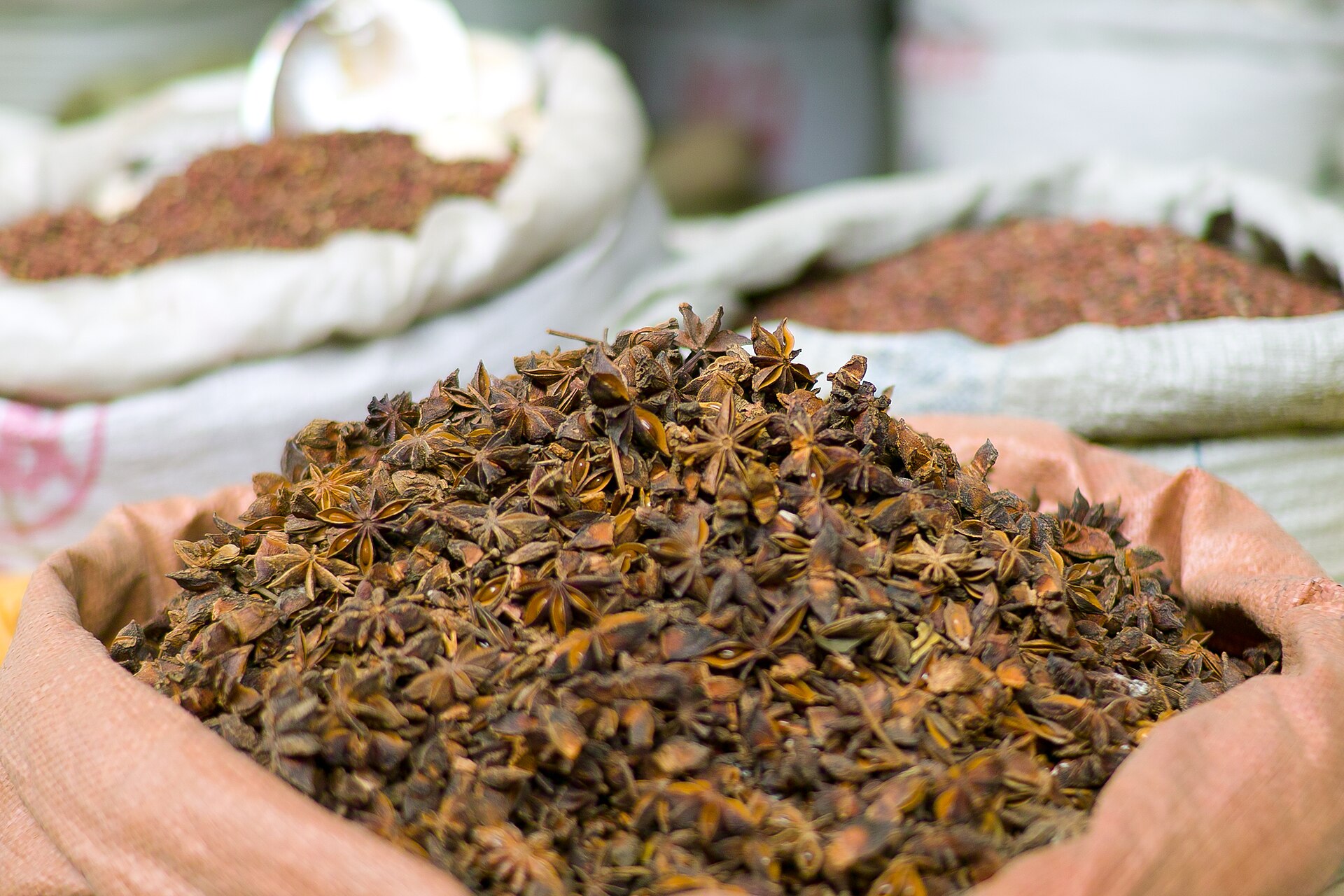
 Star anise — Spice shop (dried)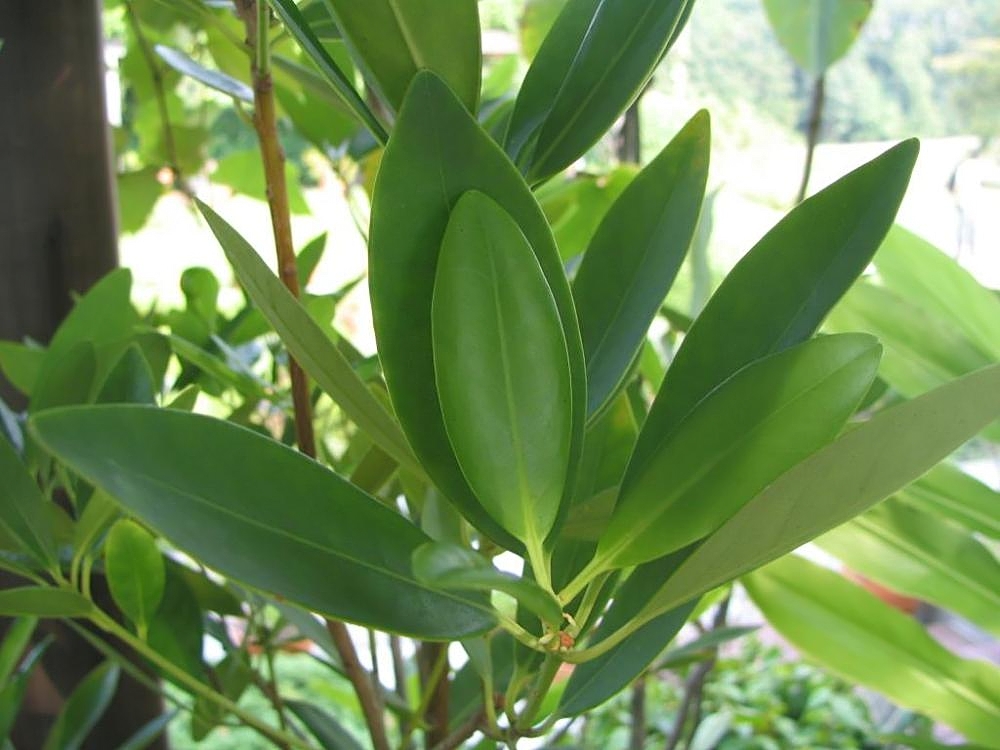
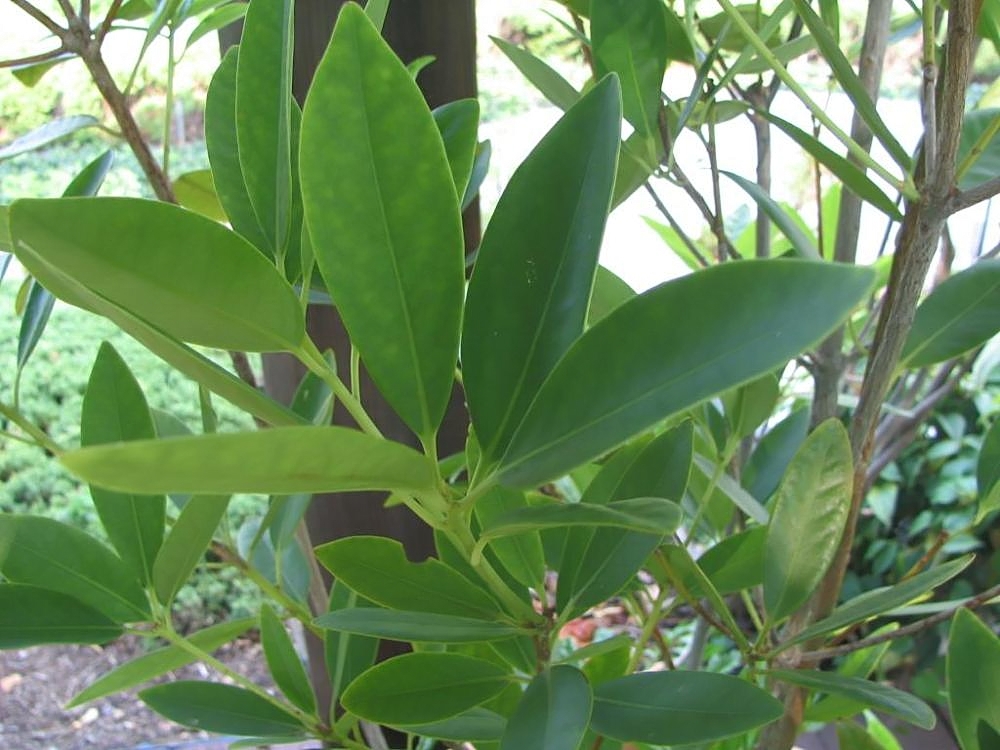
 Star anise — Tree
 Star anise — Star fruitStar anise — Spice shop (dried)
Photo credits: thierrytutin (CC BY 2.0) · Photo by David J. Stang (CC BY-SA 4.0)
Overview
Star anise is an evergreen tree 8–15 m tall with leaves alternate or clustered in whorls at branch tips, obovate-elliptic to obliquely lanceolate, 50–150 mm long, leathery and glossy, with 4–6 pairs of lateral veins and 8–20 mm petioles. Flowers are solitary in leaf axils or subterminal, pink to crimson, on 15–40 mm pedicels, with 7–12 often gland-dotted tepals. The fruiting head sits on a 20–56 mm stalk and reaches 35–40 mm across at maturity, made up of 7–10 (usually eight) follicles 14–20 mm long spread like a star; seeds are brown and 7–10 mm long. The tree blooms twice a year — March to May (the main fruiting flush) and August to October — and fruit is gathered in autumn and winter as it turns from green to yellow-red.
According to Kew's Plants of the World Online the native range of Illicium verum runs from southern and western Guangxi in China to northern Vietnam, in the subtropical biome; the species is most probably native to southern China and north-east Vietnam and has long been cultivated elsewhere. In China it is grown mainly in Guangxi (Baise, Nanning, Qinzhou, Wuzhou and Yulin) at 200–700 m and in Yunnan (Funing, Guangnan, Xichou, Pingbian and Lüchun) up to about 1,600 m. In 2018 Guangxi supplied over 90% of China's output and China accounts for roughly 80% of world production — Guangxi is known as "the hometown of star anise". Secondary production areas include Vietnam (Ha Giang and districts bordering Laos), Laos, Cambodia, Myanmar, Indonesia and the Philippines; Asia provides about 80% of the global source, and the tree is also recorded from Mexico, Haiti and Florida.
By 2023 a total of 201 chemical constituents had been identified from star anise, covering volatile oils, phenylpropanoids, flavonoids, lignans, sesquiterpene lactones, organic acids and terpenoids — most of the 58 newly found compounds being phenylpropanoids and lignans. The most studied fraction is the fruit essential oil, dominated by trans-anethole (over 80%); the Chinese Pharmacopoeia 2020 describes the oil as a clear, colourless to pale-yellow liquid that often turns turbid or crystallises when cold and is readily soluble in 90% ethanol. It also contains limonene, α- and β-pinene, linalool, 1,8-cineole, estragole, anisic aldehyde, β-caryophyllene and germacrene D. The genus is chemically marked by neolignans and seco-prezizaane sesquiterpenes. The second most studied non-volatile component is shikimic acid, the industrial precursor of oseltamivir. The Chinese Pharmacopoeia 2020 carries the monograph Ba Jiao Hui Xiang (八角茴香), and the European Pharmacopoeia (4th edition) has recognised Anisi Stellati Fructus and its oil as expectorant and spasmolytic drugs used in allopathy since 2002.
The review by Zou et al. (Molecules, 2023) and individual studies document a wide activity range: the oil inhibits Bacillus subtilis at MIC 0.5 µL/mL — stronger than the common preservative paraben — and suppresses Aspergillus flavus and Candida albicans at MIC/MFC 2.5–25 µL/mL; trans-anethole shows antifungal activity close to the oil itself (IC50 0.06–0.25 mg/mL against 11 plant pathogens). Extracts are strong antioxidants (DPPH EC50 0.089 mg/mL when extracted at 60 °C) and anti-inflammatory agents (reduction of xylene-induced ear oedema in mice; a star-anise mouthwash improved gingival status in a small clinical study). At 0.1% (w/w) the oil protects stored grain, giving 100% inhibition of Tribolium castaneum, Rhizopertha dominica and Tenebrio molitor, which is why it is being developed as antimicrobial, insect-repellent food-packaging film. Against viruses, (−)-bornyl p-coumarate isolated from star anise (2022) gave an IC50 of 1.74 µmol/L against influenza A H1N1 — more potent in vitro than oseltamivir (10.01 µmol/L) and ribavirin (10.76 µmol/L) — while illicinone A and a cycloartane derivative showed anti-HIV activity (EC50 16.1 and 5.3 µM). Shikimic acid from the fruit is the main precursor of oseltamivir (Tamiflu, Roche), the drug recommended against H5N1 avian influenza, and the 2005 global shortage traced back to limited extraction from this tree.
Safety hinges on never confusing Illicium verum with Illicium anisatum (Japanese star anise) and other native species rich in the neurotoxin anisatin — adulteration has repeatedly caused poisoning outbreaks. In 1996 three compounds, veranisatin A, B and C, isolated from star-anise extract were reported to cause convulsions and lethal toxicity in mice at an oral dose of 3 mg/kg (anisatin acting at 1 mg/kg); the first documented overdose case dates from 1992 and infant poisonings continue to be reported, mostly after mix-ups with substitute species. trans-Anethole has been assessed as a flavouring substance (FEMA GRAS, 1999), but contact allergy and occupational dermatitis in food handlers are documented. Conservation-wise, IUCN lists the species as Not Evaluated (NE) and it is absent from CITES; supply comes overwhelmingly from orchards in Guangxi, Yunnan and Ha Giang, so wild populations in southern China and northern Vietnam face moderate harvesting pressure. Priorities are protecting local seed trees, maintaining clean grafted orchard stock, and keeping the crop strictly separate from anisatin-rich toxic relatives.
Life cycle
From seed to productSeed
Small seeds sit in the follicles of the star-shaped fruit, typically eight lobes; they are sown in warm, moist soil and kept evenly damp until germination.
Germination
Star anise seeds germinate in warm, moist soil; seedlings need shade and high humidity to survive their first months.
Seedling
The sapling grows slowly in shade with a slim stem and leathery leaves, rooting deeply into limestone soil in its early years.
Mature plant
After several years the evergreen reaches 8–15 m with a canopy of leathery glossy leaves, its roots set in deep, fertile limestone soil.
Flowering & fruiting
The tree bears small wine-red flowers; fruit ripens from green to dark red, each with a star of typically eight seed-bearing follicles.
Harvest
Ripe fruit is picked, blanched and sun- or machine-dried; good-quality batches retain a reddish-brown colour and strong anethole aroma.
Distribution & origin
Share of recorded occurrences by region- China78%
- Vietnam10%
- Cambodia3%
- Myanmar3%
- Indonesia3%
- Philippines & other areas3%
Chemical composition
Relative content in agarwood resin- trans-AnetholeSignature liquorice aroma; over 80% of the fruit oil82%
- LimoneneFresh citrus-peel note4%
- α- & β-PinenePiney nuance4%
- LinaloolLight floral note3%
- β-Caryophyllene & germacrene DWoody sesquiterpenes3%
- Others1,8-cineole, estragole, anisic aldehyde, low-level safrole4%
Uses
- Spice for phở, braised dishes, five-spice powder, sauces and braised pork
- Anethole distilled for confectionery, beverages, flavourings and mouthwash
- Industrial shikimic acid source for synthesising oseltamivir (Tamiflu)
- Liqueurs (pastis, absinthe, raki) and traditional medicine: warming, dispersing cold, regulating qi
- Essential oil as a grain preservative and natural insect repellent
- Antimicrobial, antifungal food-packaging film that extends shelf life
Properties
- Fruit shape
- Eight-lobed star
- Fruit colour
- Dark reddish brown
- Scent
- Sweet, liquorice-like
- Taste
- Warm, sweet, faintly pungent
Habitat & conservation
Humid subtropical forest and limestone hills; it favours deep, well-drained, fertile, moist and slightly acidic sandy loam or loam, and grows poorly on dry, barren or waterlogged soil. Cultivation runs from about 200 m in Guangxi to roughly 1,600 m in Yunnan, and young plants tolerate light shade. POWO places the species in the subtropical biome.
Conservation
Not Evaluated (NE) by the IUCN and not listed in CITES. Supply comes overwhelmingly from orchards in Guangxi and Yunnan (China) and Ha Giang (Vietnam), while wild fruit is still collected in the forests of southern China and northern Vietnam, so harvesting pressure is moderate at most. Priorities are protecting local seed trees, maintaining clean grafted orchard stock, and keeping the crop strictly separate from anisatin-rich toxic relatives to prevent dangerous adulteration.
References
- 1Plants of the World Online — Illicium verum Hook.f. — Kew Science, 2024
- 2Flora of China, Vol. 7 — Schisandraceae (Illicium) — Flora of China, 2008
- 3Pharmacopoeia of the People's Republic of China — Ba Jiao Hui Xiang (八角茴香) — Chinese Pharmacopoeia, 2020
- 4A Comprehensive Review of the Pharmacology, Chemistry, Traditional Uses and Quality Control of Star Anise (Illicium verum Hook. F.) — Molecules 28(21):7378 (Zou et al.), 2023
- 5Illicium verum (Star Anise) and Trans-Anethole as Valuable Raw Materials for Medicinal and Cosmetic Applications — Molecules 27(3):650 (Sharafan et al.), 2022
- 6Star anise (Illicium verum): Chemical compounds, antiviral properties, and clinical relevance — Phytotherapy Research 34:1248 (Patra & Das), 2020
- 7Illicium verum: A review on its botany, traditional use, chemistry and pharmacology — Journal of Ethnopharmacology 136(1):10 (Wang et al.), 2011
- 8Antifungal activity of the essential oil of Illicium verum fruit and its main component trans-anethole — Molecules 15(11):7558 (Huang et al.), 2010
- 9Nguồn ảnh: Daderot (CC0) / Bff (CC BY-SA 4.0) / Borshingwoods (CC BY-SA 4.0) — Wikimedia Commons,