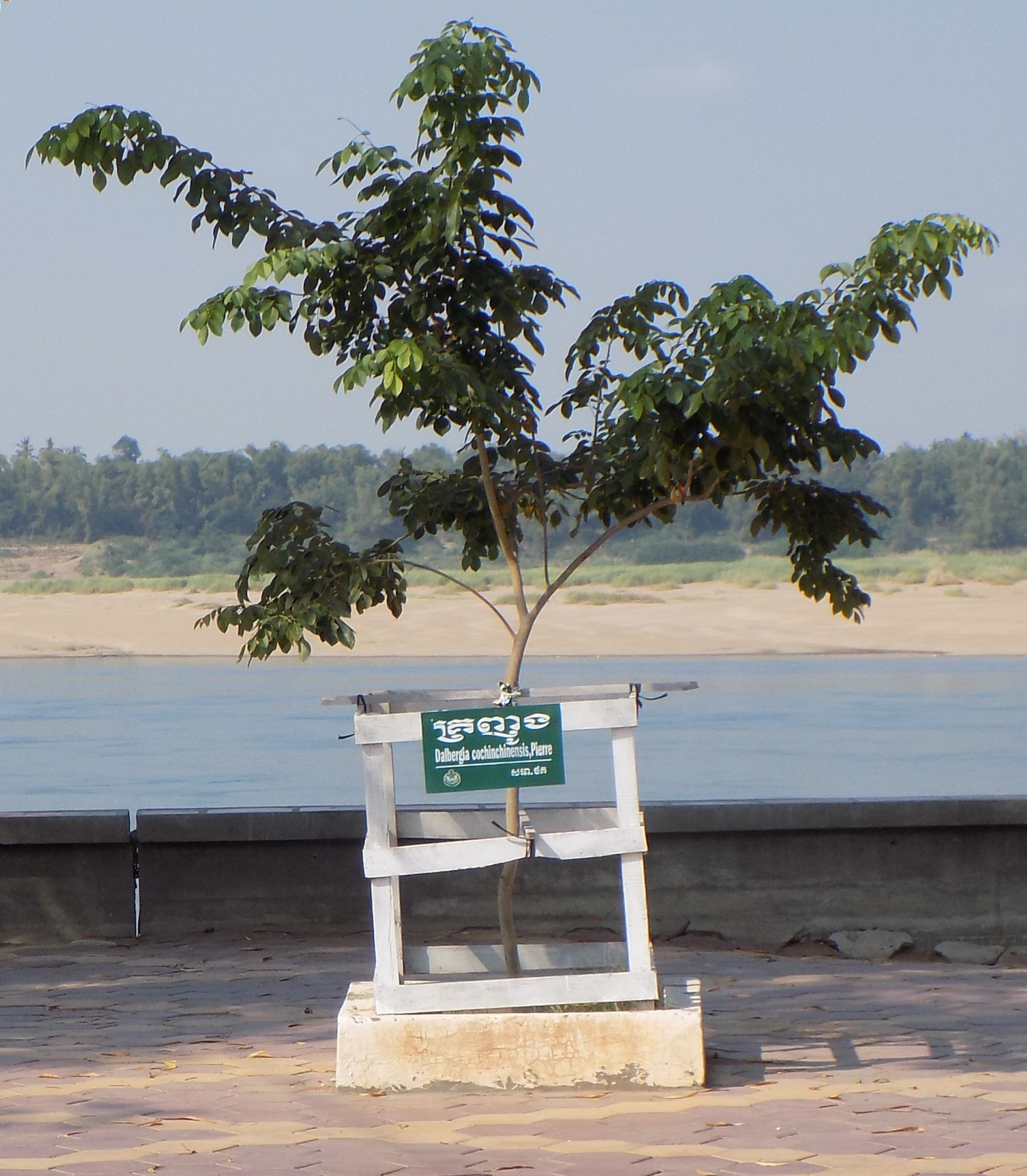
Cochinchina rosewood
Dalbergia cochinchinensis Pierre ex Laness.
Cochinchina rosewood (Dalbergia cochinchinensis) is a highly prized rosewood with dense, dark-red, fine-grained timber; illegal harvesting has driven it to Critically Endangered on the IUCN Red List.
No ratings yet — be the first!
Gallery
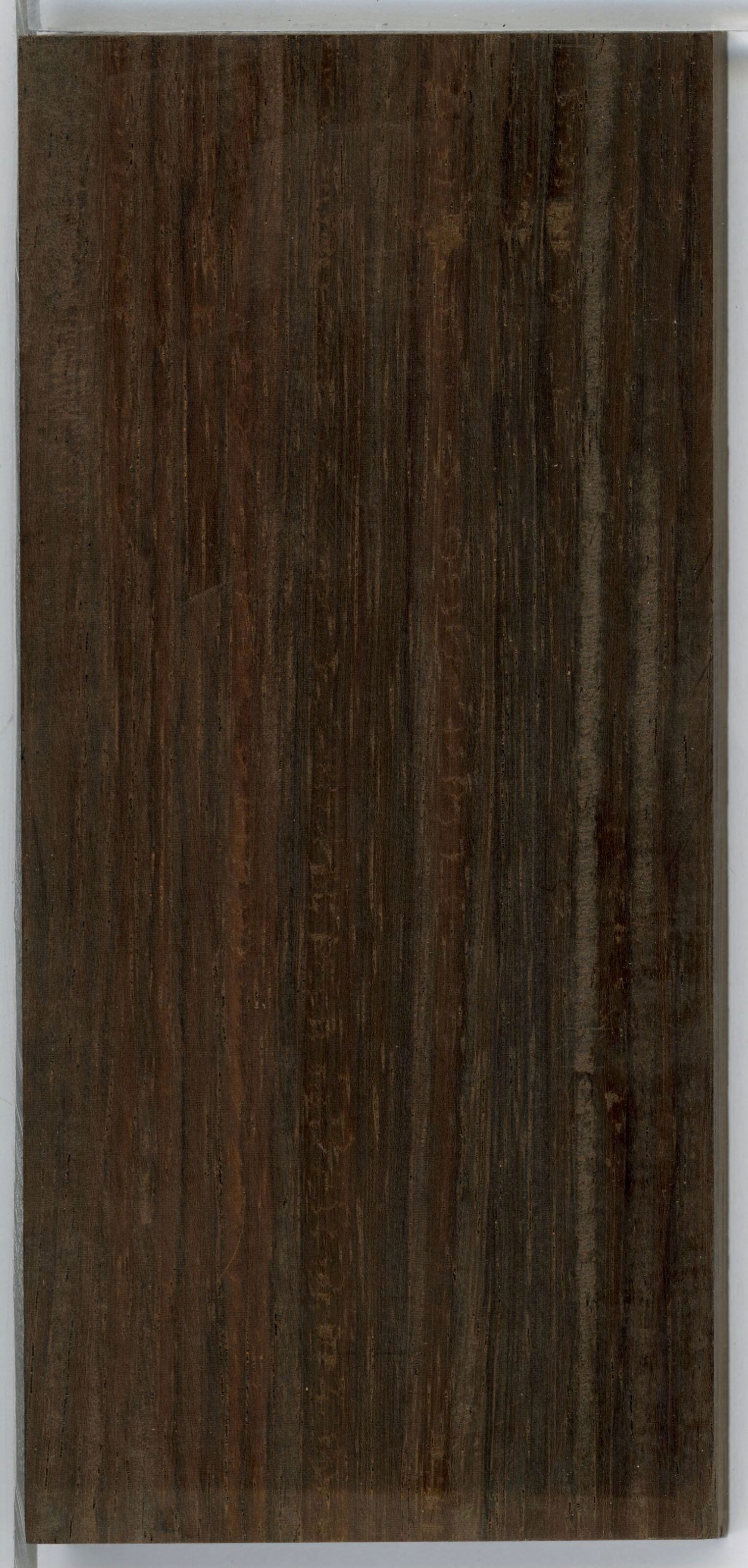 Cochinchina rosewood · photo 3Dark red rosewood
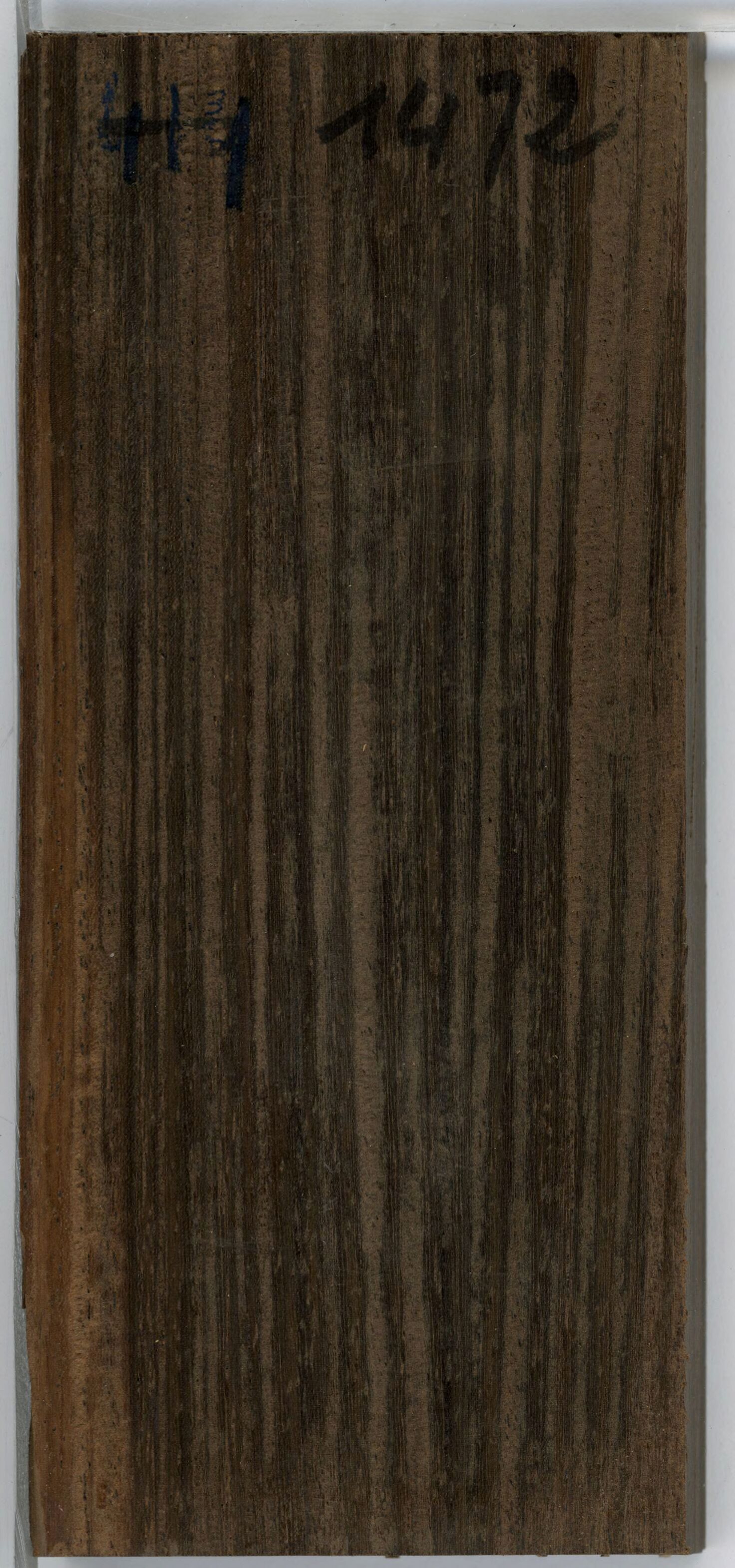 Cochinchina rosewood · photo 2Cochinchina rosewood · photo 3Dark red rosewood
Photo credits: Pamputt (CC0) · Centre de coopération internationale en recherche agronomique pour le développement (France). Programme Bois. Producteur d'un fonds d'archives (Public domain)
Overview
A slow-growing evergreen of 10–25 m, sometimes crooked or low-branched under past logging. The heartwood is dark red to purplish, fine-grained, very heavy and faintly scented — ranked among the top red-wood (hongmu) timbers for furniture and carving.
Native to Cambodia, Laos, Thailand and Vietnam, it grows on loamy soils in deciduous and dry semi-evergreen forest. The timber is fiercely hunted to supply China's red-wood furniture trade, with trees uprooted entirely. Reassessed in 2022 and listed as Critically Endangered (CR); Dalbergia cochinchinensis was included in CITES Appendix II at CoP16 in 2013.
Life cycle
From seed to productSeed
Trac seed lies inside thin winged pods that drift on the wind before falling; ripe pods are collected and sown early to keep viability.
Germination
Seeds germinate on mineral soil at the onset of the rains; the warmth and moisture of the rainy season trigger germination.
Seedling
The seedling grows slowly in dappled light, tolerating poor soils and the harsh dry-season sun.
Mature plant
At 10–25 m, the dark red heartwood builds up slowly over decades; the older the tree, the finer the timber.
Logging
Timber is sawn, dried and polished for furniture and carving; illegal logging is the greatest threat, making legal-origin traceability essential.
Distribution & origin
Share of recorded occurrences by region- Cambodia27%
- Vietnam26%
- Laos22%
- Thailand18%
- Other regions7%
Chemical composition
Relative content in agarwood resin- CelluloseStructural cell-wall polymer43%
- HemicelluloseMatrix polysaccharide20%
- LigninHigh share, dense hard wood31%
- Extractives (tannin & red pigments)Gives the heartwood its dark red tone6%
Uses
- High-end rosewood furniture
- Carving, statues and relief work
- Prayer beads, jewellery and handicrafts
- Luxury flooring and panelling
Properties
- Colour
- Dark red to purplish
- Grain
- Fine, attractively figured
- Density
- 0.85 – 1.10 g/cm³
- Durability
- Very durable, faintly fragrant
Habitat & conservation
Deciduous and dry semi-evergreen forest on loamy soils with a long dry season; native to Cambodia, Laos, Thailand and Vietnam.
Conservation
Dalbergia cochinchinensis was reassessed in 2022 and is now Critically Endangered (CR) on the IUCN Red List: booming red-wood demand has led to felling and uprooting across its range. It was listed in CITES Appendix II (CoP16, 2013); all international trade requires permits and legal-origin documentation.
References
- 1Dalbergia cochinchinensis — The IUCN Red List of Threatened Species (2022 reassessment) — IUCN, 2022
- 2CITES CoP16 Proposal 60 — Dalbergia cochinchinensis in Appendix II — CITES, 2013
- 3Range-wide priority setting for the conservation of Asian rosewoods — Biological Conservation, 2022