

Lettuce
Lactuca sativa L.
Lettuce (Lactuca sativa) is an annual herb of the daisy family grown for its leaves, eaten raw in salads, sandwiches and wraps; many cultivars exist (head, romaine, butterhead); native to the Middle East–Mediterranean, cultivated since ancient Egypt, with China producing over half of world output.
No ratings yet — be the first!
Gallery
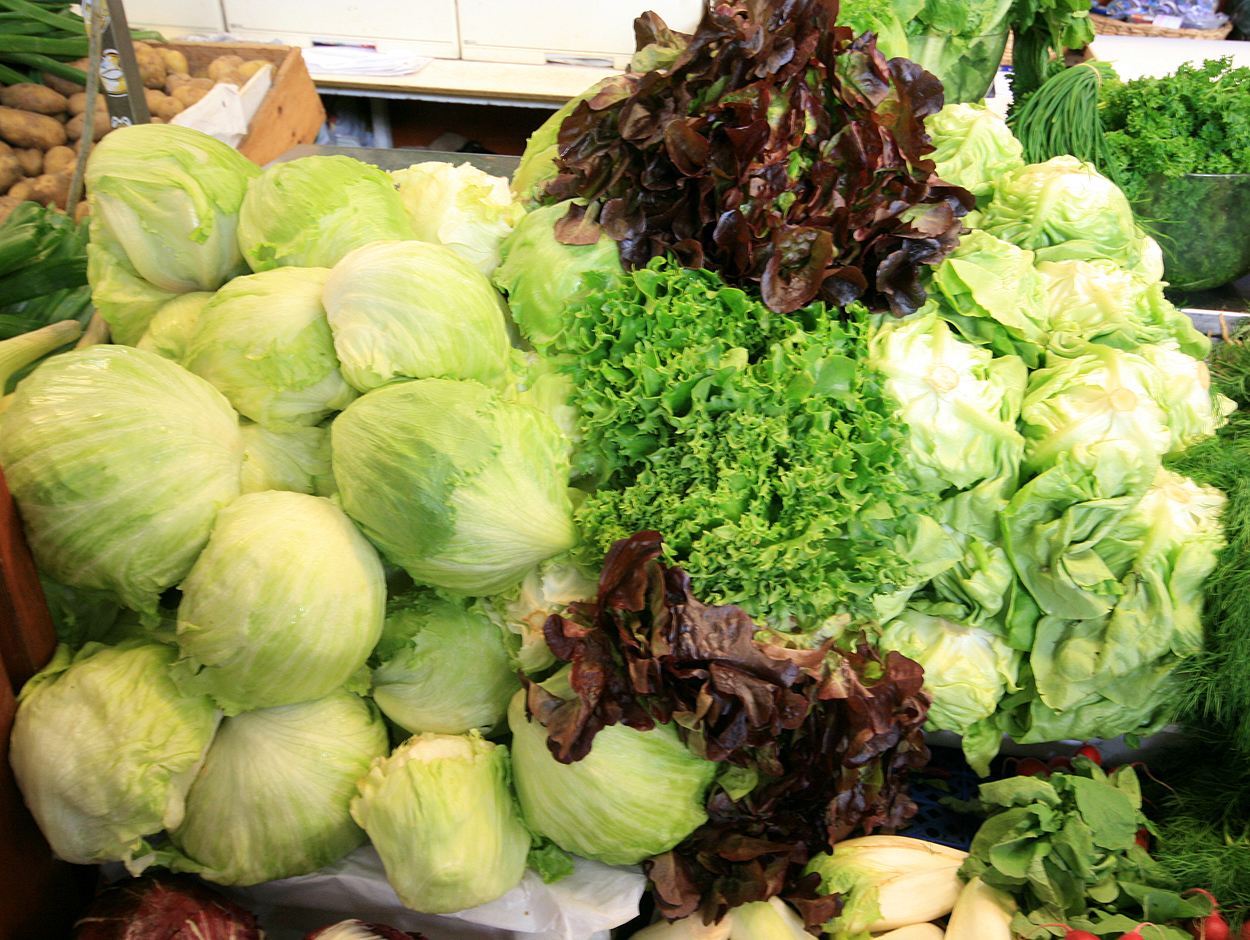 Lettuce — MarketLettuce — Plant
 Lettuce — Romaine head
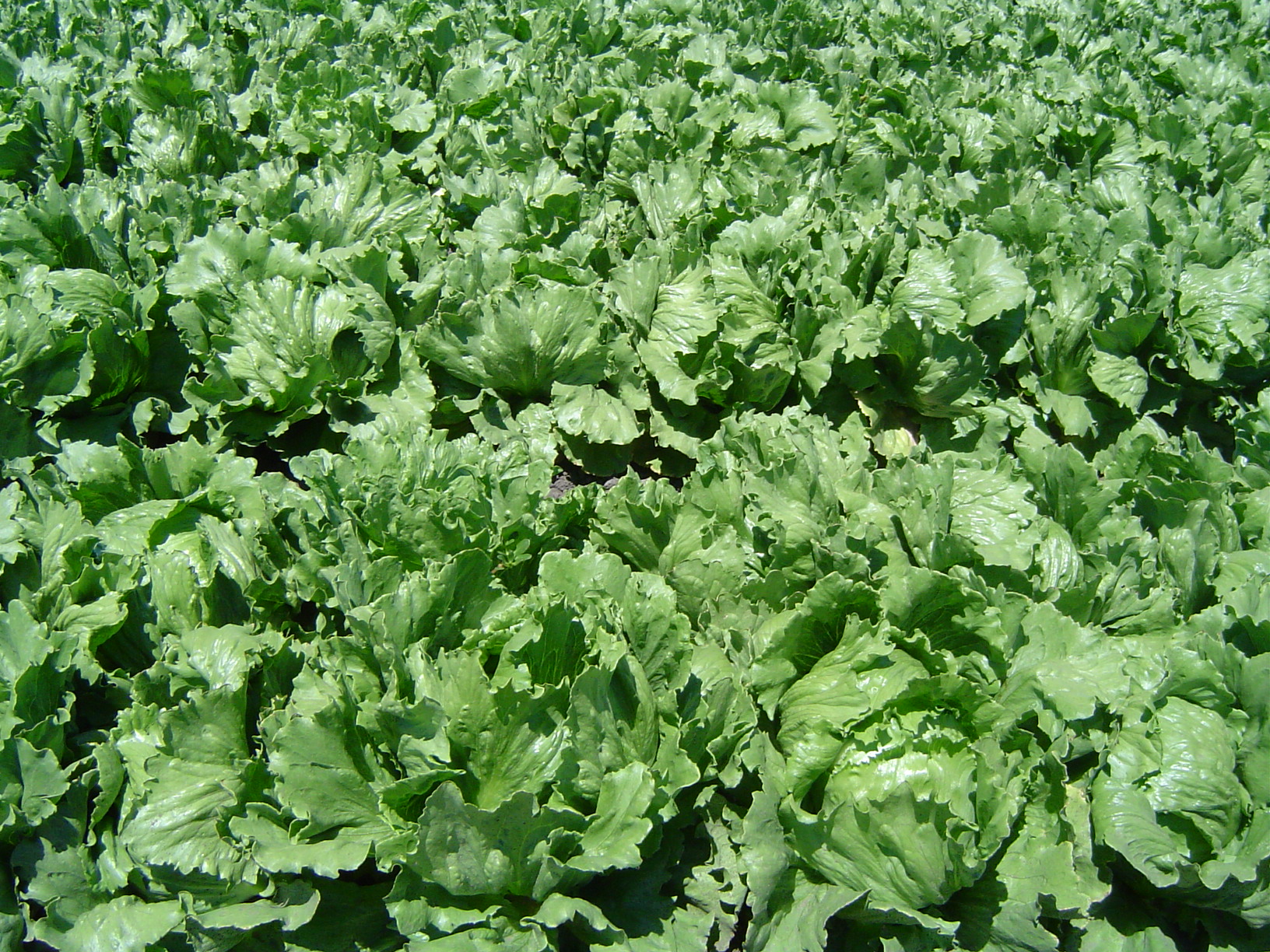 Lettuce — Field
 Lettuce — Bolting
 Lettuce — SeedsLettuce — MarketLettuce — Plant
Overview
An annual herb 15–30 cm tall (bolting to 60–100 cm); short stem exuding milky latex when cut. Leaves form a basal rosette; blades oval to rounded or lobed, entire or wavy, pale to deep green (head types) or red-purple (red romaine). Depending on the variety, leaves pack into a tight head (iceberg, butterhead) or spread loose (leaf types, upright romaine). The small pale-yellow flowers are borne in panicles and appear only when the plant bolts under heat or long days; self-pollinating. The fruit is an achene; seeds are small, white-grey and tufted, wind-dispersed. Lettuce is grown mainly for fresh young leaves that are crisp, juicy and mild, turning slightly bitter as plants age.
Lettuce derives from the wild species Lactuca serriola of the Mediterranean and West Asia; the ancient Egyptians cultivated it some 4,500 years ago, both as a vegetable and for seed oil. Greeks and Romans spread it through Europe; the English 'lettuce' descends from Latin 'lactuca' (milky). Today there are about seven cultivar groups: crisphead (iceberg), butterhead, romaine, leaf, stem (celtuce), Latin and oilseed. In 2023 world production of lettuce (and chicory) was about 28 million tonnes; China produced roughly 53%, followed by the United States, India and Europe. In Vietnam, lettuce grows year-round in cool highlands (Đà Lạt, Sa Pa, Mộc Châu) and in the winter-spring season on the plains, used for fresh platters with phở and seafood rolls, and salads. The leaves are mostly water, with vitamin K, A, folate and lactucarium, a substance used in folk medicine as a mild sedative.
Life cycle
From seed to productLettuce field
Grown in rows, harvested 30–70 days after sowing; prefers cool weather of 15–20°C.
Mature head
Leaves form a rosette head or loose bunch depending on variety; ~95% of fresh weight is water.
Bolting
In hot weather the stem bolts to 60–100 cm and bears small yellow panicles; leaves then turn bitter.
Seeds
Small white-grey tufted seeds; about 800–1,500 seeds per gram.
Distribution & origin
Share of recorded occurrences by region- China (largest producer)45%
- Mediterranean & West Asia (origin) + Europe15%
- United States & North America15%
- India · rest of Asia · Africa25%
Chemical composition
Relative content in agarwood resin- WaterJuicy crisp leaves95%
- Carbohydrate (sugars)Mild taste2.9%
- ProteinLow content1.4%
- Dietary fibreSupports digestion1.3%
- FatVery low0.15%
- Vitamins & minerals (K, A, C, folate)Rich in vitamin K and pro-vitamin A0.25%
Uses
- Eaten raw in salads, sandwiches, burgers and wraps; served fresh with phở-bún and spring rolls
- Lightly cooked in stir-fries and soups; stem lettuce (celtuce) cooked or pickled
- Older bitter leaves contain lactucarium, used in folk medicine as a mild sedative
- Grown hydroponically and in rotation; diverse cultivars for horticulture
Properties
- Stem
- Short, milky latex; bolts tall
- Leaf
- Rosette, head or loose, crisp juicy
- Flower
- Pale yellow panicles, selfing
- Fruit
- Small tufted achenes, wind-dispersed
Habitat & conservation
Prefers cool weather of 15–20°C, ample moisture and rich, well-drained soil at pH 6–7; heat above 25°C triggers early bolting (bitter leaves). In Vietnam it grows year-round in Đà Lạt, Sa Pa and Mộc Châu and in the winter-spring season on the plains; harvest at 30–70 days.
Conservation
Not Evaluated on the IUCN Red List. Local cultivars are conserved in gene banks given high genetic diversity.
References
- 1Plants of the World Online — Lactuca sativa L. — Kew Science, 2026
- 2Lettuce — mô tả, lịch sử, sản xuất — English Wikipedia, 2026
- 3Xà lách — các nhóm giống, đặc điểm — Vietnamese Wikipedia, 2026
- 4FAOSTAT — Lettuce and chicory: world production (2023) — FAO, 2024
- 5Nguồn ảnh: Shuvaev / Rainer Zenz / Geographer (CC BY 4.0 / CC BY-SA 3.0 / CC BY 1.0) — Wikimedia Commons,
- 6Nguồn ảnh: Forest & Kim Starr / Tracey Slotta-USDA / Mahlum (CC BY 3.0 / PD / PD) — Wikimedia Commons,