
Peanut
Arachis hypogaea L.
The peanut or groundnut (Arachis hypogaea L.) is a legume of the family Fabaceae whose pods ripen underground (geocarpy); the seeds are rich in oil (about 45–50%) and protein (about 25–30%) and are used for oil, peanut butter and food, and it is native to South America. According to Kew POWO the species is a cultigen from Bolivia; the genus Arachis is native from Bolivia to Brazil and northern Argentina. Besides oil and protein, the seed contains resveratrol, p-coumaric acid, phytosterols and vitamin E. Peanuts are studied for antioxidant, anti-inflammatory and cardiovascular effects; notably, the LEAP trial (Du Toit et al., 2015) showed that early peanut consumption in high-risk infants greatly reduces peanut allergy. Two key safety issues are peanut allergy (which can be severe) and aflatoxin from mould during storage.
No ratings yet — be the first!
Gallery
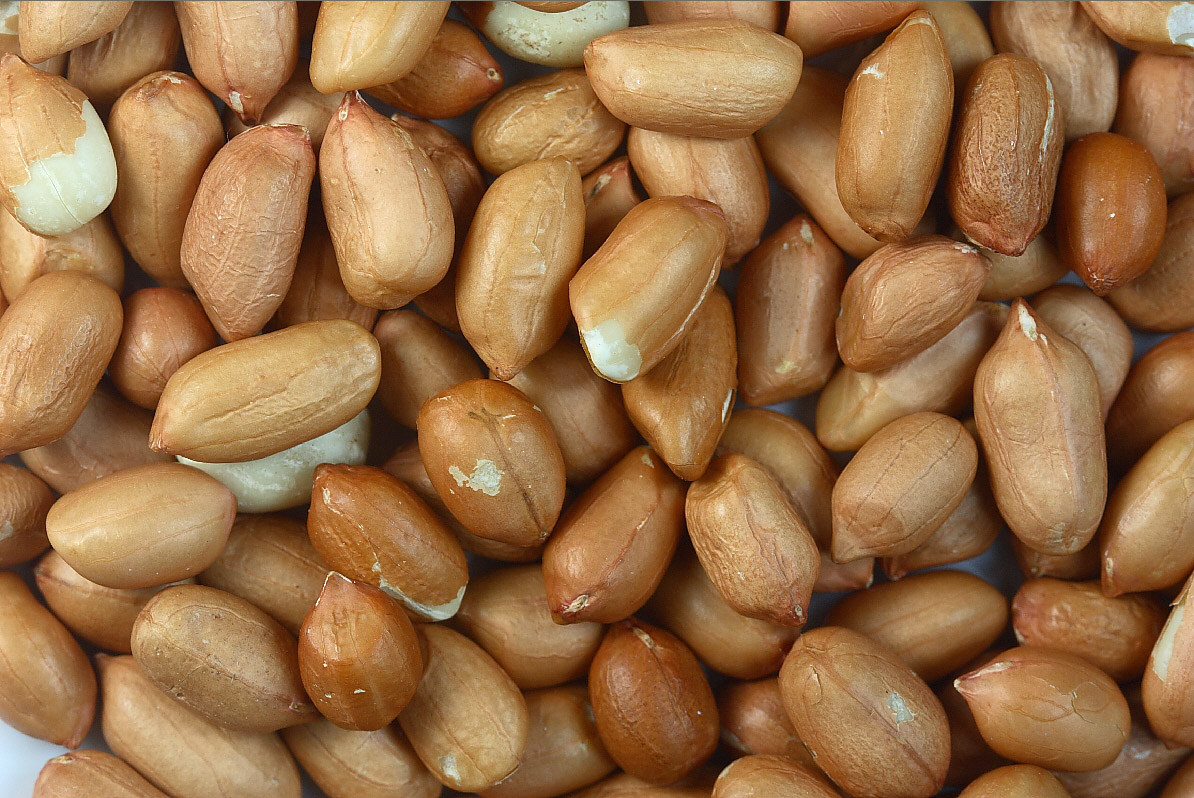 Peanut — SeedsPeanut — Plant
 Peanut — Leaves
 Peanut — Flower
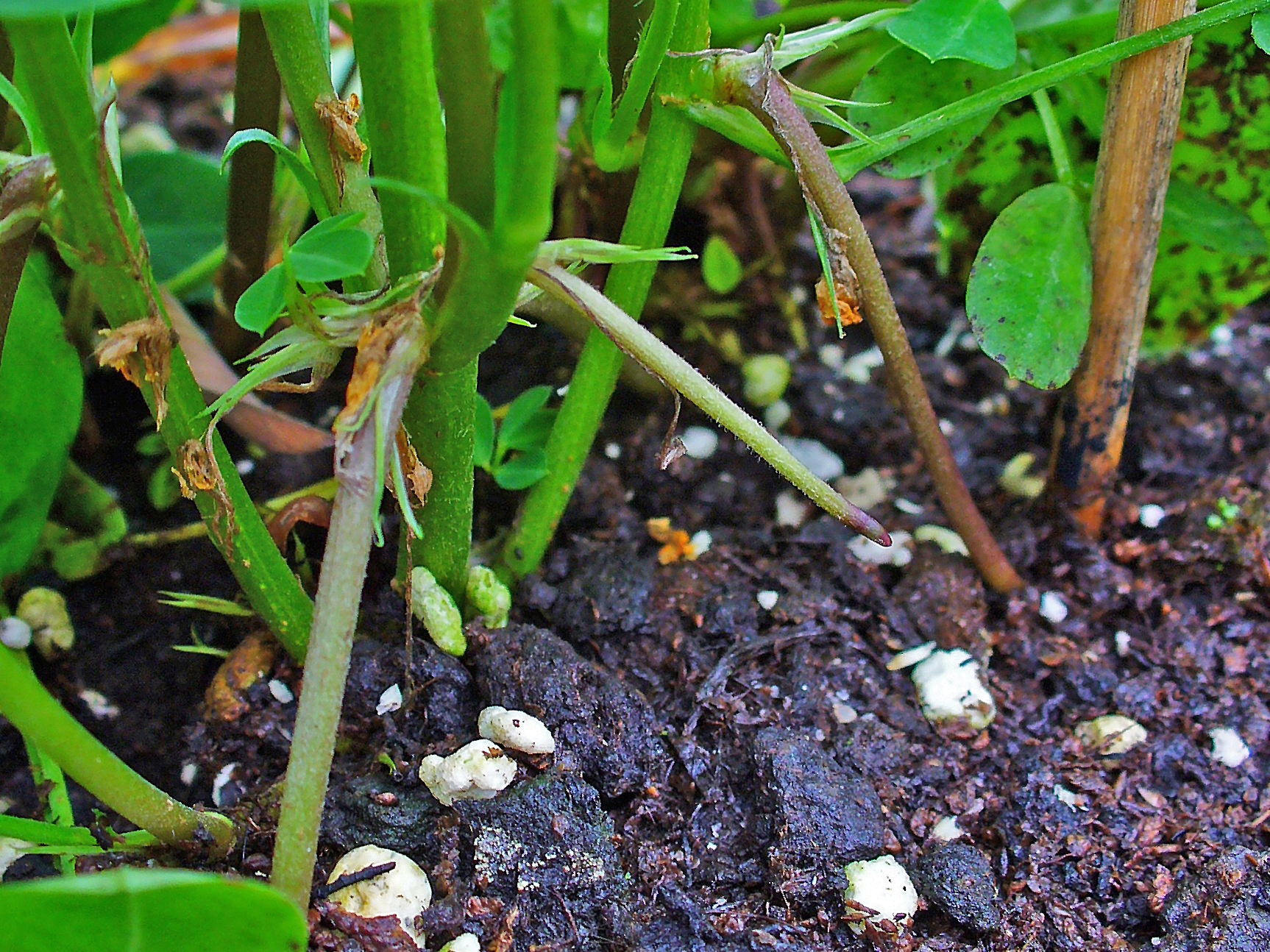 Peanut — Peg growing into the soil
 Peanut — PodsPeanut — SeedsPeanut — Plant
Overview
The peanut (Arachis hypogaea L.) is an annual herb 30–50 cm tall (sometimes to 60 cm), with an erect stem that branches into a bushy or slightly prostrate plant. The leaves are alternate and pinnate, usually with two pairs of leaflets (four leaflets) and long stipules; the leaflets are obovate to oval, 1–7 cm long and 1–3 cm broad and finely hairy. The papilionaceous (pea-like) flowers are yellow with red veins on a 2–4 cm stalk and are largely self-pollinating. After pollination the flower stalk (gynophore, or 'peg') elongates, bends down and penetrates the soil, and the pod develops underground — the unusual geocarpy of this legume; the species epithet 'hypogaea' means 'under the earth'. The fruit (pod) is a legume 3–7 cm long, net-veined, containing 1–4 seeds; the seeds are egg-shaped with a reddish-brown to pale pink testa; the chromosome number is 2n = 40. The roots bear nodules with nitrogen-fixing bacteria.
According to Kew POWO, the native range of the species Arachis hypogaea is given as a cultigen from Bolivia; the genus Arachis is native from Bolivia to Brazil and northern Argentina, i.e. the region east of the Andes in South America. It is an annual of the seasonally dry tropics. The peanut was domesticated in the Chaco and Andean foothill region (now Bolivia, Paraguay and Argentina) several thousand years ago, and was then carried worldwide by the Spanish and Portuguese to Africa, Asia and Oceania. Today China and India are the largest producers, followed by Nigeria, the United States and Argentina. In Vietnam peanuts are grown mainly in the spring and summer–autumn seasons, concentrated in provinces such as Nghe An, Thanh Hoa, Tay Ninh and Binh Dinh.
Chemically, the peanut stands out for its high oil content, about 45–50% of the seed weight, consisting mainly of oleic acid (omega-9) and linoleic acid (omega-6) with small amounts of saturated fatty acids. Protein makes up about 25–30% and is rich in arginine and essential amino acids; carbohydrate is about 16% and dietary fibre about 8%. As phytonutrients, peanut contains resveratrol (a stilbenoid), p-coumaric acid, flavonoids and isoflavonoids, together with phytosterols (mainly beta-sitosterol) and vitamin E (alpha-tocopherol) — regarded as important phytonutrients (Toomer, 2017). The seed also supplies niacin (vitamin B3), folate, magnesium, potassium and phosphorus. Raw peanut also contains some anti-nutrients such as trypsin inhibitor, phytate and lectins, reduced by roasting, boiling or processing; notably, resveratrol and phenolic-acid levels rise when the seed germinates (Zhou et al., 2021). An important chemical safety point is that peanut is readily infected during hot, humid storage by the fungi Aspergillus flavus and Aspergillus parasiticus, which produce aflatoxins.
Peanut is used widely as food and industrial raw material. In Vietnam boiled peanuts, salted roasted peanuts, peanut butter, peanut candy and peanut oil are familiar products; worldwide roasted peanuts, peanut butter and peanut sauces (Southeast Asia, West Africa, Latin America) are very common. Peanut oil is used for cooking and in industry (paint, varnish, polishes, lubricants); the oilcake is used as animal feed and fertiliser; the haulms are used for fodder and silage. In research, the randomised controlled LEAP trial (Du Toit et al., 2015, New England Journal of Medicine) showed that introducing peanut to high-risk infants from 4–11 months reduced the prevalence of peanut allergy at age 5 by about 80% — the basis for current guidance to introduce peanut early; the PREDIMED trial (Estruch et al., 2013, NEJM) showed that a Mediterranean diet containing nuts (including peanuts and other nuts) reduced cardiovascular events; the review by Ortiz et al. (2024) systematises peanut bioactives and their anti-inflammatory and antioxidant effects; Zhou et al. (2021) showed that germination markedly raises resveratrol and phenolic acids; and Toomer (2017) analysed the nutritional chemistry, including resveratrol and isoflavonoids.
As regards safety, peanut's two biggest issues are allergy and aflatoxin. Peanut is one of the eight major food-allergen groups; peanut allergy is often severe and can cause anaphylaxis, due to storage proteins such as Ara h 1 and Ara h 2, and usually persists for life. However, evidence from the LEAP trial (2015) shows that introducing peanut early to high-risk infants (under medical guidance) helps prevent allergy, so delaying introduction is no longer advised. Second, aflatoxin — especially aflatoxin B1 — is a mould toxin produced by Aspergillus flavus and A. parasiticus when peanut is stored hot and humid; it is a human liver carcinogen (classified by IARC in Group 1) and can cause acute poisoning. Peanuts should therefore be stored dry, ventilated and cool, mouldy, greenish or bitter seeds discarded, and spoiled peanuts never eaten; international standards (Codex) set limits for aflatoxin in peanuts and peanut butter. On conservation, the species Arachis hypogaea has no global IUCN Red List assessment (NE) and is not listed in the CITES appendices; it is an important oil and grain crop grown worldwide and is not threatened. However, the wild species of the genus Arachis in South America — valuable gene sources for disease resistance, drought tolerance and oil quality — face habitat loss and should be maintained in genebanks (such as ICRISAT and USDA) and conserved in situ.
Life cycle
From seed to productGermination & seedling
Seeds germinate in the soil and the seedlings grow upright before branching into a bush.
Plant & leaves
An annual herb 30–50 cm tall with opposite, pinnate leaves of four leaflets.
Flowering
Pea-like yellow flowers with red veins on a 2–4 cm stalk; they self-pollinate above ground.
Pods ripening underground
After pollination the peg elongates downward and the pod develops underground (geocarpy).
Distribution & origin
Share of recorded occurrences by region- Bolivia · Paraguay · Argentina (Chaco, origin)16%
- China (largest producer)22%
- India18%
- Nigeria · West Africa14%
- United States8%
- Other Asia (incl. Vietnam, Indonesia, Myanmar)14%
- Elsewhere (Latin America, other Africa, Oceania)8%
Chemical composition
Relative content in agarwood resin- Oil (oleic, linoleic acids)~45–50% of seed; source of peanut oil40%
- Protein & amino acids (arginine)~25–30%; rich in arginine22%
- Carbohydrate & dietary fibreEnergy and fibre16%
- Resveratrol & polyphenols (p-coumaric acid, isoflavonoids)Antioxidant; rises on germination10%
- Phytosterols (beta-sitosterol) & vitamin ECholesterol-lowering, antioxidant7%
- B vitamins (niacin, folate) & minerals (Mg, K)Micronutrients5%
Uses
- Vietnam: boiled peanuts, salted roasted peanuts, peanut butter, peanut candy, peanut oil
- World cuisine: roasted peanuts, peanut butter, peanut sauces (SE Asia, West Africa, Latin America)
- Peanut oil for cooking and industry (paint, varnish, polishes, lubricants)
- Oilcake as animal feed & fertiliser; haulms for fodder/silage
- Traditional medicine & nutrition: peanut oil, resveratrol and phytosterols for cardiovascular health
- Agriculture: nitrogen fixation, rotation; in Vietnam grown in spring and summer–autumn
Properties
- Stem
- Annual herb, 30–50 cm, bushy
- Leaf
- Pinnate with four opposite leaflets
- Flower
- Pea-like, yellow with red veins
- Fruit
- Pod that develops underground (geocarpy)
Habitat & conservation
Peanut is a tropical and subtropical crop that likes warmth, sun and light, loose, well-drained soil (sandy loam, light loam) at about pH 5.8–7.0. Loose soil is essential for the peg to penetrate and for the pods to ripen underground; heavy, compacted or waterlogged soil therefore reduces yield. It is fairly drought-tolerant thanks to its deep taproot but needs even moisture at flowering and pod formation. According to POWO peanut is an annual of the seasonally dry tropical biome. In Vietnam peanuts are grown mainly in the spring and summer–autumn seasons, common on alluvial soils, coastal sands and upland soils.
Conservation
On the IUCN Red List the species Arachis hypogaea has no global assessment (NE) and is not listed in the CITES appendices. It is an important oil and grain crop grown worldwide and is not threatened. However, the wild species of the genus Arachis in South America (Bolivia, Brazil, Argentina, Paraguay, Uruguay) — valuable gene sources for disease resistance, drought and heat tolerance and oil quality — face habitat loss from expanding agriculture, grazing and urbanisation. Conservation priorities: maintaining wild Arachis species and local peanut landraces in genebanks (such as ICRISAT and USDA) and in situ, and sustaining traditional varieties to avoid genetic erosion.
References
- 1Plants of the World Online — Arachis hypogaea L. — Kew Science, 2026
- 2Bioactive compounds in peanuts (Arachis hypogaea L.): a review of their anti-inflammatory and antioxidant effects — Ortiz et al. — Functional Foods in Health and Disease, 2024
- 3Impact of Germination Time on Resveratrol, Phenolic Acids and Antioxidant Capacities of Peanut — Zhou et al. — PMC8614862, 2021
- 4Nutritional chemistry of the peanut (Arachis hypogaea) — Toomer — Critical Reviews in Food Science and Nutrition, 2017
- 5Randomized Trial of Peanut Consumption in Infants at Risk for Peanut Allergy (LEAP) — Du Toit et al. — New England Journal of Medicine, 2015
- 6Primary Prevention of Cardiovascular Disease with a Mediterranean Diet (PREDIMED) — Estruch et al. — New England Journal of Medicine, 2013
- 7IARC Monographs — Aflatoxins (Volume 100F) — International Agency for Research on Cancer (IARC/WHO), 2012
- 8FAOSTAT — Crops and livestock products (groundnuts) — Food and Agriculture Organization (FAO), 2024