
Peanut
Arachis hypogaea L.
The peanut (Arachis hypogaea) is a legume whose pods ripen underground; its oil- and protein-rich seeds are used for oil, peanut butter and food, and it is native to South America.
No ratings yet — be the first!
Gallery
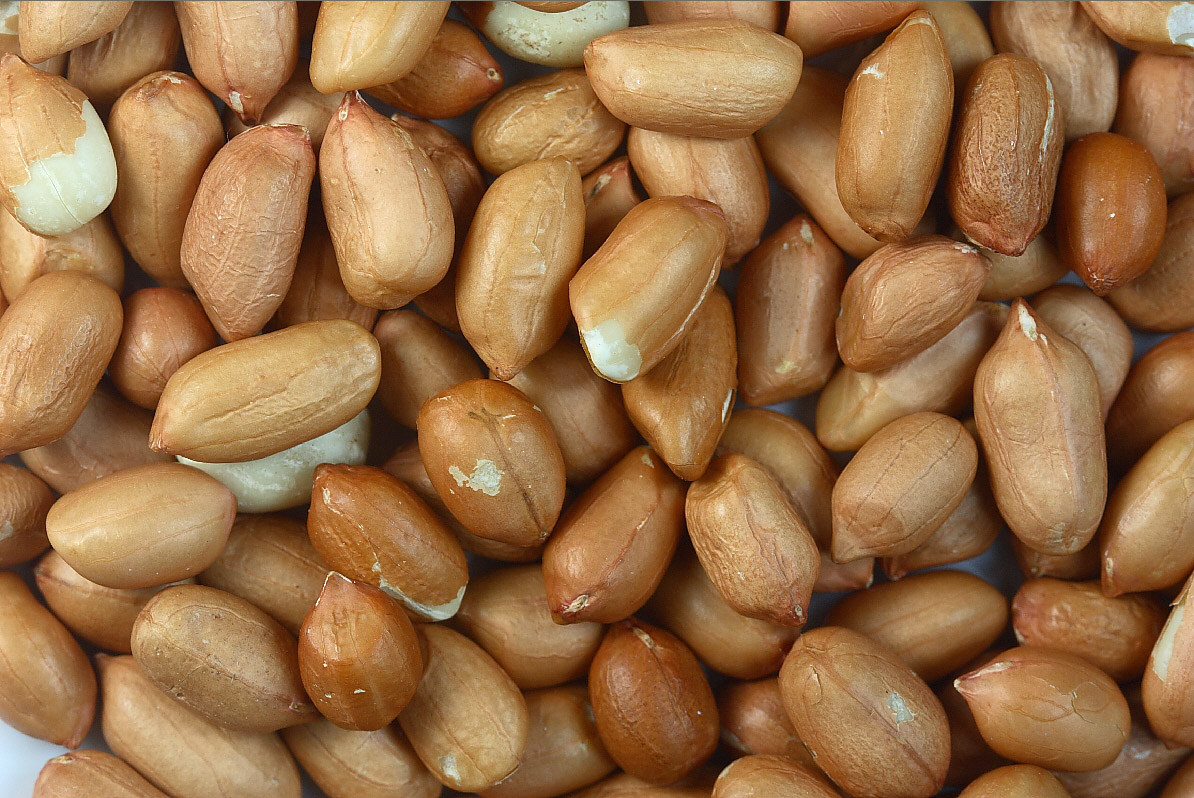 Peanut — SeedsPeanut — Plant
 Peanut — Leaves
 Peanut — Flower
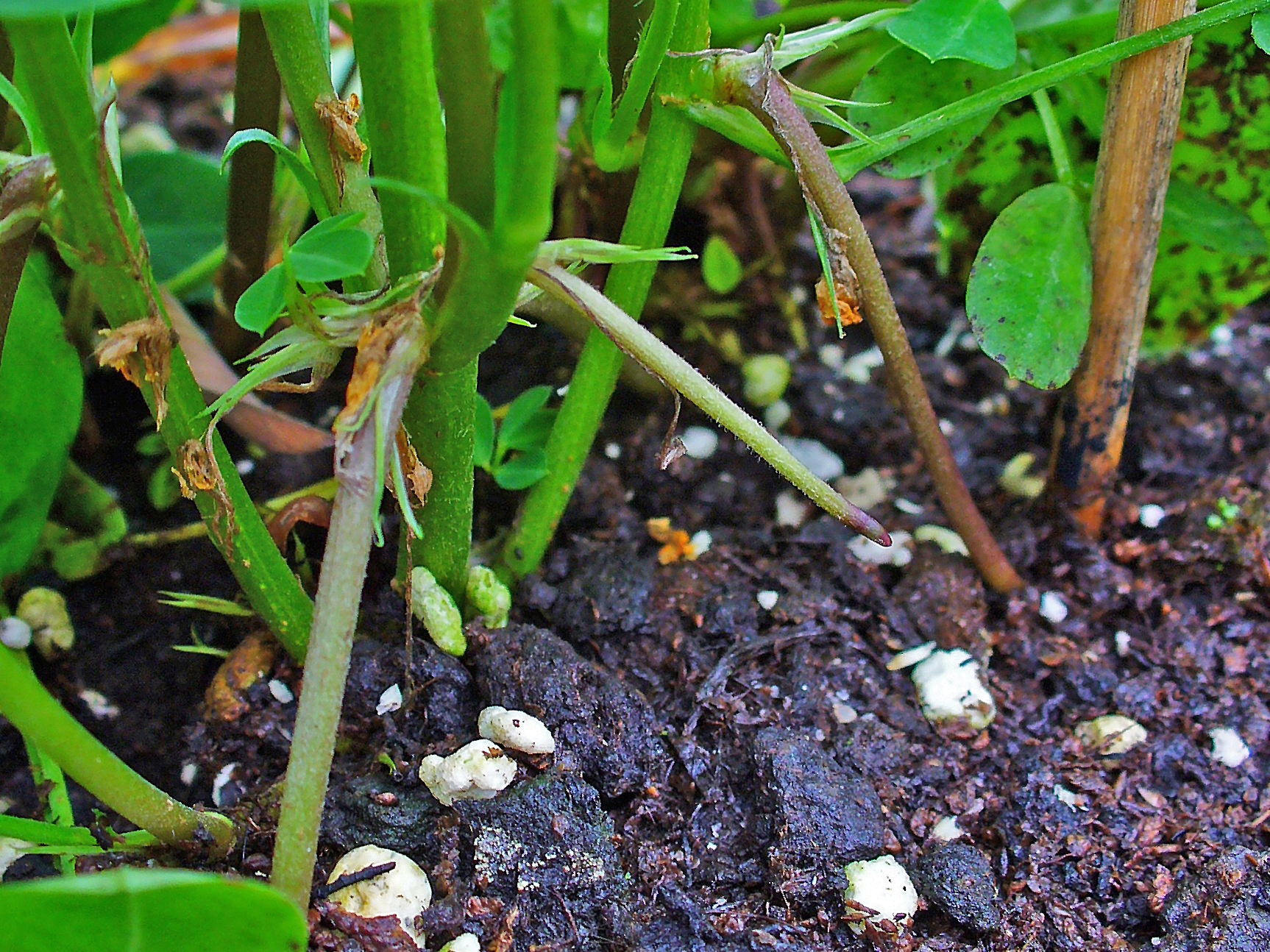 Peanut — Peg growing into the soil
 Peanut — PodsPeanut — SeedsPeanut — Plant
Overview
An annual herb 30–50 cm tall. Leaves are opposite and pinnate with four leaflets 1–7 cm long and 1–3 cm broad. The flowers are typical pea flowers, yellow with red veins, on a 2–4 cm stalk. After pollination the flower stalk (gynophore) elongates and pushes down into the soil, where the pod develops — the unusual underground fruiting (geocarpy) of this legume. The pod is 3–7 cm long and holds 1–4 seeds. The species epithet 'hypogaea' means 'under the earth'. The roots bear nodules with nitrogen-fixing bacteria.
The peanut is native to South America, domesticated in the Chaco region (Paraguay, Bolivia) and spread worldwide by the Spanish and Portuguese. It is an important grain legume and oil crop in the tropics and subtropics. The oil-rich seeds are pressed for cooking oil and made into peanut butter; peanut sauces are common in Southeast Asia, West Africa and Latin America; the oilcake is used as animal feed and fertiliser; the tops are used for silage. Peanut oil is also used in industry (paint, varnish, furniture polish). In Vietnam, peanuts are boiled, roasted with salt, made into peanut butter and candy, and pressed for oil. Note: some people are allergic to peanuts, sometimes severely.
Life cycle
From seed to productGermination & seedling
Seeds germinate in the soil and the seedlings grow upright before branching into a bush.
Plant & leaves
An annual herb 30–50 cm tall with opposite, pinnate leaves of four leaflets.
Flowering
Pea-like yellow flowers with red veins on a 2–4 cm stalk; they self-pollinate above ground.
Pods ripening underground
After pollination the peg elongates downward and the pod develops underground (geocarpy).
Distribution & origin
Share of recorded occurrences by region- South America (origin, Chaco)30%
- Asia · Southeast Asia25%
- Africa20%
- Grown worldwide (China, India, Nigeria...)25%
Chemical composition
Relative content in agarwood resin- Oil (lipid)High oil content; pressed for peanut oil45%
- ProteinA good plant protein source25%
- CarbohydrateEnergy source of the seed15%
- Dietary fibreIn the seed coat and kernel8%
- Vitamin E, B3 & minerals (Mg, K)Vitamin E, niacin, magnesium, potassium7%
Uses
- Seeds roasted, boiled, made into peanut butter and candy; pressed for cooking oil
- Oilcake used as animal feed and fertiliser; tops used as fodder/silage
- Vietnam: boiled peanuts, salted roasted peanuts, peanut butter, peanut oil; the plant fixes nitrogen to improve soil
Properties
- Stem
- Annual herb, 30–50 cm, bushy
- Leaf
- Pinnate with four opposite leaflets
- Flower
- Pea-like, yellow with red veins
- Fruit
- Pod that develops underground (geocarpy)
Habitat & conservation
A tropical and subtropical crop favouring warmth, sun and light, loose, well-drained soil (sandy loam); loose soil is needed for the pegs to penetrate and the pods to ripen. In Vietnam it is grown in the spring and summer–autumn seasons.
Conservation
Not Evaluated on the IUCN Red List. The peanut is an important oil and grain crop widely grown worldwide and is not threatened.
References
- 1Plants of the World Online — Arachis hypogaea L. — Kew Science, 2026
- 2Peanut (Arachis hypogaea) — mô tả, địa quả, sử dụng — English Wikipedia, 2026
- 3Lạc — đặc điểm, nguồn gốc, giá trị dinh dưỡng — Vietnamese Wikipedia, 2026
- 4FAOSTAT — Crops and livestock products (groundnuts) — FAO, 2024
- 5Nguồn ảnh: H. Zell (CC BY-SA 3.0) — Wikimedia Commons,
- 6Nguồn ảnh: Forest and Kim Starr (CC BY 3.0 us) — Wikimedia Commons,
- 7Nguồn ảnh: Tu7uh (CC BY 3.0) — Wikimedia Commons,
- 8Nguồn ảnh: Sanjay Acharya (CC BY-SA 3.0) — Wikimedia Commons,
- 9Nguồn ảnh: Dinesh Valke (CC BY-SA 2.0) — Wikimedia Commons,