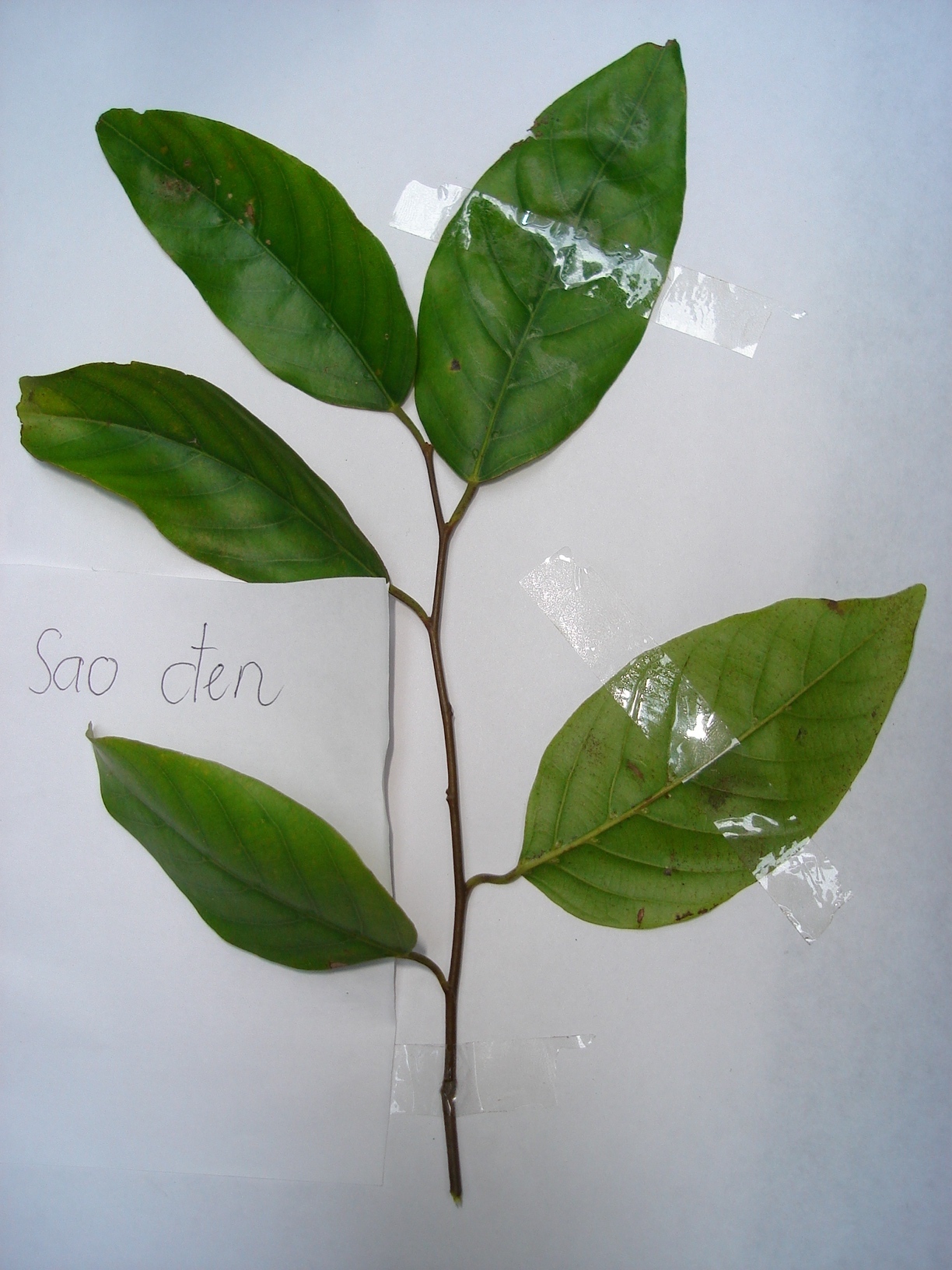
Takian
Hopea odorata Roxb.
Takian (Hopea odorata) is a large dipterocarp of Southeast Asian tropical forests, yielding hard, durable timber for boats, bridges and flooring, as well as dammar resin.
No ratings yet — be the first!
Gallery
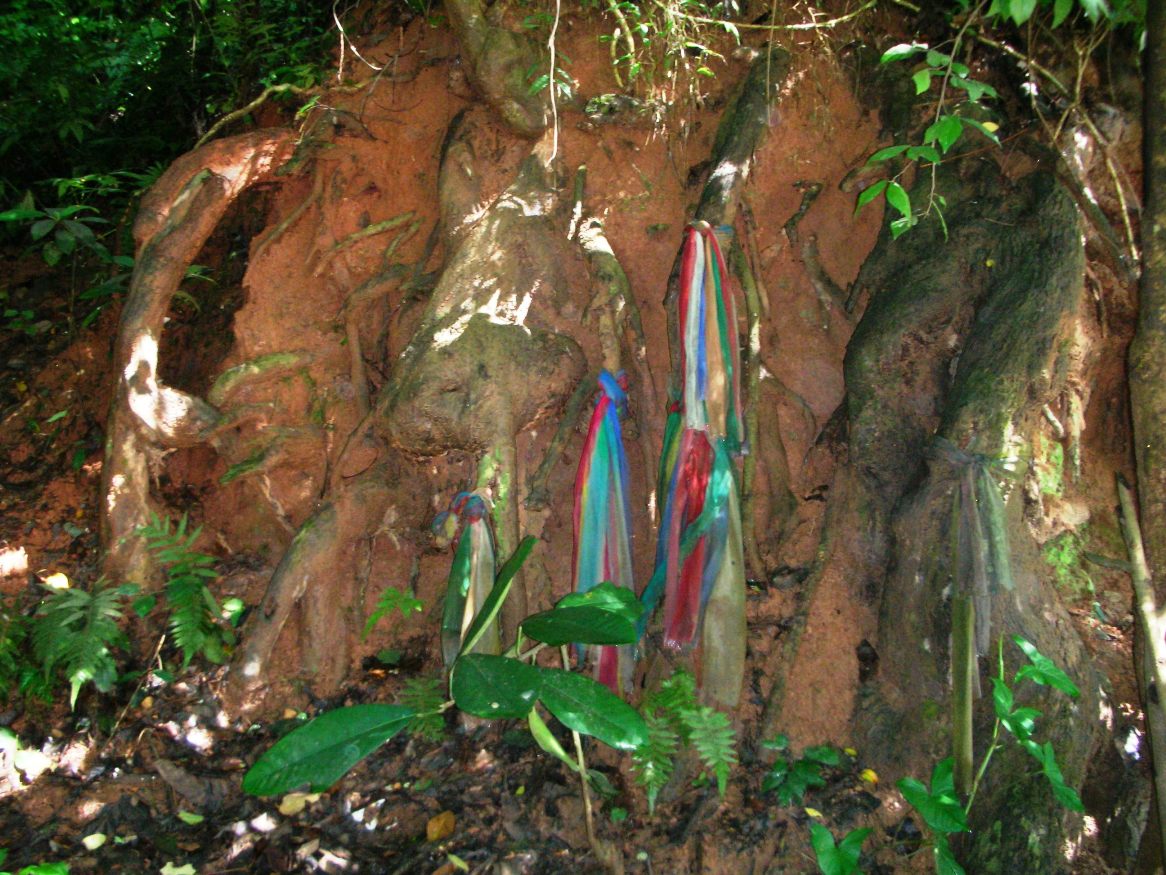 Takian
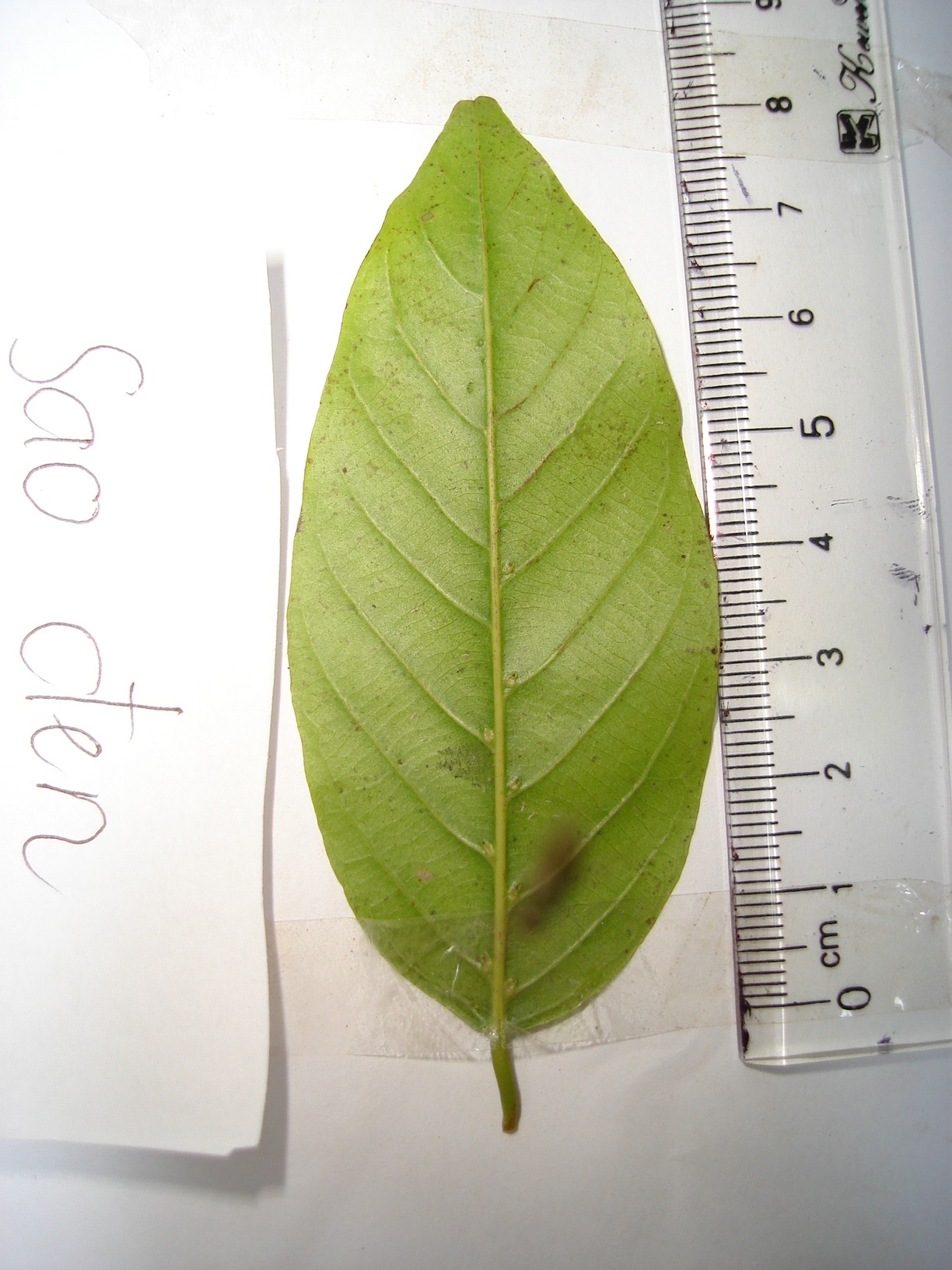 Takian
Photo credits: Silviculture at Vietnamese Wikipedia (CC BY-SA 3.0) · Xufanc (CC BY-SA 3.0)
Overview
An evergreen reaching up to 45 m, with a straight, buttressed bole over 1.2 m in diameter. Heartwood is yellowish- to reddish-brown with dark streaks, turning purplish on exposure; very hard, heavy and durable, termite-resistant but difficult to saw and poor for nailing — a first-class sleeper wood.
The tree yields rock dammar, tapped by ringing the trunk from about 20 years old for up to 30 years, used for caulking boats, varnish and inks; bark holds 13–15% tannin. Flowering and fruiting follow an almost biennial cycle; seeds are recalcitrant and die within five days, so must be sown at once. It grows in deep-soiled evergreen forest, often along streams, up to about 600 m.
Life cycle
From seed to productSeed
Takian seed sits inside the winged fruit; it is recalcitrant and dies within five days, so it cannot be stored and must be sown immediately after collection.
Germination
Seeds germinate within 1–4 weeks when sown straight after collection, in deep, moist loam; since the seed cannot wait, fresh sowing decides the germination rate.
Seedling
Seedlings are shade-loving when young but become increasingly light-demanding; nursery shade gives the best survival.
Mature plant
Reaching 30–45 m with a straight, buttressed bole and no branches for up to 25 m; the yellowish- to reddish-brown heartwood with dark streaks is fully formed.
Flowering & fruiting
Flowering and fruiting follow an almost biennial cycle; the winged fruit rides the wind, carrying the seed away from the parent tree.
Logging
Rock dammar is tapped from trees over 20 years old; logs are sawn and dried for boats, bridges, flooring and sleepers.
Distribution & origin
Share of recorded occurrences by region- Thailand24%
- Vietnam22%
- Myanmar17%
- Cambodia14%
- Laos13%
- South Asia and Malay Archipelago10%
Chemical composition
Relative content in agarwood resin- CelluloseStructural cell-wall polymer43%
- HemicelluloseMatrix polysaccharide21%
- LigninGives the wood rigidity29%
- Extractives (tannin & resin)Dammar resin and tannin7%
Uses
- Boat building, canoes and hulls
- Bridges, pillars, flooring and submerged works
- First-class railway sleepers
- Roofing, fences, posts and household timber
- Dammar resin for caulking, varnish and inks
Properties
- Heartwood colour
- Yellowish- to reddish-brown with dark streaks
- Grain
- Close, even
- Durability
- Very durable, termite-resistant
- Working properties
- Hard to saw, poor nailing
Habitat & conservation
Evergreen tropical forest on deep, moist soils, often near streams and seasonally wet ground, up to about 600 m; prefers 2,000–4,000 mm annual rainfall and acid soil at pH 4.8–5.2.
Conservation
Hopea odorata is classified as Vulnerable (VU) by IUCN. Long-term selective logging in Vietnam has reduced stands to small groups or isolated individuals, and both resin and timber are still taken from wild forest; its good growth rate has made it a common planting for amenity and reforestation.
References
- 1Trees of Laos and Vietnam — A Field Guide to 100 Species — Blumea, 2004
- 2Gums, Resins and Latexes of Plant Origins (Non-Wood Forest Products 6) — FAO, 1995
- 3IUCN Red List — Hopea odorata — IUCN, 2024